Prof. Dr. Thorsten Jungmann (last updated 2026-11-04)
Overview of this lesson
What is this lesson about? – The guiding questions:
- Which future trends are changing the work of mechatronics engineers and industrial engineers?
- How do you evaluate a source?
- How do you take steps 1 to 4 for your trend in phase 2?
What will you be able to do at the end of this lesson? – The intended learning outcomes:
- You name current technological and social trends and classify their effects on the job profile of engineers.
- You distinguish types of sources, classify publications funded by industry with their interests and ask what a study has examined and how.
- You put the same question to an artificial intelligence (AI) service twice and compare the two answers.
- You sign up for a trend and formulate your own answer to its question.
What will you know at the end of this lesson? – The building blocks of knowledge:
- What a future trend is
- The trends and your job profile
- Types of sources
- Publications funded by industry and their interests
- What a study has examined and how
- The same question twice
- Phase 2 step by step
- The 20 trends one by one
How is the content organized? – The structure:
Review of the previous lesson
In the previous lesson, you gave your elevator talk and looked back on phase 1.
- Comprehensibility was in focus: everybody in the room should understand your question and your balanced, reflective answer.
- In phase 1, you took all five steps of the didactic concept once, from your question to your balanced, reflective answer.
- With the questions for reflection, you looked back on what you have learnt and what you will do differently.
- Phase 2 follows the same pattern, with a new topic and with sources in focus.
Today, phase 2 begins: with the future trends – and with the question of how to evaluate a source.
1 What lies ahead? – Future trends at a glance
1.1 What is a future trend?
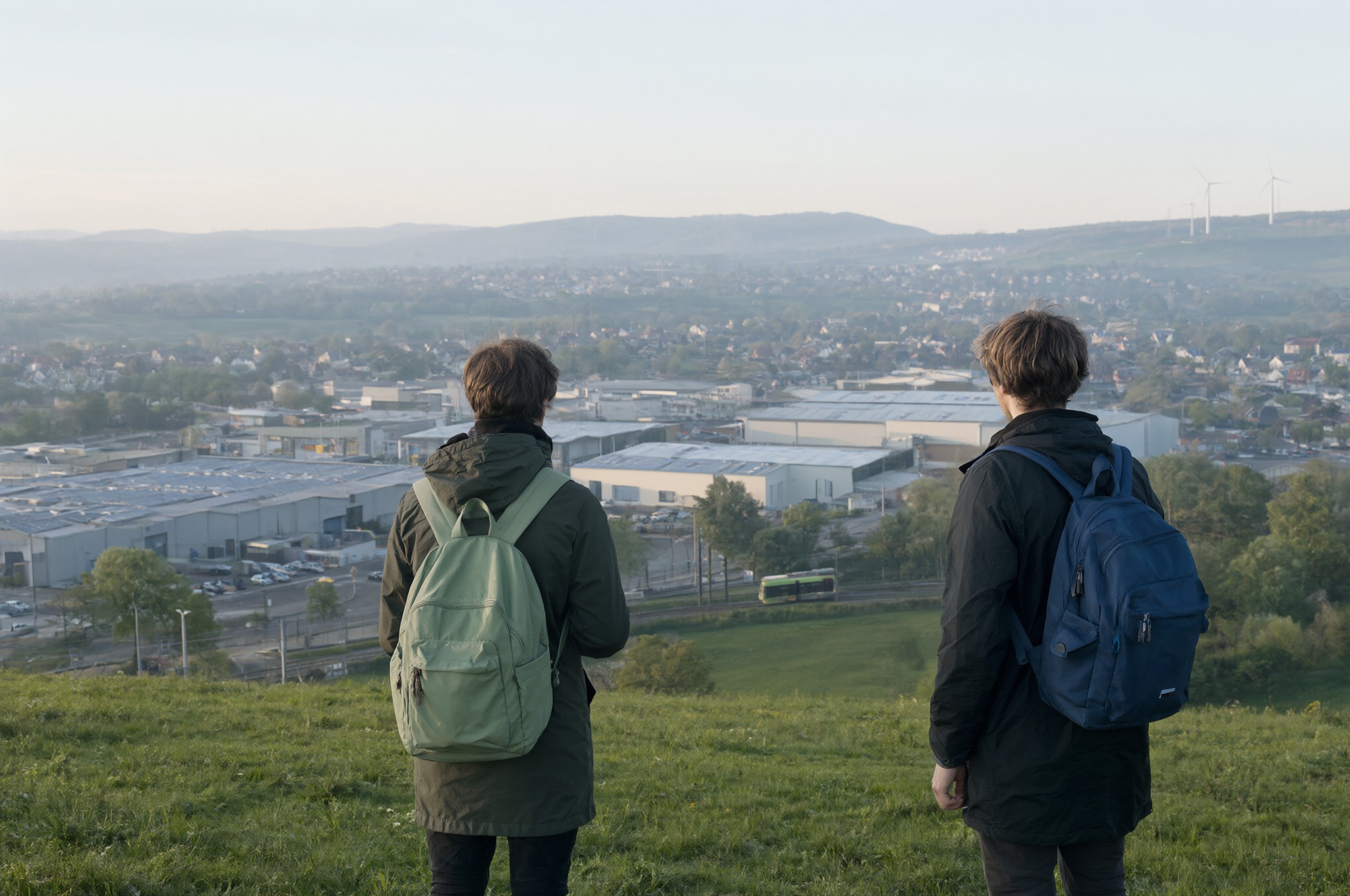
Image by Qwen-Image 2.1
In phase 1, you worked on goals that the countries of the world have set themselves. In phase 2, we look ahead, like the two students in the picture, at developments that are already under way, whether anybody has set them as a goal or not.
The European Commission keeps an eye on such developments on a large scale. Its Joint Research Centre describes megatrends (German: Megatrends) as forces that act globally and over the long term: we can observe them today, and they will probably remain influential for some decades (European Commission 2020, p. 1). The Commission follows 14 of them. For each one, it also indicates the range of views on how it may evolve, and it calls the whole collection a tool for reflecting on the future, not a position of the Commission (ibid., p. 1). That is worth remembering: a trend tells you that something is under way, not how it will end.
In this module, we speak of future trends (German: Zukunftstrends): developments that can be observed today and that are changing the work of mechatronics engineers and industrial engineers, as FTS-01, 5.4 announced. Some are broad, such as climate change; others are narrow, such as digital twins. I have compiled 20 of them: nine technological and eleven social. For this list, I drew on reports by consultancies, a trade association, a trade magazine, a futures institute and the World Economic Forum. Keep this in mind – we come back to it at the end of this chapter.
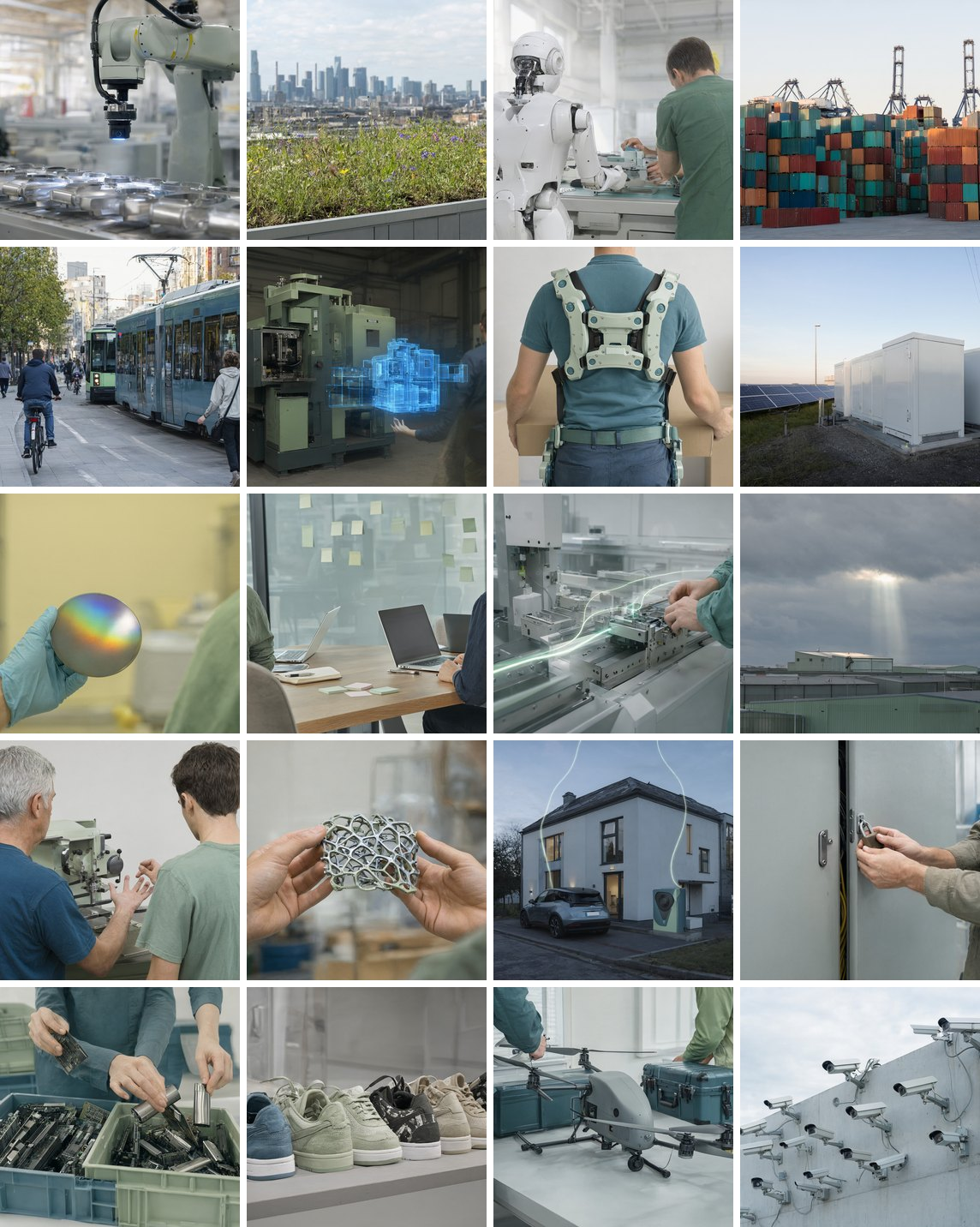
Images by Qwen 2.1
1.2 Nine technological trends
The first nine trends are technologies. They change the work of both of your degree programmes, but with a different focus: mechatronics engineers are mainly concerned with implementing a technology, industrial engineers with scaling it economically, optimizing it and deciding on its strategy. The following table shows this focus trend by trend. The assignment is mine; it names examples, not limits.
| Technological trend | Focus for mechatronics engineers | Focus for industrial engineers |
|---|---|---|
| Artificial intelligence (AI) | AI algorithms at the control level, synthetic training data, agents in control systems, proof of safety and robustness | Predictive maintenance and return on investment, process automation with human checkpoints, risk classes of the AI Act of the European Union (EU) and governance |
| Digital twins | Virtual commissioning and modelling | Factory simulation and scenario planning |
| Robotics and autonomous systems | End effectors, sensors and functional safety, AI-controlled robots and transfer from simulation to reality | Economic viability of flexible manufacturing, change management, deployment scenarios and work organization |
| Additive manufacturing and smart materials | Design and manufacturing parameters | Supply chain strategy and inventory costs |
| Energy systems and electrification | Fuel cells, drives and electronics, battery and thermal management | Compliance on environmental, social and governance (ESG) issues, life cycle assessment, life cycle costs and raw materials |
| Connected and software-defined production | Connected sensors, actuators and edge devices, virtual programmable logic controllers (PLCs) and the standard IEC 61499 | Platforms and pay-per-use models, unlockable functions and independence from individual vendors |
| Cybersecurity of operational technology | Protection according to the standard IEC 62443 | Risk management, the EU Cyber Resilience Act and the EU’s Network and Information Security Directive (NIS2) |
| Microelectronics and power semiconductors | Inverters with silicon carbide (SiC) and gallium nitride (GaN), embedded systems | Supply chains and dependence on individual countries |
| Circular economy and digital product passport | Design for circularity and remanufacturing | EU Ecodesign Regulation and product passport |
Read the table line by line. Take digital twins: as a mechatronics engineer, you work on the model of a machine and commission it virtually; as an industrial engineer, you simulate a factory and plan scenarios. It is the same trend, but a different desk.
1.3 Eleven social trends
The other eleven trends are social: developments in society, the economy and politics. The module description explicitly counts sustainability and ethical aspects of digitalization among them (HSBI 2026, p. 41). They, too, reach the desks of engineers:
| Social trend | Focus for mechatronics engineers | Focus for industrial engineers |
|---|---|---|
| Demographic change and shortage of skilled workers | Automation, assistance systems and ergonomics | Succession planning, securing knowledge and international skilled workers |
| Geoeconomic fragmentation and resilience | Interchangeable components and regional standards | Diversified supply chains, reshoring and export controls |
| Security and defence | Robust systems and dual-use technologies | Defence market, security clearances, export control and critical infrastructure |
| Mobility and urbanization | Electric drives, autonomous driving and charging infrastructure | Last mile and mobility as a service |
| Health and care | Medical technology, care robotics and exoskeletons | Occupational health and safety, approval of medical devices and the health economy |
| Individualization | Batch size 1 and product configurators | Mass customization and variant management |
| Neo-ecology and climate change | Energy efficiency and adaptation to the consequences of climate change | Carbon pricing and sustainability reporting |
| Economic uncertainty | Modular and scalable concepts | Scenario planning and risk management |
| Connectivity | Remote maintenance, over-the-air updates and interfaces | Platform economy and data-based services |
| Ethics of digitalization and disinformation | Traceable automation and privacy by design | Guidelines for data and artificial intelligence (AI), protection against disinformation |
| New work and lifelong learning | Further training and distributed teams | Hybrid work, reskilling and upskilling |
Here, too, the assignment is mine. Trends do not stand alone: individualization, for example, is linked to additive manufacturing, and scenario planning appears under digital twins as well as under economic uncertainty.
1.4 What the trends mean for your job profile
Why does all this concern you? According to the module description, you are to name current technical and social trends and to classify their effects on the development of the job profile (German: Berufsbild) of engineers (ibid., p. 41).
One attempt to describe such effects is the Future of Jobs Report of the World Economic Forum (WEF). It rests on a survey of over 1 000 employers with more than 14 million workers in 22 industry clusters and 55 economies (WEF 2025). Two of its results matter here:
- What you will work on: Among technologies, 86 % of the employers expect artificial intelligence (AI) and information processing to transform their business by 2030; 58 % expect this of robotics and automation and 41 % of the generation, storage and distribution of energy (ibid.). 47 % name the mitigation of climate change, and with it, the demand for renewable energy engineers, environmental engineers and specialists in electric and autonomous vehicles grows: all three are among the 15 jobs that are growing fastest (ibid.).
- What you will need: Employers look for analytical thinking above all, followed by resilience, flexibility and agility, and by leadership and social influence. Among the skills that are growing fastest are AI and big data, networks and cybersecurity, and technological literacy (ibid.).
So the job profile changes in two respects: in what engineers work on and in what they need to be able to do, technically and socially.
But note what kind of statement this is. These are the expectations of employers, not measurements; the figures on jobs are extrapolated from what the respondents predicted (ibid.). And the report wants something: its preface hopes for ‘an ambitious, multistakeholder agenda’ (ibid.). The same applies to my list of 20 trends, which rests on such reports. Can you rely on them? That depends on who says something, how they know it and what they want. This is the subject of the next chapter.
2 Who says so? – Evaluating sources
2.1 One question, four publications
Let us return to our example question, ‘Does hydrogen make steel production climate-neutral?’ In FTS-03, 4.2, you saw what an artificial intelligence (AI) service answered, among other things about the Hydrogen Breakthrough Ironmaking Technology (HYBRIT) project:
Claude
‘Commonly cited reductions are in the range of 80 to over 90 % compared with the blast furnace route, depending on assumptions. […] Pilot projects show the technology works, for example HYBRIT in Sweden, which delivered its first fossil-free steel in 2021.’ (Claude, Claude app for macOS, Claude Opus 5.5 with effort xhigh, queried 2026-10-16) – AI output, quoted as an example – not evidence.
Back then, our two sources could not confirm the last part: a case study from 2019 cannot report on 2021. So we go on looking, and we find, among others, these four publications:
| Publication | What it is | What it says |
|---|---|---|
| SSAB (2021, pp. 1–2) | Press release of a steel company | SSAB says it has made ‘the first fossil-free steel in the world’ and handed it over to a customer, in a trial delivery. The release names neither an amount nor an emissions figure for this steel. |
| EUROFER (2019, p. 2) | Roadmap of the European Steel Association (EUROFER) | The European steel industry could cut its carbon emissions by 80–95 % by 2050, ‘under the right conditions’. |
| Pei et al. (2020, section 3) | Article in the journal Metals by employees of the steel company SSAB, the mining company Luossavaara-Kiirunavaara Aktiebolag (LKAB), the energy company Vattenfall and their joint venture | In an example from northern Sweden, fossil carbon dioxide (CO₂) falls from 1 600 kg to 25 kg per tonne of crude steel. |
| Vogl et al. (2018, pp. 740–741) | Article in the Journal of Cleaner Production by researchers at Lund University | Carbon, lime and graphite electrodes cause 53 kg of CO₂ per tonne of steel; the blast furnace route emits 1 870 kg. |
First, back to the last sentence of the quoted AI answer. It is confirmed in part. Steel made with HYBRIT technology was indeed delivered in 2021 – but it was SSAB that delivered it, it was a trial delivery, and so far our only witness is the company itself (SSAB 2021, p. 1). ‘Fossil-free’ is its own word, and it gives no figure for it (ibid., pp. 1–2).

Image by Qwen-Image 2.1
Now lay the four publications side by side, as in the picture. All four sound serious, all four deal with hydrogen in steel production, and yet three of them name different figures, and the press release names none for its steel. Whom do you believe – and why? Four tools help you to answer:
- Types of sources: What kind of publication is it, and who checked it before it appeared?
- Interests: Who wrote it, who paid for it, and who benefits?
- What was examined: What exactly was measured, compared with what, and under which conditions?
- The same question twice: Does an AI service give the same answer when you ask again?
2.2 Tool 1: Types of sources
The first question is what kind of publication you have in front of you. Evaluating sources (German: Quellen bewerten) starts with the type of source (German: Quellenart). In my book on final theses, I describe what makes a source suitable: its scientific quality, which you recognize by the peer review it has passed, by the reputation of its authors and of the publication outlet and by its method and argumentation, and its topicality (Jungmann 2025, p. 77). Articles in journals and contributions to conferences represent the current state of research; textbooks provide the theoretical foundations (ibid., pp. 76, 78). Journals, conference proceedings, edited volumes and monographs are the typical publication outlets of science (ibid., p. 141).
A great deal is published outside these channels. This is grey literature (German: graue Literatur): it comes from government, academia, business and industry, but no commercial publisher controls it (Garousi et al. 2019, p. 3). You should not ignore it, but you do need to place it. Garousi et al., building on a model from management research, use two questions for this: How well can the expertise of the producer be determined? And how far was the content produced, moderated or edited according to explicit and transparent criteria – what they call outlet control (German: Kontrolle durch das Medium)? The result is a range rather than sharp categories, which they divide into three tiers (ibid., pp. 3–4):
| Type of source | Examples (ibid., p. 4) | In our case |
|---|---|---|
| Scientific literature (‘white’ literature in the model) | Published journal papers, conference proceedings, books | Vogl et al. (2018), Pei et al. (2020) |
| Grey literature, first tier: high outlet control, high credibility | Books, magazines, government reports, white papers | EUROFER (2019) |
| Grey literature, second tier: moderate outlet control, moderate credibility | Annual reports, news articles, presentations, videos, question-and-answer sites, wiki articles | SSAB (2021) |
| Grey literature, third tier: low outlet control, low credibility | Blogs, emails, tweets | – |
The last column is my own assignment. The model does not mention press releases; I put them next to annual reports. Books stand in two rows. I take this to mean that what counts is who has checked them. And the type of a source can shift with its content: a presentation that only sets out new ideas falls into the third tier (ibid., p. 4).
Where does the AI answer belong? Nowhere: it is never a source and never evidence (guide to Scientific Work, section 2.10).
A lower tier does not make a publication useless. A company’s website or datasheet can provide a fact, such as a technical value; just do not adopt its advertising language. But the type alone is not enough either: Vogl et al. and Pei et al. are both journal articles. To see the difference between them, you need the second tool.
2.3 Tool 2: Publications funded by industry and their interests
The second question is who wrote a publication, who paid for it and who benefits if it is well received. A publication funded by industry (German: branchenfinanzierte Veröffentlichung) is paid for by companies or their associations, or it is written by their employees. You find out by looking in three places: the affiliations (German: Zugehörigkeit) of the authors on the first page and the sections on funding (German: Finanzierung) and on the conflict of interest (German: Interessenkonflikt) at the end.
Look at our four publications with these questions in mind:
- SSAB announces its own success in a press release.
- EUROFER has steel companies and national steel federations as its members (EUROFER 2019, p. 18). Its roadmap concludes with demands: financial support, and measures of the European Union (EU) through which the steel industry gets all the costs of its decarbonization back (ibid., pp. 16–17).
- Pei et al. work for SSAB, LKAB, Vattenfall and their joint venture, that is, for the companies whose project they describe. The financial support came from the Swedish Energy Agency together with the three companies, and the article states: ‘The authors declare no conflict of interest.’ (Pei et al. 2020)
- Vogl et al. work at Lund University and declare no competing financial interests. Their acknowledgement, however, names funding from the Swedish Energy Agency within the project HYBRIT-RP1 (Vogl et al. 2018, p. 744). So even this article is not entirely separate from the project.
Why does this matter? In research on drugs and medical devices, a Cochrane review found that studies sponsored by the manufacturer report favourable results on efficacy and favourable conclusions more often than studies with other sponsors (Lundh et al. 2017). That is medicine, not engineering, but in the energy sector, too, it has been shown that the type of publication makes a difference. Supran and Oreskes (2017, p. 1) compared 187 documents on climate change from ExxonMobil. Of the peer-reviewed papers, 83 % acknowledged that climate change is happening and that humans cause it, and of the internal documents, 80 %; of the paid, editorial-style advertisements in The New York Times, it was only 12 %, and 81 % of these expressed doubt (ibid., p. 1).
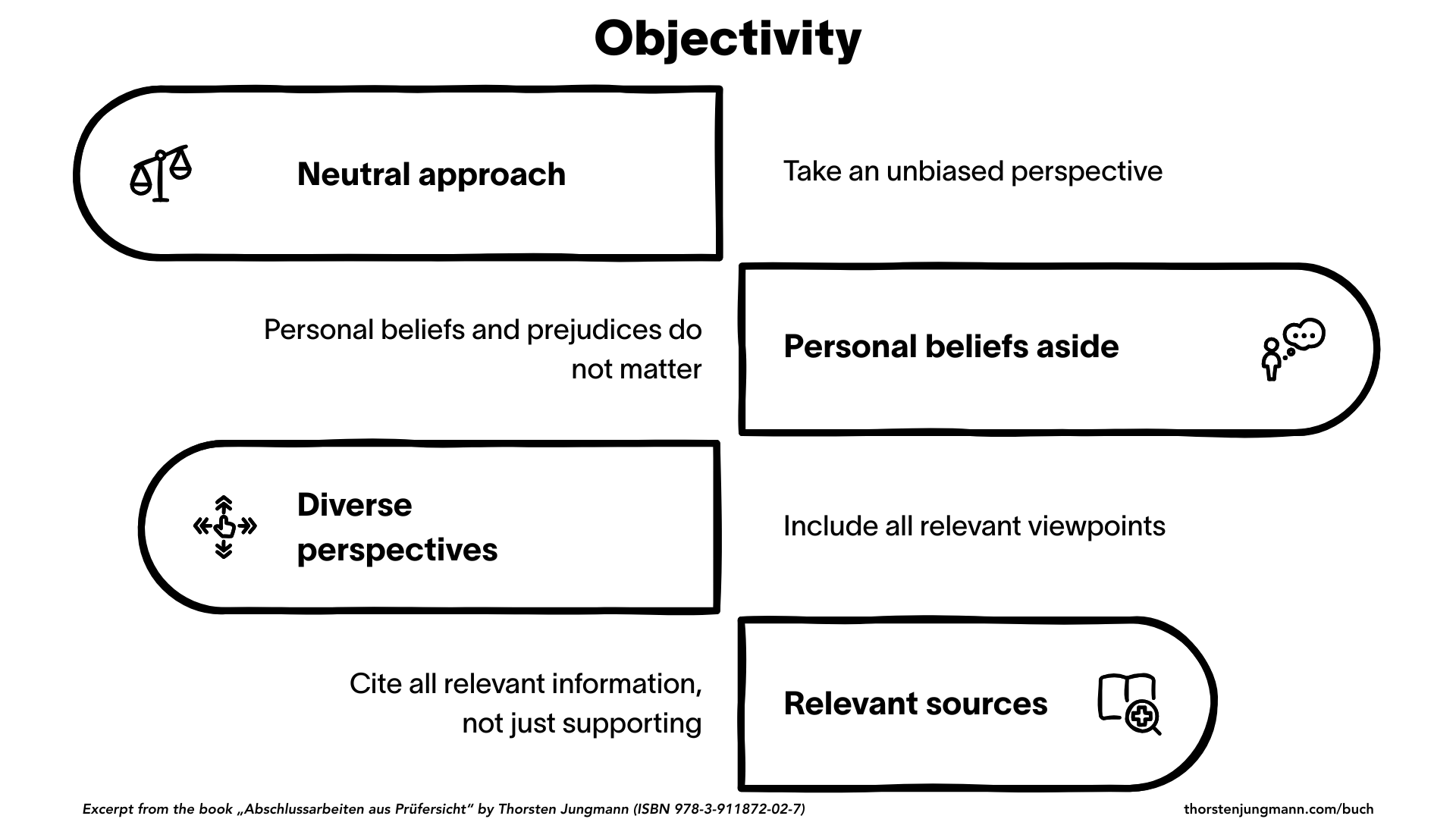
Figure: English version of the figure in Jungmann (2025, p. 14)
An interest does not make a statement wrong. The companies in the HYBRIT project know their process better than anybody, and an association may rightly state what its members need. An interest is a reason to ask further: Is there a vested interest, and do the data back up the conclusions (Garousi et al. 2019, p. 19)? This is where objectivity comes in, which you know from FTS-02, 4.4: take all relevant points of view into account and do not cite selectively only those sources that support your own position (Jungmann 2025, p. 14). And say who is speaking: ‘According to the steel association EUROFER …’ is a different statement from ‘Studies show …’.
2.4 Tool 3: What a study has examined and how
The third question concerns the content. Validity describes the extent to which a method actually captures what it claims to capture (ibid., p. 18; FTS-02, 4.8). For a reader, this means: What is the aim of the publication, what method does it use, what limits does it state, and which case does it refer to (Garousi et al. 2019, p. 19)? Our publications show why these questions matter:
| Publication | Figure | Compared with | What it covers, under which conditions |
|---|---|---|---|
| Vogl et al. (2018, pp. 740–741) | 53 kg of CO₂ per tonne of steel | 1 870 kg, blast furnace route | One tonne of steel by hydrogen direct reduction, with carbon, lime and graphite electrodes counted; assumes electricity free of emissions |
| Pei et al. (2020, section 3) | 25 kg of fossil CO₂ per tonne of crude steel | 1 600 kg, blast furnace route of SSAB | An example in northern Sweden with renewable electricity and biomass; counts fossil CO₂ only |
| EUROFER (2019, pp. 2, 4, 6) | Cuts of 80–95 % | 1990 levels | The whole European steel industry by 2050, with several technologies; only given CO₂-free electricity and hydrogen |
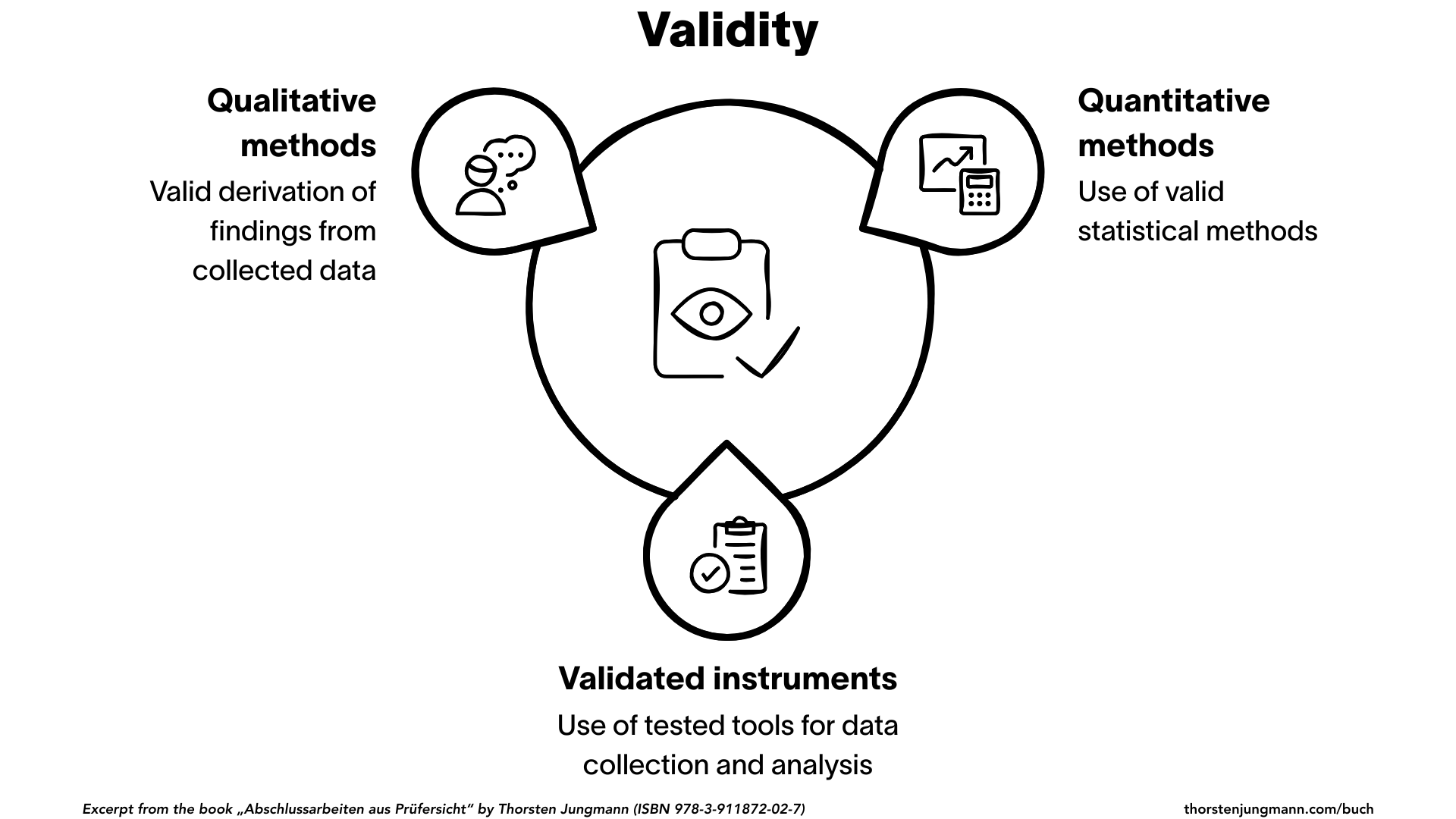
Figure: English version of the figure in Jungmann (2025, p. 18)
These figures do not contradict each other – they measure different things. Vogl et al. and Pei et al. both look at one tonne of steel, but with different comparison values, and Pei et al. count only fossil CO₂ in a region with plenty of renewable electricity and biomass. The roadmap of EUROFER speaks of a whole industry and of a target for the year 2050. So you cannot say that EUROFER confirms the lower end of the range in the AI answer in 2.1: its 80 % refers to something else.
The conditions decide. With a power grid that emits more than 532 kg of CO₂ per megawatt-hour and without scrap, hydrogen direct reduction emits more than the blast furnace route (Vogl et al. 2018, p. 740). And words matter: the press release says ‘fossil-free steel’, while the article by employees of the same companies names a remaining fossil carbon load from graphite electrodes and from the carbon added in the furnace (Pei et al. 2020, section 3).
When you read a study, ask: What exactly was measured? Compared with what? For which region and which period? Under which assumptions? And what was left out? In FTS-06, when you exchange your answers in your trend group, you will need these questions.
2.5 Tool 4: The same question twice
The first three tools are for publications. The fourth is for the AI service, and it follows from the criterion of reliability: a reliable study leads to comparable results when it is repeated under the same conditions (Jungmann 2025, p. 19; FTS-02, 4.9). Is that true of an AI service? Language models are not deterministic: the same prompt can lead to completely different responses (Ouyang et al. 2025, p. 1). In one study, ChatGPT generated code five times for each of 829 programming problems; depending on the data set, for 48 to 76 % of the tasks, there was no test in which all five versions of the code gave the same output (ibid., pp. 1–2, 8). That study is about code, not about questions like yours – so try it out.
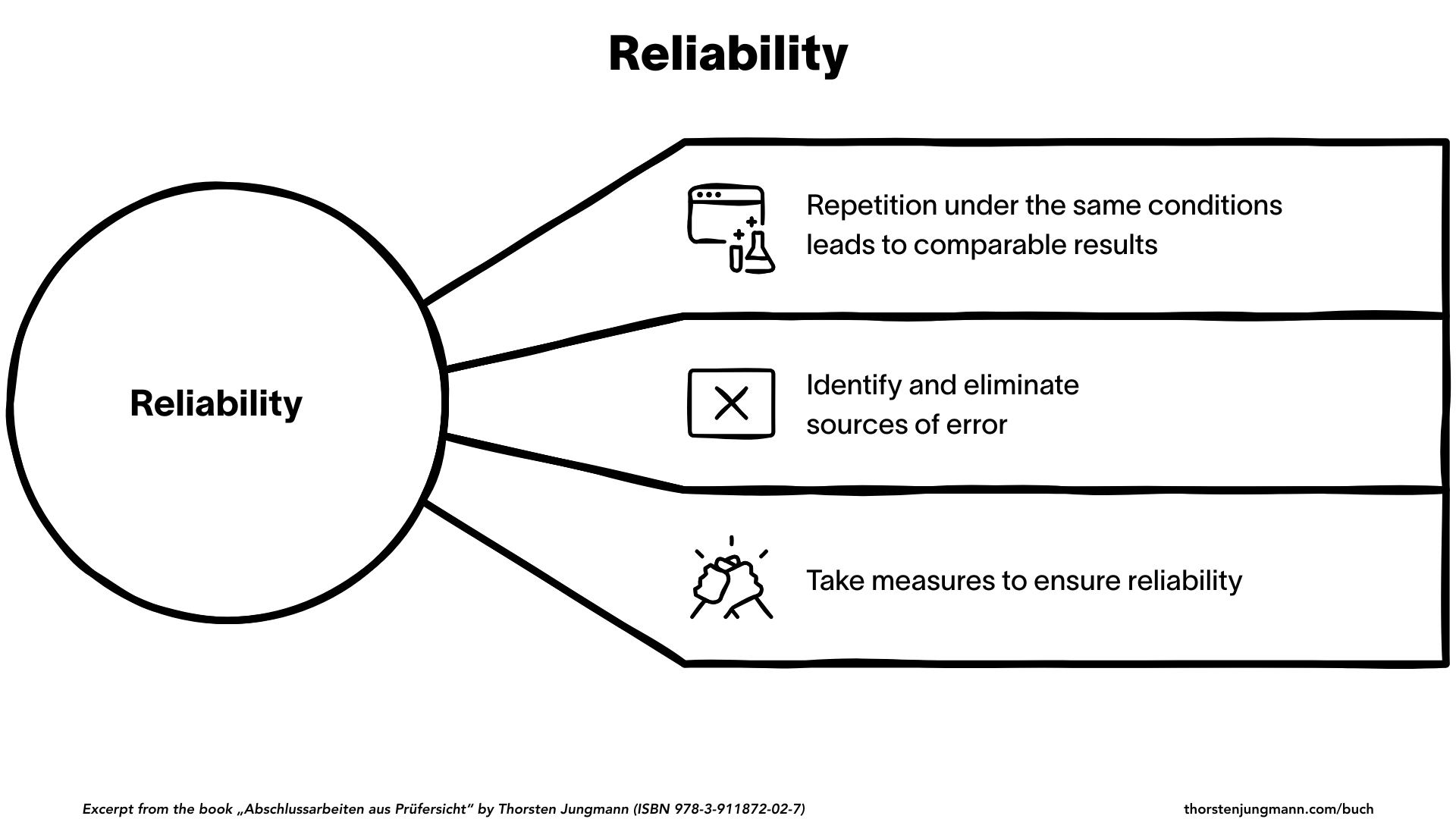
Figure: English version of the figure in Jungmann (2025, p. 19)
In phase 2, you therefore put your question to your AI service twice: word for word, with the same service and the same model and mode, in a new chat. If your service can remember earlier chats, ask both times in a temporary chat without memory, where it offers one. You save both answers and compare them: Does the answer to the question stay the same? Do the figures stay the same? Does the service name the same sources?
I have done this with our example question. Here are passages from the two answers, 17 days apart:
Claude, first query
‘Short answer: Not by itself. Hydrogen can make steel production nearly climate-neutral, but only if certain conditions are met, and some emissions remain. […] Electrolysis and the arc furnace together need roughly 3–4 MWh per tonne of steel, mostly for producing the hydrogen. […] Commonly cited reductions are in the range of 80 to over 90 % compared with the blast furnace route, depending on assumptions. […] Pilot projects show the technology works, for example HYBRIT in Sweden, which delivered its first fossil-free steel in 2021.’ (Claude, Claude app for macOS, Claude Opus 5.5 with effort xhigh, queried 2026-10-16) – AI output, quoted as an example – not evidence.
Claude, second query
‘Not by itself. Hydrogen can cut steelmaking emissions dramatically, but only if both the hydrogen and the electricity are very low-carbon. Even then, some emissions remain. […] The green hydrogen route needs about 3.5 MWh per tonne of steel. […] Hydrogen leaks, because hydrogen acts as an indirect greenhouse gas […] With renewable power, hydrogen-based steel can get close to zero, with reductions often estimated at 90% or more compared with the blast furnace route. […] The figures come from my general knowledge and were not checked against sources for this answer, so verify them before citing.’ (Claude, Claude app for macOS, Claude Opus 5.5 with effort xhigh, queried 2026-11-02) – AI output, quoted as an example – not evidence.
Both answers give the same short answer, ‘Not by itself’, and reach a similar conclusion. The details differ: ‘roughly 3–4 MWh’ against ‘about 3.5 MWh’, ‘80 to over 90 %’ against ‘90% or more’. The first answer mentions the HYBRIT project and the second does not; the second mentions hydrogen leaks. Neither names a source, and the second says itself that its figures were not checked.
One repetition proves little, and two answers that agree can both be wrong: reliability is not truth. So you still check them against the sources. The electricity is confirmed: hydrogen direct reduction needs 3.48 MWh per tonne of liquid steel (Vogl et al. 2018, p. 736). The ‘90% or more’ is confirmed in part. If the electricity is free of emissions, carbon, lime and graphite electrodes still cause 53 kg of CO₂, which is 2.8 % of the blast furnace route (ibid., p. 741). But this figure does not cover the whole chain: CO₂ is still embedded, for example, in the extraction of iron ore and limestone (ibid., p. 740). That this figure is ‘often’ estimated is not confirmed: our sources do not say how often. On your poster, you quote what you examine from both answers, each with its long reference and the note, and in the column for the AI answer, you report what the comparison has shown.
Now it is your turn: in exercise FTS-05.01, you apply the tools to short cases, here in the session. After that, we look at how phase 2 works.
3 Your trend, your question – Phase 2 step by step
3.1 Your trend, your pair and your question

Image by Qwen-Image 2.1
Your work in phase 2 starts in the exercise time today. First, you sign up for one of the 20 future trends in ILIAS. Each trend has four places, set up as groups in ILIAS. Choose your trend by interest: you will work with it until the elevator talk, and in phase 3, you can link your term paper to it (FTS-01, 4.1). Chapter 4 introduces all 20 trends; read the section on the trend you have in mind before you choose.
The four of you form a trend group (German: Trendgruppe), like the one in the picture, and you divide yourselves into two pairs. Each pair shares a source package. All four of you work on the same question: each trend has exactly one, and you find it at the end of its section in chapter 4. Unlike in phase 1, you do not have to choose.
If your trend group has only two or three members, divide yourselves so that each of the two source packages is taken by at least one of you. If you are alone in your trend at the end of the exercise time, join a trend group that still has free places.
Then you write down your own answer to this question, in the session today, before you consult the artificial intelligence (AI) service or your source package. Everything you already know counts, including what you have heard in this session. Your own answer stays as you wrote it: on your poster, it shows where you started from (FTS-02, 5.2).
3.2 Your AI service and your source package
For step 3, an artificial intelligence (AI) service is specified for each trend; both pairs of a trend use the same service:
| AI service | Access | Trends |
|---|---|---|
| ChatGPT | https://chatgpt.com | Artificial intelligence; Cybersecurity of operational technology; Mobility and urbanization; Ethics of digitalization and disinformation |
| Perplexity | https://www.perplexity.ai | Digital twins; Microelectronics and power semiconductors; Health and care; New work and lifelong learning |
| Claude | https://claude.ai | Robotics and autonomous systems; Circular economy and digital product passport; Individualization |
| Gemini | https://gemini.google.com | Additive manufacturing and smart materials; Demographic change and shortage of skilled workers; Neo-ecology and climate change |
| Vibe by Mistral AI | https://chat.mistral.ai | Energy systems and electrification; Geoeconomic fragmentation and resilience; Economic uncertainty |
| Grok | https://grok.com | Connected and software-defined production; Security and defence; Connectivity |
If registering with the specified service is an obstacle for you – some services ask for a mobile phone number, for example – use the chat service with artificial intelligence of HSBI (HSBIKI) instead (FTS-01, 2.1).
For step 4, you use the source package of your pair in the Zotero group FTS-resources-2. You take the scientific sources for your poster from this package. This is a new group: ask to join it at https://www.zotero.org/groups/fts-resources-2, as you did for phase 1 in FTS-01.01, and wait for my approval.
3.3 Steps 1 to 4 again – what is new
The five steps stay the same; you find steps 1 to 4 explained with an example in FTS-02, chapter 5. In these steps, three things are new:
- Step 1: You do not choose your question. Your trend has one, and you adopt it word for word.
- Step 3: You put your question to your AI service twice (2.5). You save both answers, you check the sources they name – Which ones? Do they exist? Do they say what the service claims? – and you compare the two answers.
- Step 4: You read the texts of your source package with the tools of this lesson: What type of source is it? Who wrote it, and who paid for it? What has it examined, and how? Note the answers together with the statements you want to use.
Step 5 follows in FTS-06, this time after an exchange in your trend group.
In FTS-04, I gave you general feedback on your posters from phase 1. Take these points with you to your next poster:
- Upload one file in the Portable Document Format (PDF) with one page.
- Your question word for word, your trend below it, your name in the strip.
- The AI answer as a quotation with its long reference and the note – and your check of the sources it names.
- Author, year and page at every statement from a source; your bibliography lists exactly the sources you cite.
- Your balanced, reflective answer compares the AI answer with the scientific answer.
3.4 From today to your elevator talk
Phase 2 at a glance:
- Today, in FTS-05: sign up for your trend, form your pair, adopt your question and write down your own answer.
- Until FTS-06 on 13 November: steps 3 and 4 on your own, with your AI service and your source package:
- Step 3: Putting your question to the AI service twice, checking its sources and comparing the two answers
- Step 4: Reading the texts of your source package and noting where each statement comes from
- In FTS-06 on 13 November: exchange in your trend group, weighing up (step 5) and completing your poster.
- By Wednesday 18 November 2026 at 23:55: upload your poster in ILIAS; everybody can view the posters there.
- In FTS-07 on 20 November: elevator talks.
- In your elevator talk, you present briefly and concisely, in 60 to 90 seconds, your question, your own answer, what the scientific sources say, how the AI answer fits in, and the insight you take away from the exercise.
Take steps 3 and 4 before FTS-06: for the exchange in your trend group, you need your own answer, the AI answers and the scientific answer.
4 Which trend will be yours? – The 20 trends one by one
In chapter 1, you saw the 20 future trends at a glance. Now we look at them one by one. Each section says what the trend is about, where it stands, where its limits lie, what you can do with it as a mechatronics engineer or as an industrial engineer and which question you work on in phase 2.
The sources are of very different kinds: legal texts, official statistics, reports by international organizations, peer-reviewed articles and, where I found nothing better, figures from associations and trade magazines. Use the tools from chapter 2 on them. The tasks for the two degree programmes are my own assignment: they show where a trend reaches your work, and they do not answer the question of the trend. Read the section on the trend you have in mind before you sign up.
4.1 Artificial intelligence
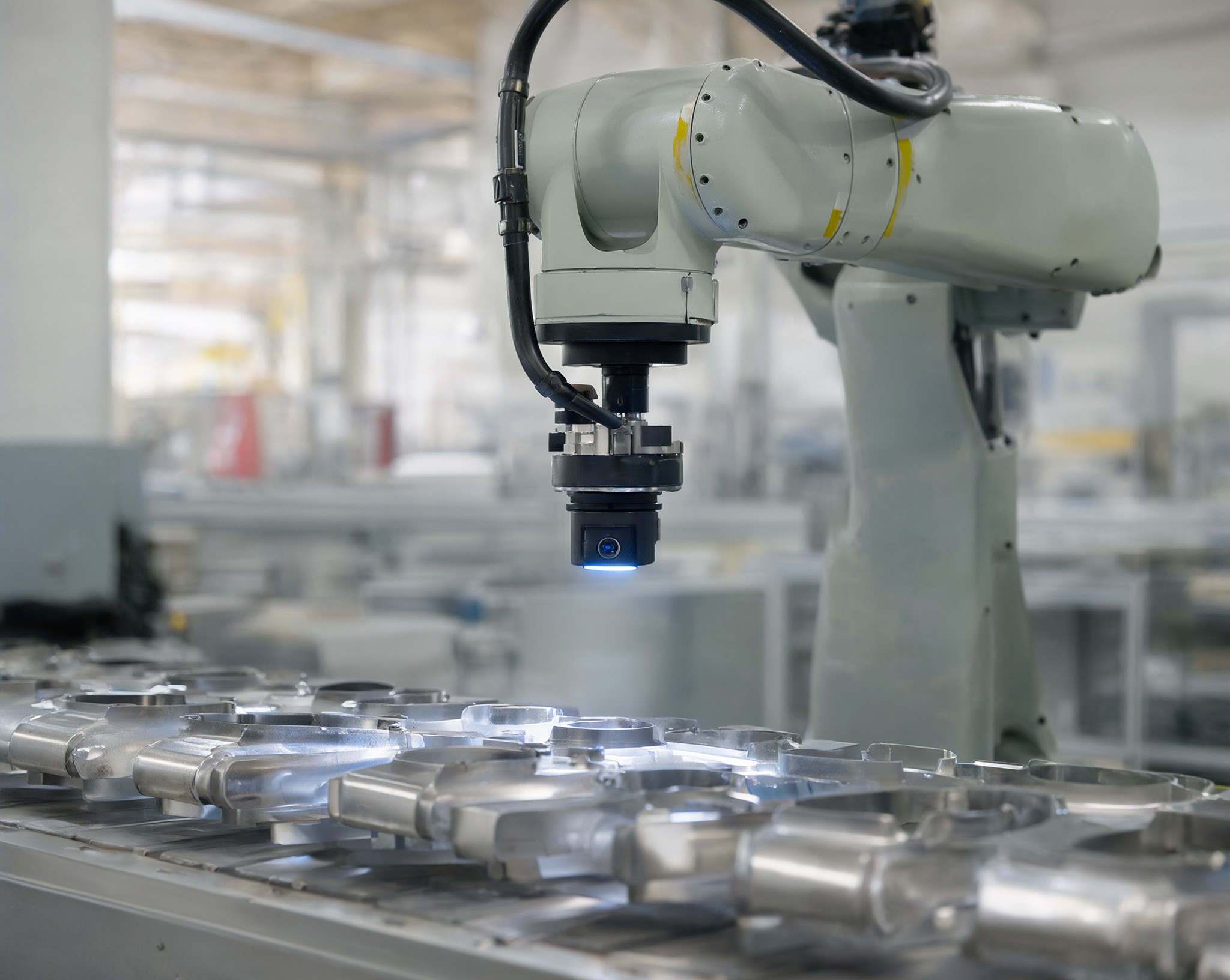
Image by Qwen-Image 2.1
Artificial intelligence (German: Künstliche Intelligenz) includes industrial artificial intelligence (AI), AI agents and the regulation of AI. The European Union (EU) has defined the term by law, in its AI Act: an AI system is based on machines, works more or less autonomously and works out from its input how to produce predictions, content, recommendations, decisions and the like (European Union 2026, p. 5).
Of the EU enterprises with at least ten employees, 19.95 % used at least one AI technology in 2025, and among large enterprises it was 55.03 % (Eurostat 2025a, p. 1). There are limits, too. Enterprises that had considered AI without using it most often named a lack of expertise (70.89 %), unclear legal consequences (52.52 %) and concerns about data protection (48.83 %) (ibid., p. 9). And AI needs electricity: data centres, of which AI is only one use, consumed about 415 terawatt-hours (TWh) in 2024, around 1.5 % of global electricity consumption (IEA 2025b, p. 14).
As a mechatronics engineer, you can analyse sensor data in real time directly on the controller, use image processing for automatic quality control, plan the movements of robots with the help of AI and prove that AI-based machine functions are safe, robust and traceable. As an industrial engineer, you can introduce predictive maintenance, calculate the return on investment of AI, classify applications according to the risk classes of the AI Act and decide where humans keep control.
Your question: ‘Do AI assistants make engineers more productive?’
4.2 Digital twins
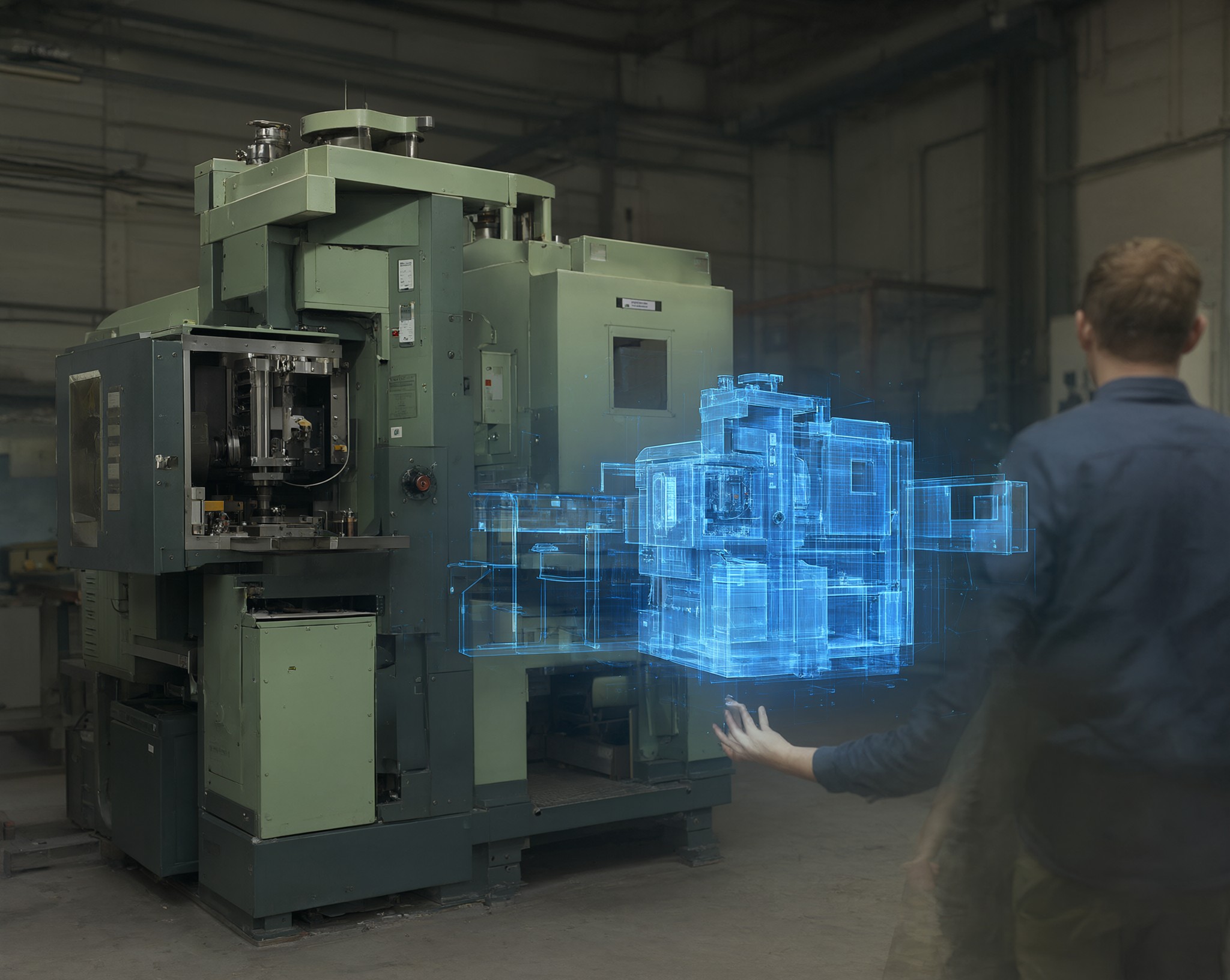
Image by Qwen-Image 2.1
A digital twin (German: digitaler Zwilling) represents the structure, context and behaviour of a system virtually. It is kept up to date with data from its real counterpart, can make predictions and supports decisions (National Academies 2024, p. 1). There is no agreed definition (Voas et al. 2025, p. 2).
For the EU or the world, I have not found a reliable figure. In Germany, 45 % of industrial companies with at least 100 employees used digital twins in production in 2026, and a further 26 % planned to; this comes from a telephone survey by the digital association Bitkom (Bitkom 2026, slides 7, 17). Among the limits: because the real counterpart, the models, the data and the task keep changing, a digital twin has to be verified and validated continuously, and methods and standards for this are still lacking (National Academies 2024, pp. 7–8). In addition, many of the systems involved are proprietary, and integrating them takes a lot of work (Voas et al. 2025, p. 4).
As a mechatronics engineer, you can commission machines virtually and validate control code on the digital model before the physical hardware is built. As an industrial engineer, you can simulate processes and supply chains as a whole, optimize the layout of a factory and analyse costs in real time.
Your question: ‘Do digital twins reduce the time and cost of commissioning machines?’
4.3 Robotics and autonomous systems
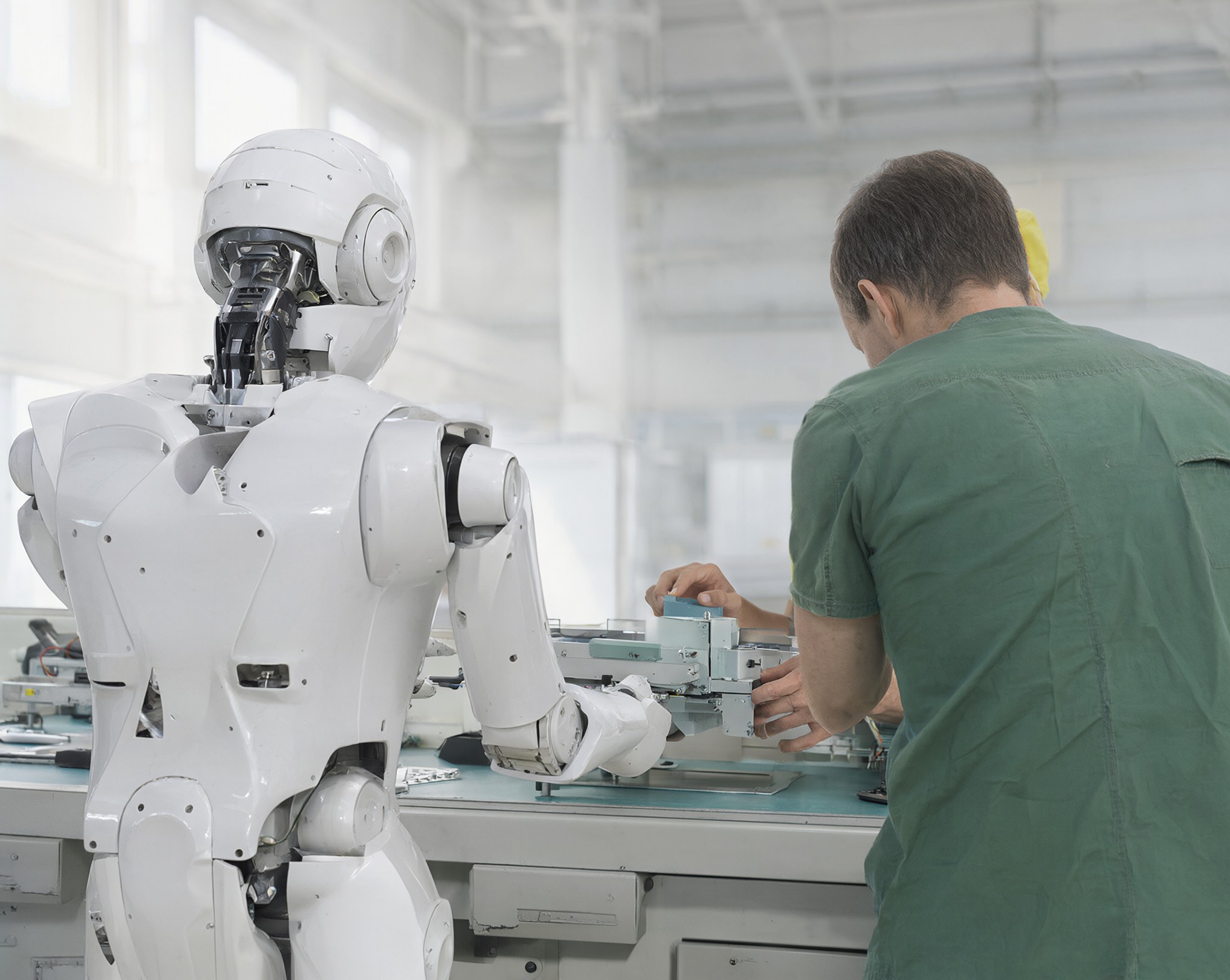
Image by Qwen-Image 2.1
Robotics and autonomous systems (German: Robotik und autonome Systeme) include human-robot collaboration, physical AI and humanoid robots. A collaborative robot (German: kollaborierender Roboter), or cobot, is designed specifically to work directly with humans in a defined workspace; the specification ISO/TS 15066 sets out the safety requirements (Rosen et al. 2022, pp. 7–8).
Worldwide, 542 076 industrial robots were installed in 2024 and 67 819 in the EU, 8 % fewer than the year before; the worldwide stock stood at 4 663 698 (Müller 2025, pp. 13–14). These figures come from the International Federation of Robotics, an association, and rest on reports by robot suppliers and national robotics associations (ibid., imprint). AI that makes machines move on their own, based on what they perceive around them, as in self-driving vehicles, was used by 1.39 % of EU enterprises with at least ten employees in 2025 (Eurostat 2025a, p. 4). The limits lie in safety: tools for assessing the risks of advanced robots are still rare, and according to the experts interviewed, the standards pay too little attention to how robots are actually used at the workplace (Rosen et al. 2022, p. 33).
As a mechatronics engineer, you can design flexible end effectors, integrate sensors such as light detection and ranging (LiDAR) and 3D cameras, implement functional safety according to the standard ISO 13849 for direct collaboration between humans and robots and train robots in simulation before you transfer the result to real hardware. As an industrial engineer, you can assess ergonomics and occupational safety, manage the change that robots bring, examine where they can be used in logistics and assembly and consider the effects on work organization.
Your question: ‘Do collaborative robots pay off compared with conventional industrial robots?’
4.4 Additive manufacturing and smart materials
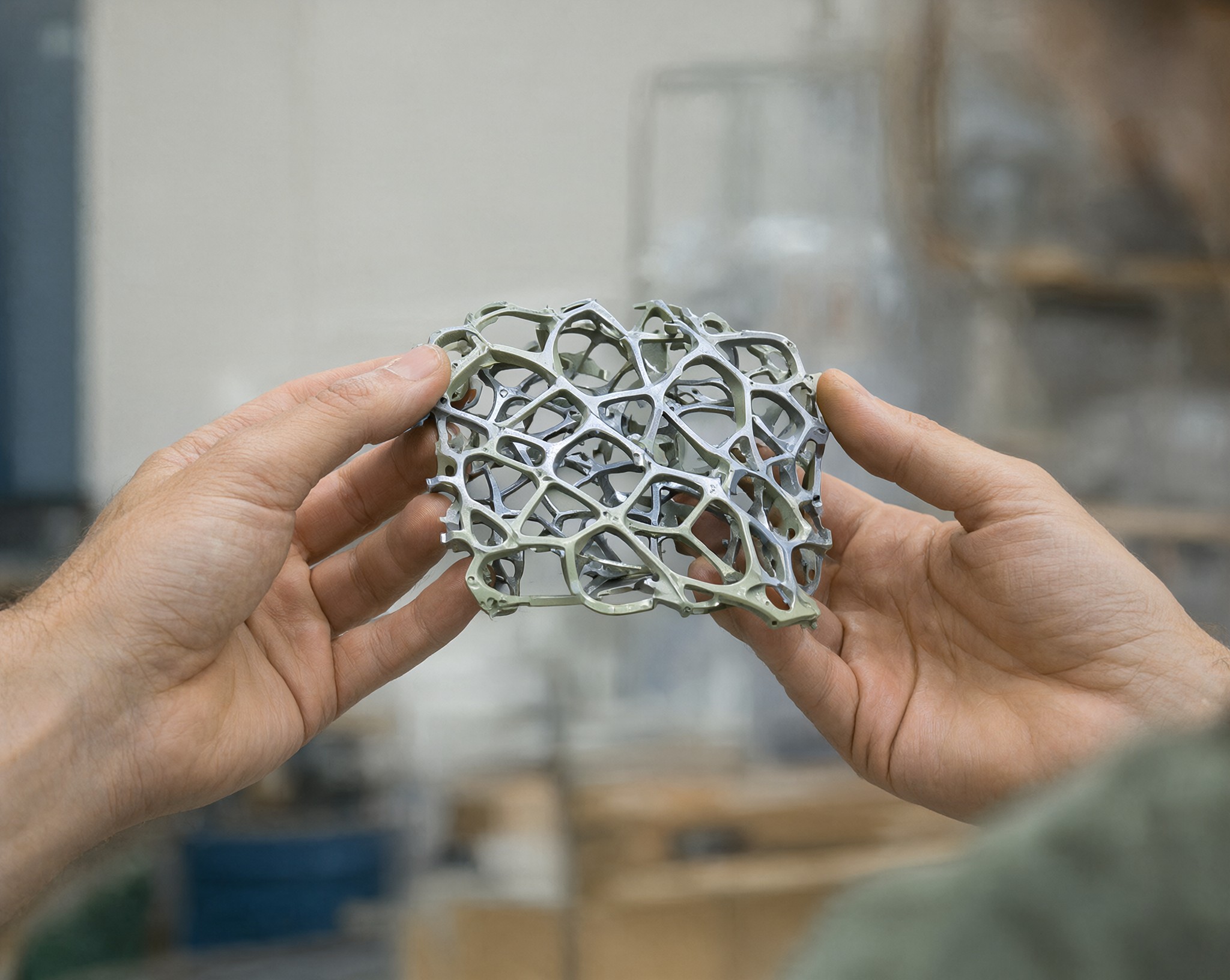
Image by Qwen-Image 2.1
Additive manufacturing (German: additive Fertigung), also known as 3D printing, builds parts from 3D model data by joining material, usually in layers – unlike methods that remove material or shape it (EPO 2023, p. 7). Among smart materials (German: intelligente Werkstoffe) in this trend, I count shape memory alloys: thermal or mechanical stimuli make them undo large deformations, and they build up high stresses in the process (Benafan et al. 2015, p. 2).
Worldwide revenue from additive manufacturing reached 24.2 billion US dollars (USD) in 2025, according to a trade magazine that reports on the Wohlers Report, a market study for sale (Davies 2026). I found no official figure for the revenue. In 2020, more than 8 090 international patent families concerned additive manufacturing (EPO 2023, p. 9). A limit lies in the processes of qualification and certification, which the European Patent Office counts among the obstacles to wider use (ibid., p. 23).
As a mechatronics engineer, you can develop parts with integrated functions, such as printed conductors or integrated cooling channels, build lightweight structures and apply shape memory alloys. As an industrial engineer, you can change supply chains towards production on demand, decentralize production and calculate unit costs for small batches.
Your question: ‘Is additive manufacturing more sustainable than conventional manufacturing?’
4.5 Energy systems and electrification
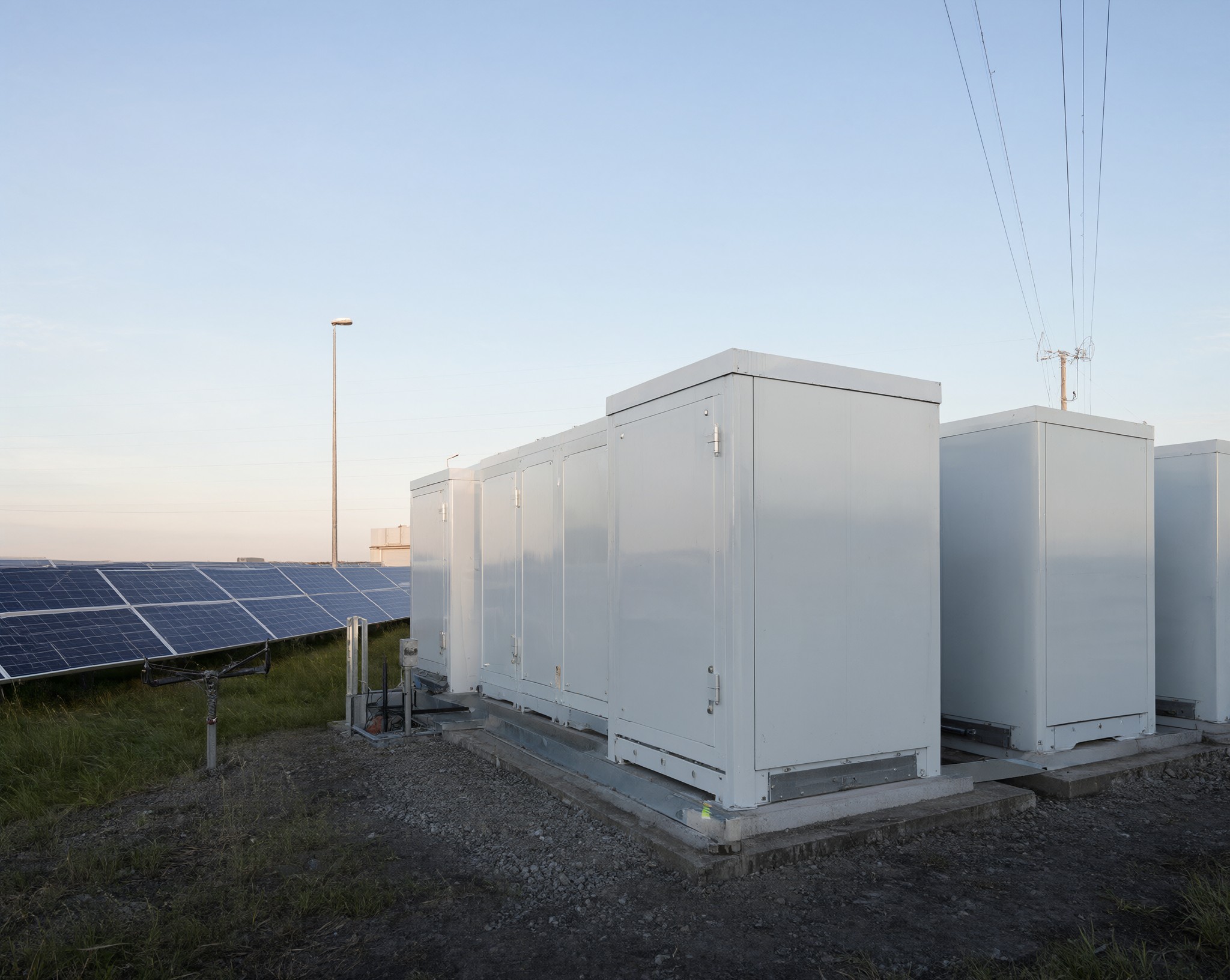
Image by Qwen-Image 2.1
Electrification (German: Elektrifizierung) means that end uses run on electricity instead of other fuels (IEA 2025a, p. 336). Energy systems (German: Energiesysteme) in this trend include renewable energy, hydrogen, battery storage and electricity grids, which the International Energy Agency (IEA) counts among clean energy (ibid., p. 478). A smart electricity grid can integrate everyone connected to it cost-efficiently and actively control what they do (European Union 2022, p. L 152/58).
Electricity covered 21 % of total final energy consumption worldwide in 2024 (IEA 2025a, pp. 19, 196), and more than 680 gigawatts (GW) of renewable capacity were added in 2024 (ibid., p. 40). The limits lie in the grid and in raw materials. Solar and wind projects with a total of some 2 800 GW are waiting to be connected (ibid., p. 147), and a single country is the leading refiner of 19 out of 20 strategic minerals for energy (ibid., p. 18).
As a mechatronics engineer, you can develop fuel cell and electrolysis systems, power electronics for renewable energy and battery systems with battery and thermal management, and you can electrify drives and process heat, for example with heat pumps. As an industrial engineer, you can determine the carbon footprint according to the standard ISO 14067, carry out energy efficiency audits, consider costs over the life cycle, secure critical raw materials such as lithium, cobalt and rare earths and plan the second use and recycling of batteries.
Your question: ‘Are battery-electric or hydrogen trucks the better choice for long-haul freight?’
4.6 Connected and software-defined production
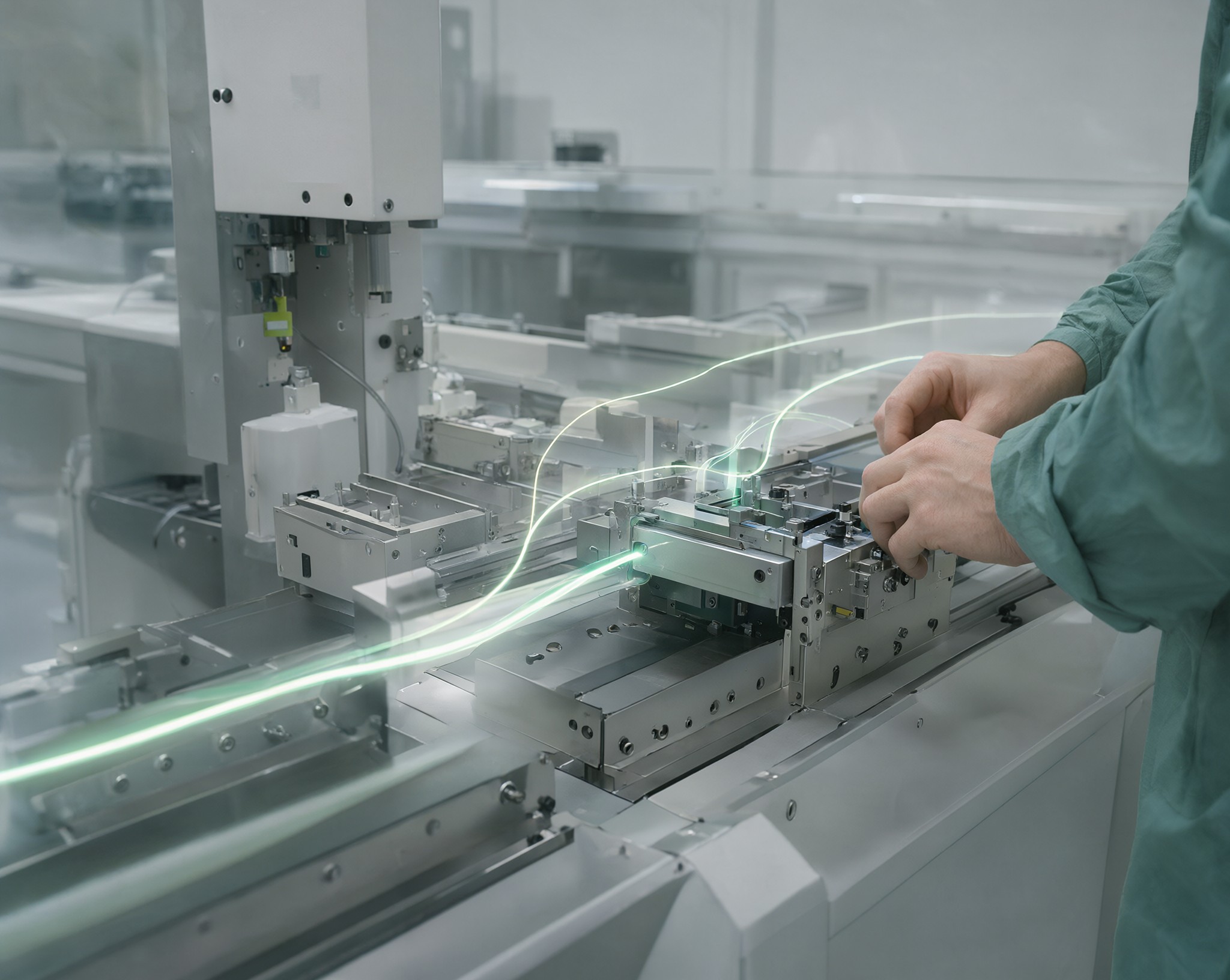
Image by Qwen-Image 2.1
Connected and software-defined production (German: vernetzte und softwaredefinierte Produktion) includes the Industrial Internet of Things (IIoT), in which sensors, machines and other devices are networked and use the internet to improve industrial processes (Stouffer et al. 2023, p. 26). With edge computing, computing power sits at points along the way from where data arise to the cloud (ibid., p. 27). The standard IEC 61499 separates control logic from communication and lets software be developed independently of the hardware it later runs on (Ashiwal et al. 2025, p. 575).
By the end of 2025, the EU had 689 private networks of the fifth generation of mobile communications (5G), more than 500 of them in Germany; a private 5G network serves a single organization only, and part of the data are estimates (IDATE and Schuman Associates 2026, pp. 10, 69, 74, 104). The limits: the EU member states regulate access to frequencies differently, which fragments the market (ibid., p. 69), and IEC 61499 has been around since 2005, but it is still not widely used, because the older IEC 61131-3 has a head start and better support from tools and vendors (Ashiwal et al. 2025, pp. 575–576).
As a mechatronics engineer, you can connect sensors and actuators via fieldbus systems or 5G campus networks, program edge devices, run control logic as software on standard hardware (virtual programmable logic controllers), program independently of the vendor according to IEC 61499 and keep machines up to date with updates and new functions over their whole life. As an industrial engineer, you can build platform architectures, develop pay-per-use models on the basis of machine data and functions that can be unlocked later, reduce dependence on individual vendors of controllers and consider the cost of maintaining software over the life cycle.
Your question: ‘Does 5G in factories offer benefits that Wi-Fi cannot?’
4.7 Cybersecurity of operational technology
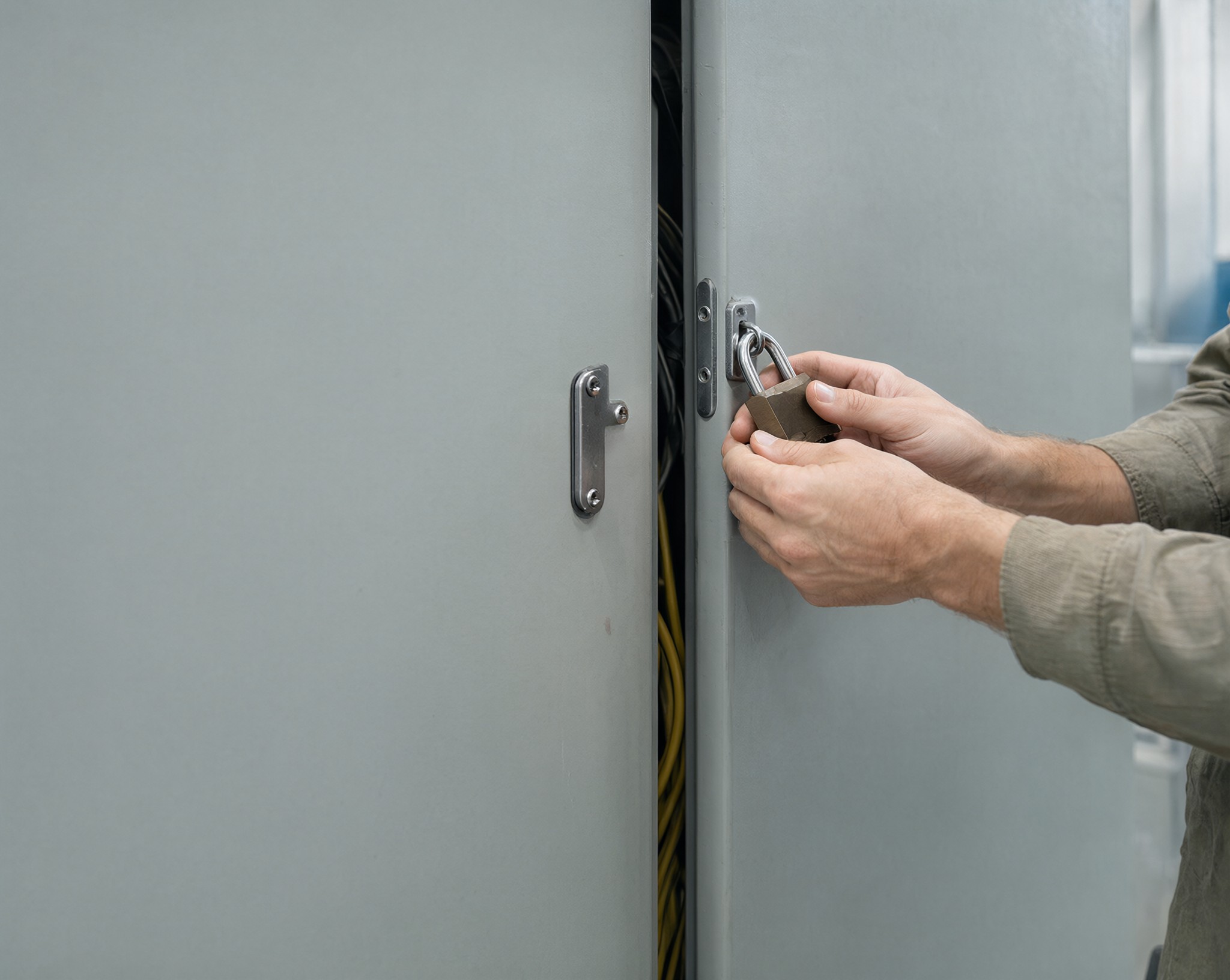
Image by Qwen-Image 2.1
The cybersecurity of operational technology (German: Cybersicherheit der Betriebstechnik) is about programmable equipment that senses or changes the physical world, such as industrial control systems. Operational technology (German: Betriebstechnik) is the term for them (Stouffer et al. 2023, p. 8). I also count two sets of rules of the EU that can apply to operational technology (OT): the Cyber Resilience Act applies to software and hardware products that can connect to a device or network (European Union 2024b, pp. 28–29), and the Network and Information Security Directive (NIS2) sets out how essential and important entities must manage cybersecurity risks (ibid., p. 4).
In its report of 2026, the European Union Agency for Cybersecurity (ENISA) analysed 8 257 incidents from the year 2025, mainly from open sources (ENISA 2026, p. 9). Manufacturing ranks fourth with 6.9 % of the recorded events (ibid., p. 31); among the ransomware attacks that the attackers themselves have claimed, it has the highest share, 25.2 % (ibid., p. 49). In the publicly reported cases, the incidents in manufacturing continued to hit core systems of information technology (IT) (ibid., p. 32). The Cyber Resilience Act applies in general from 11 December 2027, but its reporting obligations for manufacturers have applied since 11 September 2026 (European Union 2024b, pp. 38, 67). The limits lie in the nature of OT: updates have to be tested thoroughly and outages planned days or weeks in advance (Stouffer et al. 2023, pp. 29–30), and such systems often remain in use for 10 to 15 years or longer (ibid., p. 30).
As a mechatronics engineer, you can protect controllers, field devices and production networks through security by design, network segmentation and secure update processes, guided by the standard IEC 62443. As an industrial engineer, you can take charge of risk management and emergency planning, implement the Cyber Resilience Act and the NIS2 Directive and protect the company against attacks via its suppliers.
Your question: ‘Should a company hit by ransomware pay the ransom?’
4.8 Microelectronics and power semiconductors
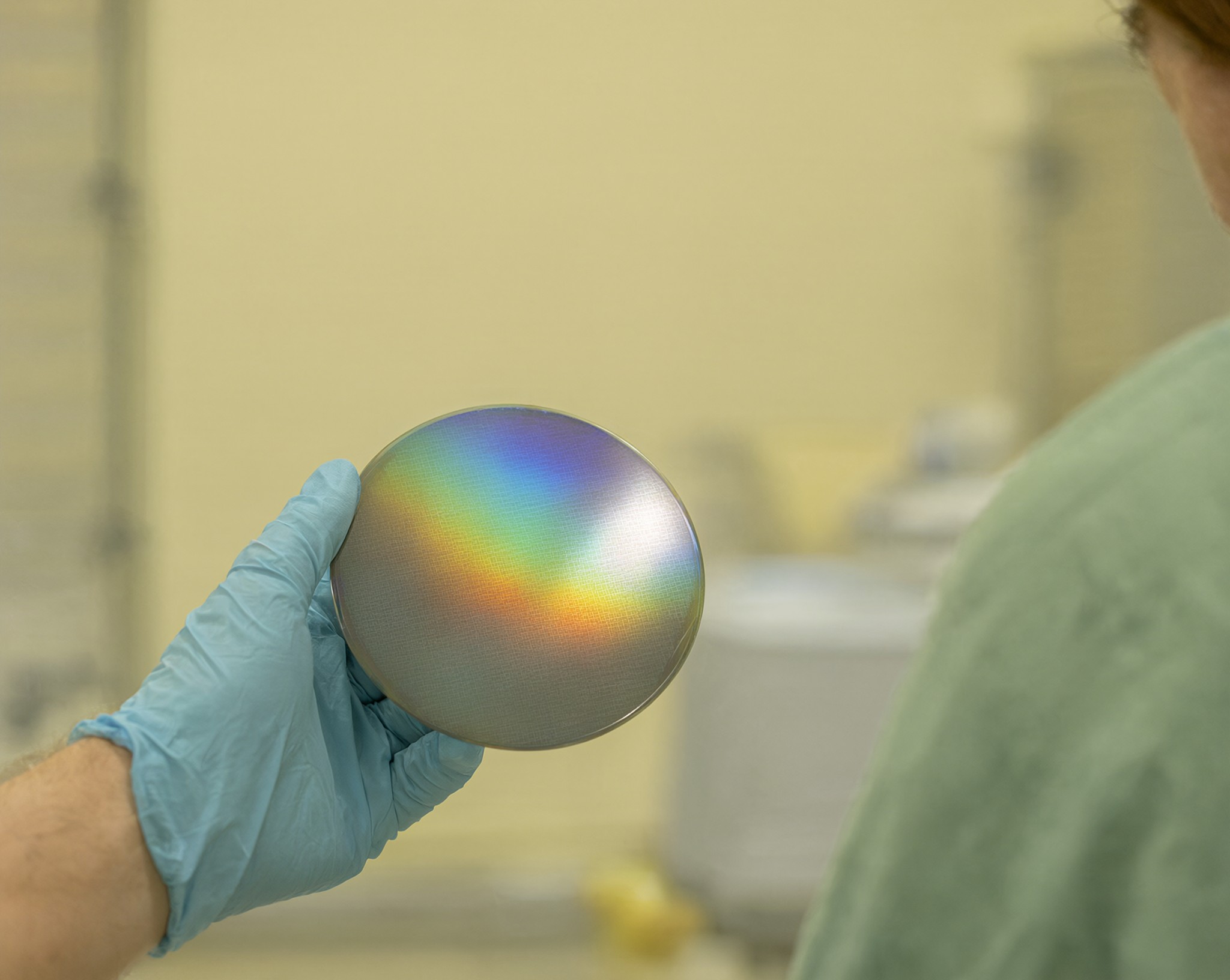
Image by Qwen-Image 2.1
A microchip is a small electronic component made of semiconductor material, usually silicon, with etched or printed circuits (ECA 2025, p. 4). Power semiconductors (German: Leistungshalbleiter) are at the core of power electronic systems (US DOE 2022, p. vii). For its study, the same report distinguishes semiconductors with a wide band gap, such as silicon carbide (SiC) and gallium nitride (GaN), which control and convert flows of power, from conventional semiconductors, which control flows of data (ibid., p. 2). Microelectronics (German: Mikroelektronik) in this trend also includes microcontrollers and embedded systems.
Worldwide sales of semiconductors came to USD 795.6 billion in 2025, which is 26.2 % more than in 2024 (WSTS 2026, p. 1). This figure comes from a non-profit organization of the manufacturers themselves (ibid., p. 2), and it does not show power semiconductors separately. The EU aims for a 20 % share of the global market, but only 11.7 % is forecast for 2030 (ECA 2025, p. 7). The limits lie in the supply chain: it is very exposed to geopolitical tension (ibid., p. 44), manufacturing is concentrated in East Asia (ibid., p. 48), and China accounts for 95 % of refined gallium worldwide (ibid., p. 43). In the wake of the pandemic, the shortage of chips at German carmakers made their production fall back to the level of 1975 (ibid., p. 5).
As a mechatronics engineer, you can use power semiconductors made of SiC and GaN in inverters and drives and select and integrate microcontrollers and sensor chips in embedded systems. As an industrial engineer, you can develop strategies against shortages, such as second sources, stockpiling and dealing with discontinued components, and assess the dependence on individual countries.
Your question: ‘Is silicon carbide worth its higher price in electric drives?’
4.9 Circular economy and digital product passport
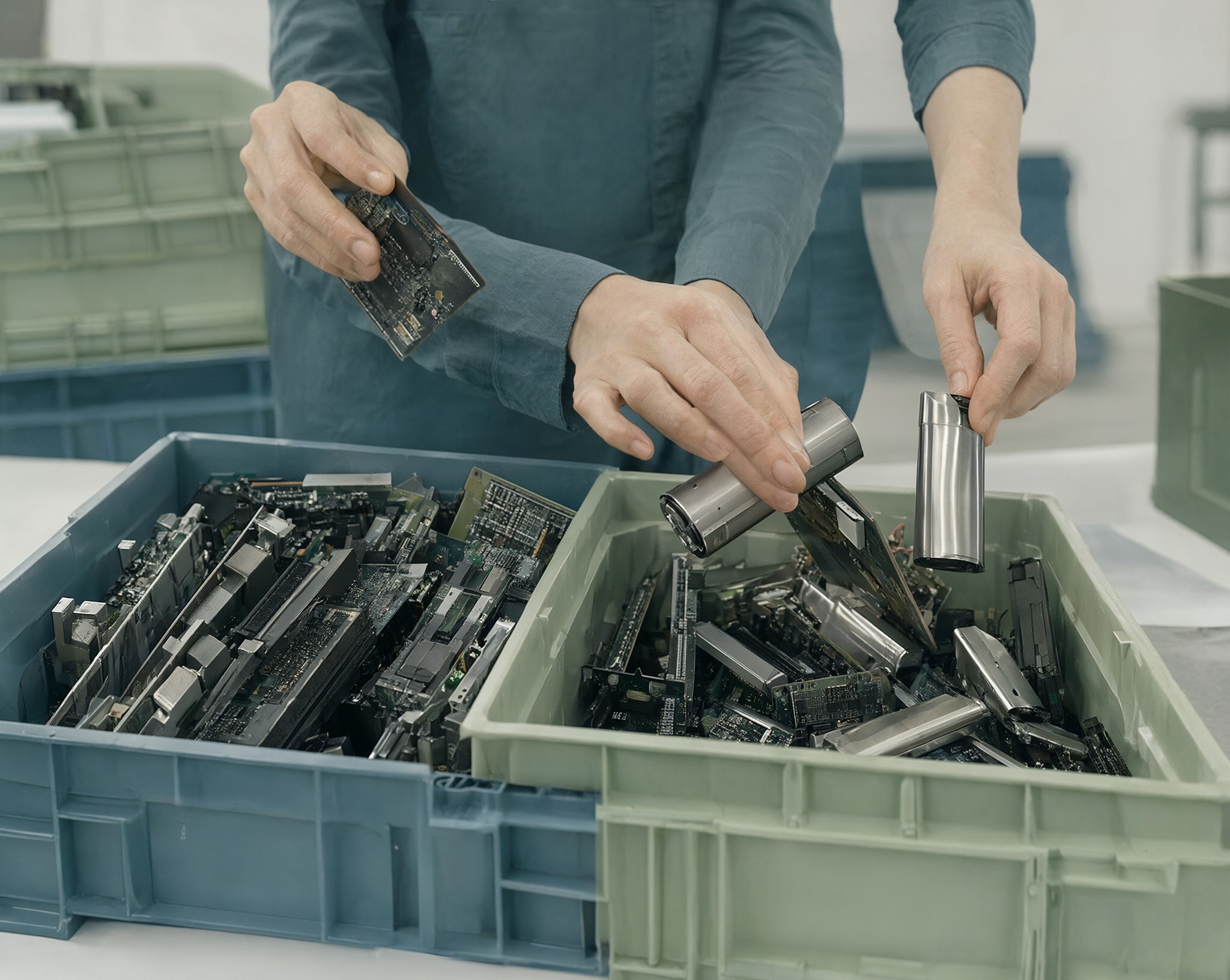
Image by Qwen-Image 2.1
A circular economy (German: Kreislaufwirtschaft) keeps products, materials and resources valuable for as long as possible by feeding them back into the product cycle, and it keeps waste to a minimum (Eurostat 2025b, p. 2). A digital product passport (German: digitaler Produktpass) is a set of data on a specific product that is accessible electronically via a data carrier, such as a barcode (European Union 2024a, p. 28). The trend also includes design for circularity (German: Konstruktion für die Kreislaufwirtschaft) and remanufacturing (German: Wiederaufarbeitung), in which a new product is made from waste, products or components (ibid., p. 27).
Recycled waste supplied 12.2 % of the materials used in the EU in 2024 (Eurostat 2025b, p. 7). According to the regulation as adopted in 2023, certain batteries, including those for electric vehicles, will need a battery passport from 18 February 2027 (European Union 2023a, p. L 191/72). The limits: some materials cannot be recycled at all, such as fossil fuels that are burnt or biomass eaten as food (Eurostat 2025b, p. 8), and as long as buildings and infrastructure need more material than recycling can supply, primary extraction remains necessary (ibid., p. 5).
As a mechatronics engineer, you can design for repair, disassembly and recycling, mark materials and components and remanufacture used components. As an industrial engineer, you can implement the EU Ecodesign Regulation and the digital product passport, such as the battery passport, ensure traceability in the supply chain and develop business models such as take-back, refurbishment and product as a service.
Your question: ‘Will the digital product passport make products more circular?’
4.10 Demographic change and shortage of skilled workers
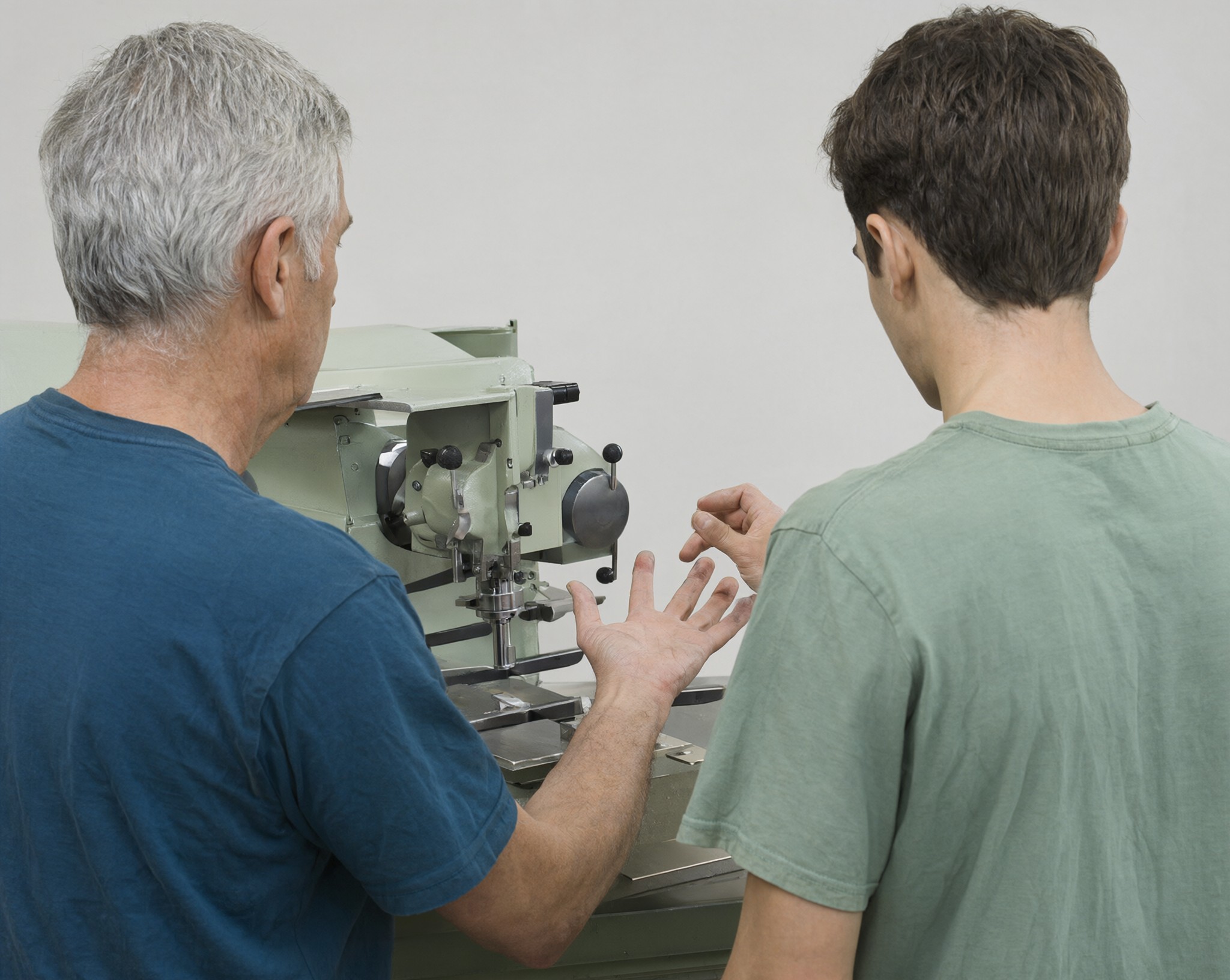
Image by Qwen-Image 2.1
Demographic change (German: demografischer Wandel) means here above all an ageing population: the share of older people grows because life expectancy rises and birth rates fall (ELA 2025, p. 7). The shortage of skilled workers (German: Fachkräftemangel) is a related topic. The report calls it a skills shortage when the demand for a skill exceeds its supply at the market wage, and a labour shortage when enough people have the skills, but too few take up the job (ibid., p. 8); its figures count occupations with either kind of shortage (ibid., p. 16).
Of the 450.6 million people in the EU, 22.0 % were 65 or older on 1 January 2025 (Eurostat 2026a, p. 1). Of the 436 occupations examined, 429 counted as shortage occupations in at least one of the reporting countries in 2024, frequently welders, nursing professionals, cooks and electricians (ELA 2025, pp. 9, 16). Note the limits of these figures: each country sets its own threshold – in Bulgaria, fewer than 20 jobseekers per vacancy; in Austria, fewer than 1.4 (ibid., p. 17). And the shortage cannot be attributed to demography alone: the report also names technological change, among other structural factors (ibid., p. 9).
As a mechatronics engineer, you can automate tasks for which workers are missing and develop assistance systems and ergonomic workplaces for older workforces. As an industrial engineer, you can plan personnel and succession, secure knowledge when people retire and recruit international skilled workers.
Your question: ‘Do ageing workforces reduce the productivity of factories?’
4.11 Geoeconomic fragmentation and resilience
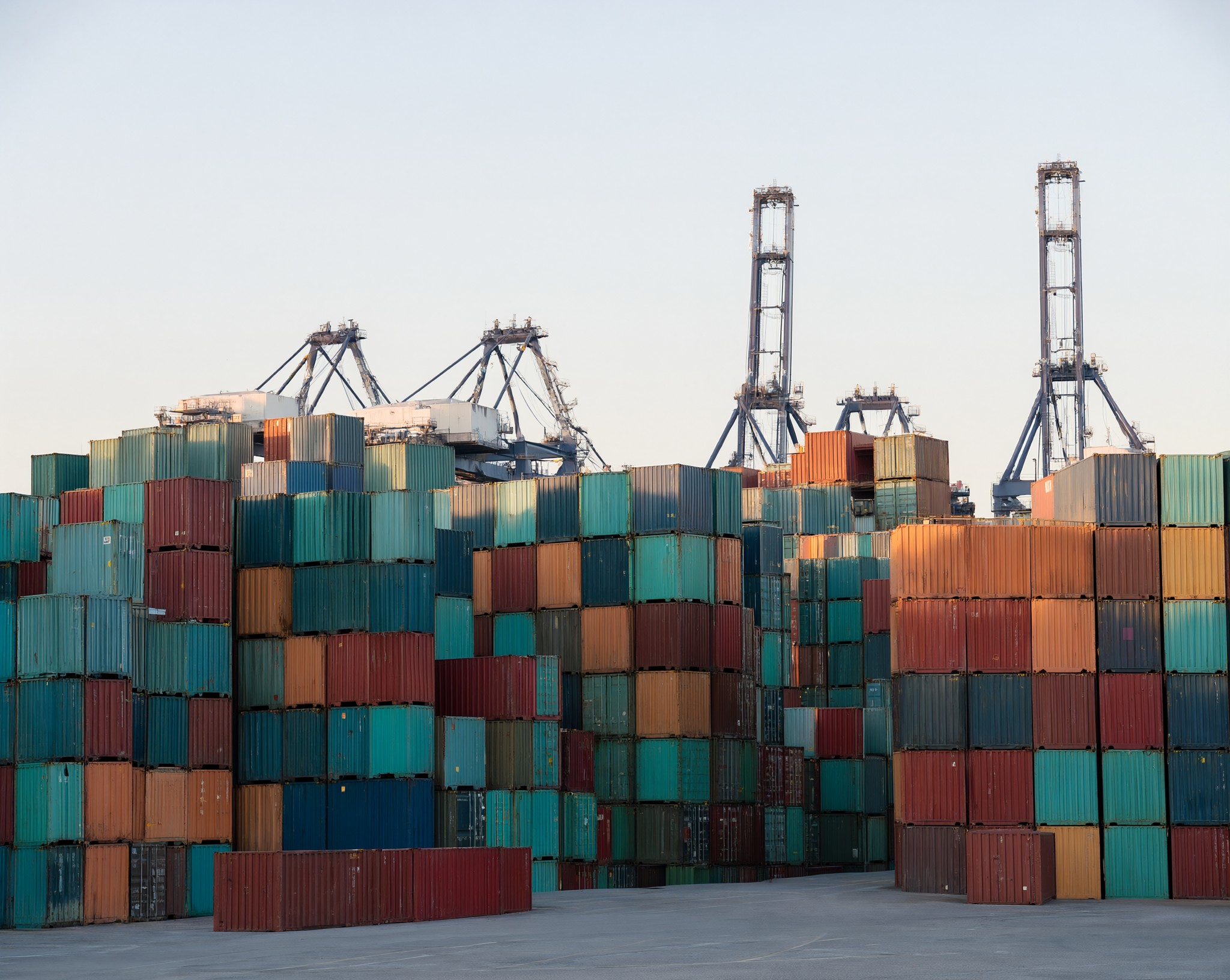
Image by Qwen-Image 2.1
Geoeconomic fragmentation (German: geoökonomische Fragmentierung) is a reversal of global economic integration that is brought about by policy, for reasons of domestic economic policy, geopolitics or strategy (Attinasi et al. 2024, p. 10). Resilience (German: Resilienz) means being able to adapt and transform when something goes wrong; a supply chain counts as resilient if it is soon running steadily again after a disruption (OECD 2025, p. 99).
Under most-favoured-nation (German: Meistbegünstigung) terms, a concession to one member of the World Trade Organization (WTO) must be extended to all (WTO 2026, p. 19). In 2022, roughly 80 % of world trade ran on these terms; in early 2026, it was only about 72 % (ibid., p. 35). The number of import and export restrictions notified on grounds of national security has almost tripled in about a decade (ibid., p. 164). But the trend is selective: overall, trade integration has so far held up against recent shocks, and the decoupling shows up in a few trade relations (Attinasi et al. 2024, p. 5). Nor may it be complete, because goods under restrictions can reach their destination by way of neutral countries (ibid., p. 6).
As a mechatronics engineer, you can design with interchangeable components and second sources and adapt products to regional standards and export regulations. As an industrial engineer, you can diversify supply chains, examine moving production back or to allied countries, known as reshoring and friendshoring, and deal with tariffs and export controls.
Your question: ‘Should companies switch from just-in-time to just-in-case?’
4.12 Security and defence
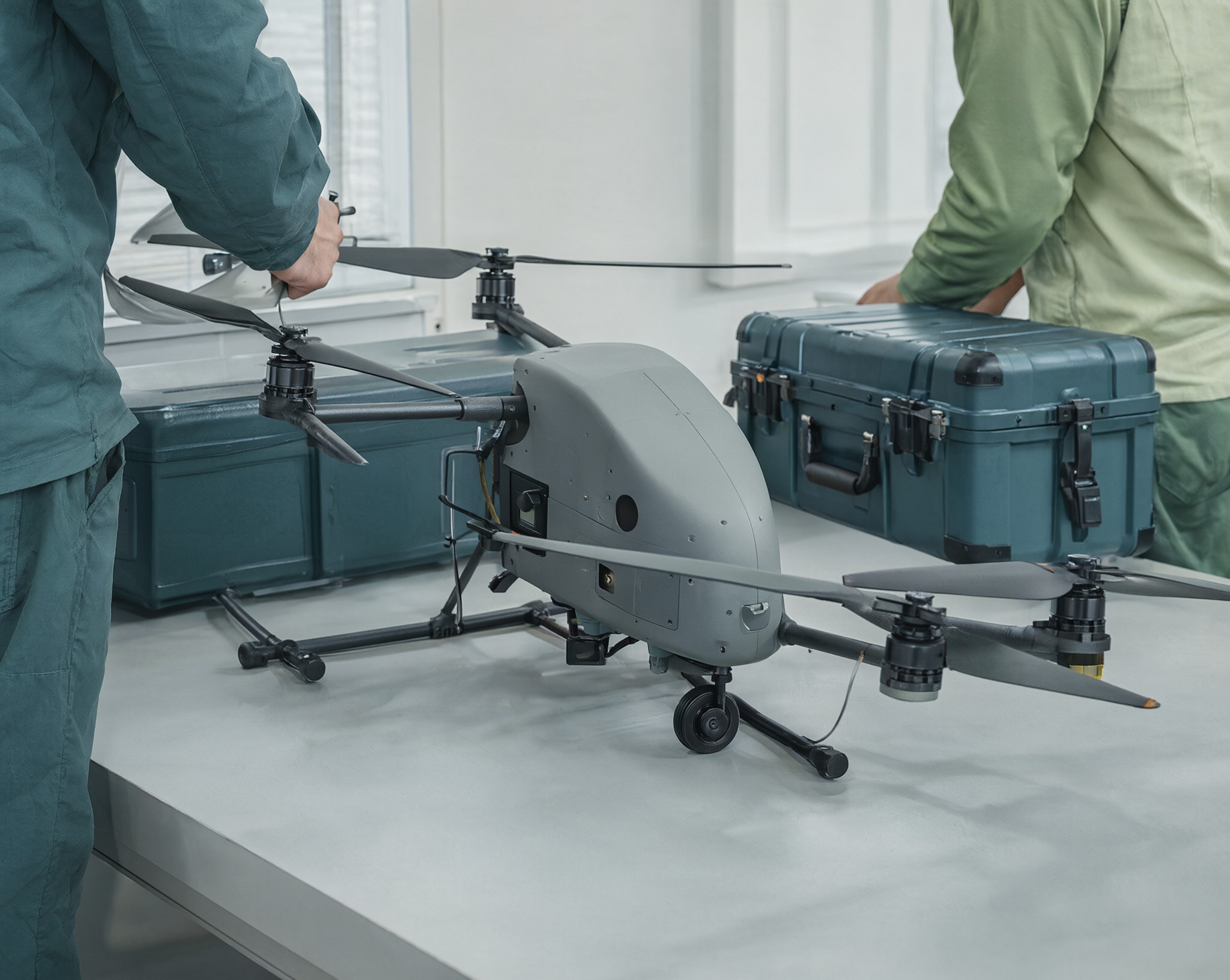
Image by Qwen-Image 2.1
Security and defence (German: Sicherheit und Verteidigung) reach the work of engineers through, among other things, dual use (German: doppelter Verwendungszweck): goods, software and technology that can serve both civil and military purposes (European Union 2021, p. L 206/6). Exporting those listed in the regulation of the EU requires an authorization (ibid., p. L 206/9).
In real terms, world military expenditure grew by 2.9 % to USD 2 887 billion in 2025, the eleventh consecutive year of growth; Europe accounted for USD 864 billion, 14 % more than the year before (Liang et al. 2026, p. 1). The limits: a joint white paper of the European Commission and the High Representative says that the European defence industry does not deliver in the quantities and at the speed needed and remains too fragmented; note that this is a political paper arguing for more spending and joint programmes (European Commission and High Representative 2025, pp. 6, 12–13). And the figures may become less clear: the North Atlantic Treaty Organization (NATO) has so far given little guidance on what counts as its new category of defence- and security-related spending, which makes it harder to define and report military spending (Liang et al. 2026, p. 8).
As a mechatronics engineer, you can develop robust systems for security and defence technology and technologies with both civil and military uses, such as drones, sensors and drives. As an industrial engineer, you can look at the security and defence industry as a market and an employer, deal with the export control of dual-use goods, with security clearances and compliance, and with the protection of critical infrastructure.
Your question: ‘Does military research and development boost civilian innovation?’
4.13 Mobility and urbanization
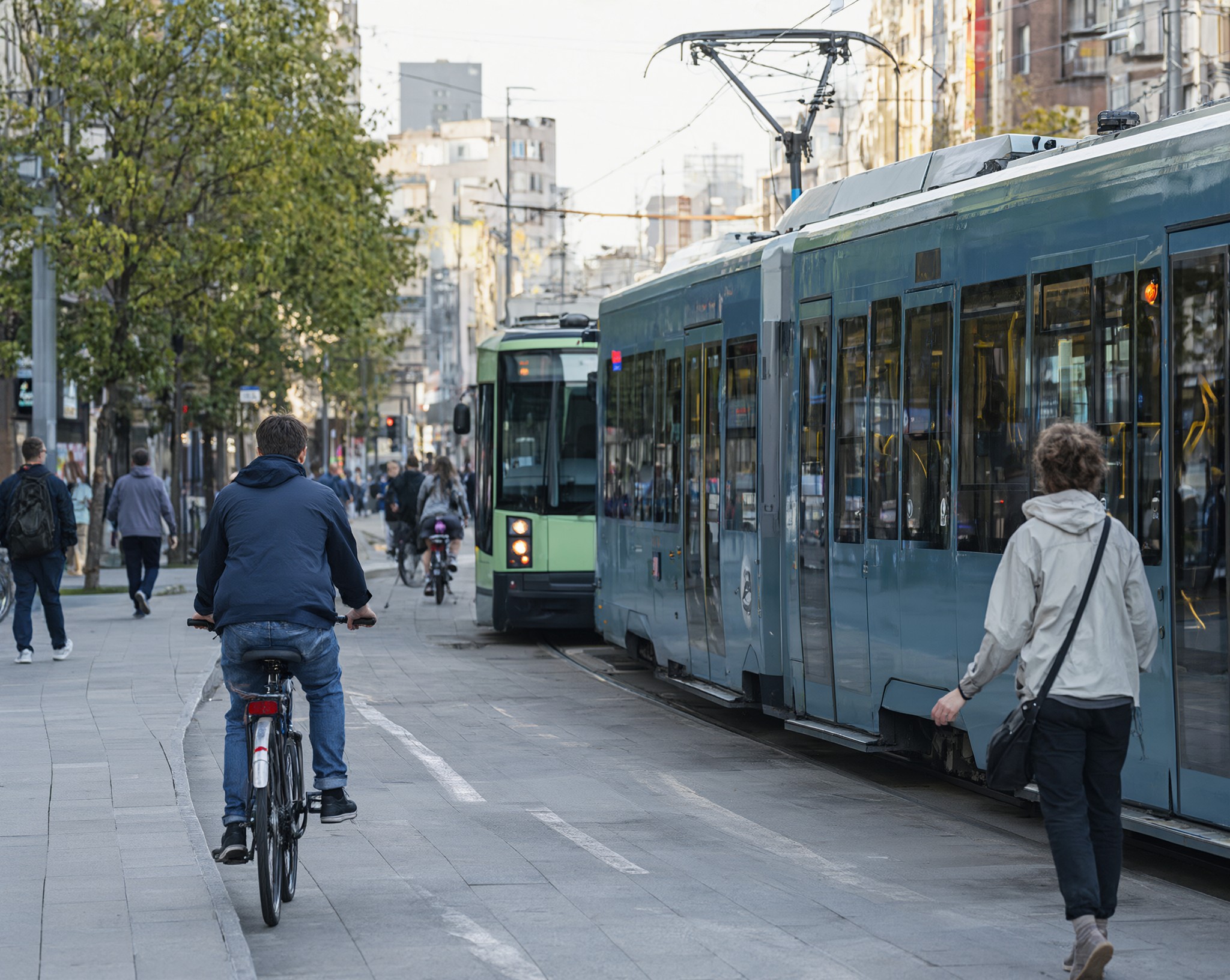
Image by Qwen-Image 2.1
Mobility and urbanization (German: Mobilität und Urbanisierung) belong together here. Urbanization is one of the great demographic shifts: it changes how and where people live and work (UN DESA 2025, p. IX). Target 11.2 of the Sustainable Development Goals calls for ‘access to safe, affordable, accessible and sustainable transport systems for all’ by 2030 (UN Statistics Division 2026, p. 3).
Of the world’s population of 8.2 billion, 45 % lived in cities in 2025 (UN DESA 2025, p. IX). More than 20 million electric cars were sold in 2025, a quarter of all new cars (IEA 2026, p. 10), and at the end of 2025, there were more than 7 million public charging points worldwide (ibid., p. 110). The limits: in a sample of 350 cities, the share of city dwellers who can conveniently reach public transport rose from 51.5 % to 60.4 % between 2020 and 2025, which is not enough given how fast cities are growing (UN Statistics Division 2026, p. 3). And fully autonomous cars (level 5) are not currently in sight, although driverless taxis (level 4) already run as a commercial service in more than 20 cities (IEA 2026, p. 163).
As a mechatronics engineer, you can work on electric drives, on sensors and control for autonomous driving and on charging infrastructure. As an industrial engineer, you can develop logistics concepts for cities, known as the last mile, mobility services as a business model, such as sharing and mobility as a service, and connected transport infrastructure.
Your question: ‘Do cargo bikes make urban deliveries more efficient?’
4.14 Health and care
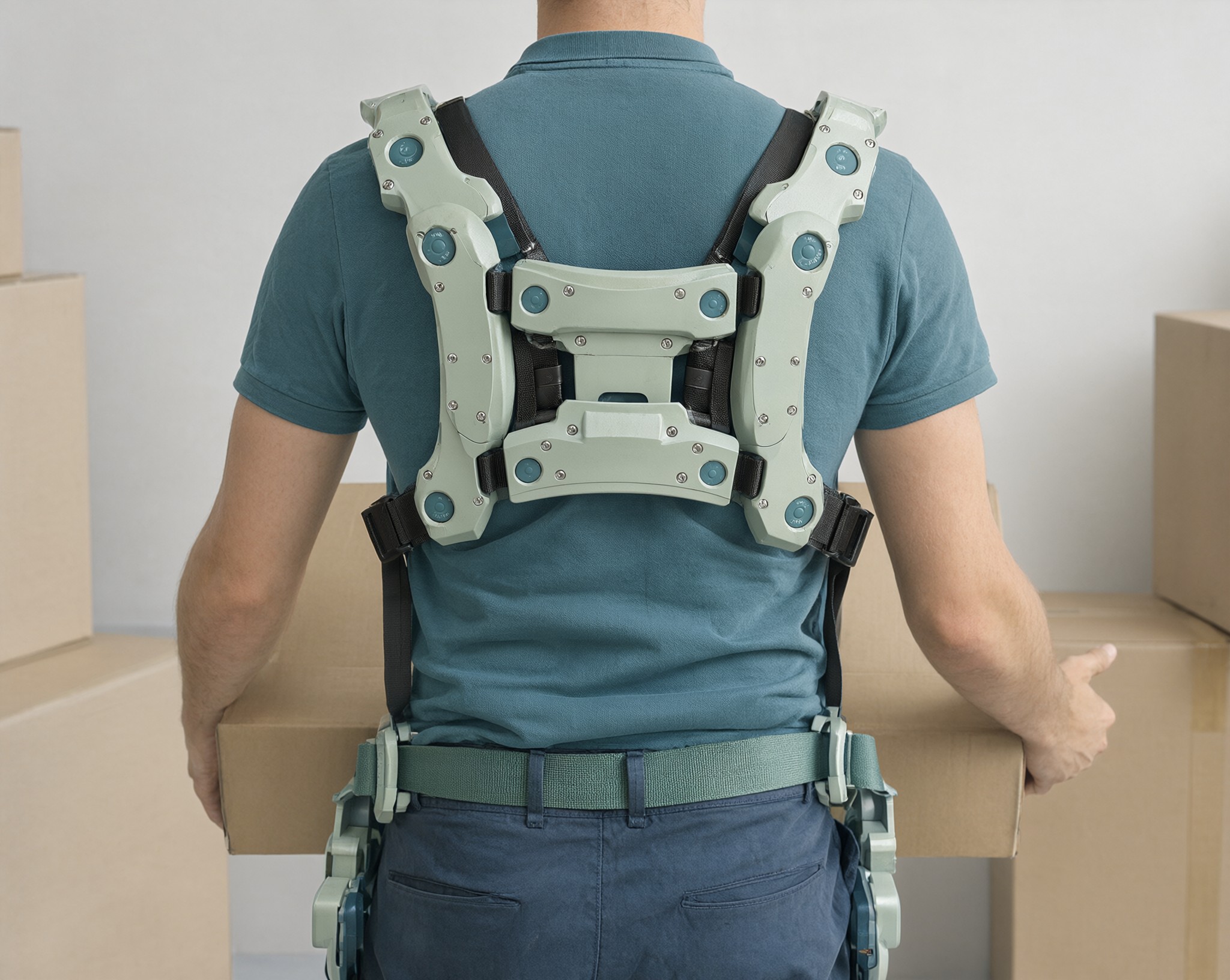
Image by Qwen-Image 2.1
Health and care (German: Gesundheit und Pflege) is a trend because longer lives and fewer births increase the demand for health and long-term care and at the same time reduce the working-age population that finances and provides it (OECD and European Commission 2024, p. 3). For engineers, this field is also regulated: a medical device (German: Medizinprodukt) is any instrument, device, software or other article that the manufacturer intends for specific medical purposes in humans (European Union 2017, p. L 117/15).
The share of people over 65 in the EU is expected to reach 29 % in 2050, up from 21 % in 2023, and in 2022, the EU had an estimated shortage of about 1.2 million doctors, nurses and midwives, measured against minimum staffing thresholds (OECD and European Commission 2024, p. 13). The limits: young people’s interest in nursing declined in more than half of the EU countries between 2018 and 2022 (ibid., p. 13). And the approval of medical devices is a bottleneck: in 2023, the capacity of the bodies that assess conformity was still not sufficient, and the EU extended the transitional periods (European Union 2023c, p. L 80/25).
As a mechatronics engineer, you can work on medical technology, on care and rehabilitation robotics and on exoskeletons for physical work. As an industrial engineer, you can deal with health protection and ergonomics at work, the approval requirements for medical devices and the markets of the health economy.
Your question: ‘Can robots relieve the staff in elderly care?’
4.15 Individualization
Image by Qwen-Image 2.1
Individualization (German: Individualisierung) in manufacturing mainly means mass customization (German: kundenindividuelle Massenfertigung): goods and services are developed, produced and delivered in so many variants that nearly everybody finds what they want, mostly through modular design, flexible processes and integrated supply chains (Mourtzis 2016, pp. 3–4). In personalization, customers go a step further and help to design the product (ibid., pp. 4–5).
I have found no statistics on mass customization for the EU or the world. A survey from 2023 covered 117 small and medium-sized enterprises in the Polish automotive industry: 55.56 % allowed customers to take part in product design, and 41.88 % had a highly flexible assembly line (Patalas-Maliszewska et al. 2025, pp. 22–23). That is one sector in one country, no more. The limits: how far a company has put mass customization into practice cannot yet be measured uniformly (ibid., p. 18). And online configurators do not solve the question of how the individual variants are to be assembled (Mourtzis 2016, p. 5).
As a mechatronics engineer, you can build adaptable manufacturing systems for batch size 1 and product configurators with a direct link to manufacturing, and you can use additive manufacturing. As an industrial engineer, you can organize mass customization, manage variants and calculate the costs of individual products.
Your question: ‘Does mass customization pay off for manufacturers?’
4.16 Neo-ecology and climate change

Image by Qwen-Image 2.1
Neo-ecology (German: Neo-Ökologie) is a term from the Zukunftsinstitut, a German futures institute with commercial offers of its own: an ecological view extended by economic and technological approaches. The institute itself now speaks of a further development, ‘Ökointelligenz’ (Zukunftsinstitut 2023). I have not found a peer-reviewed or official definition. Climate change (German: Klimawandel), by contrast, is well documented: in 2025, the global temperature was 1.43 ± 0.13 °C above the average of 1850 to 1900 (WMO 2026, p. 1).
For companies, climate policy has a price. Carbon pricing (German: CO₂-Bepreisung) comprises emissions trading systems and carbon taxes. On 1 April 2026, there were 87 direct instruments, which covered 29 % of global greenhouse gas emissions (World Bank 2026a, pp. 5, 13). The limits: most emissions therefore have no direct carbon price, and prices differ widely, from an average of USD 68 per tonne of carbon dioxide (CO₂) equivalent in Europe and Central Asia to USD 2 in the Middle East and North Africa (ibid., p. 22). Note that the World Bank itself aims to support carbon pricing (ibid., p. 3).
As a mechatronics engineer, you can develop energy-efficient drives and plants, electrify processes and adapt technology to the consequences of climate change, such as heat and heavy rain. As an industrial engineer, you can treat carbon prices and emission targets as a cost factor, take care of sustainability reporting and deal with what customers require of environmentally friendly products.
Your question: ‘Are customers willing to pay more for climate-friendly products?’
4.17 Economic uncertainty
Image by Qwen-Image 2.1
Economic uncertainty (German: wirtschaftliche Unsicherheit) goes back to a distinction by Frank Knight: uncertainty means that you cannot say how likely an event is, whereas with risk the probabilities are known, as with tossing a coin (Bloom 2013, p. 3).
The World Uncertainty Index reached its highest value so far, 106 862, in the third quarter of 2025; in the third quarter of 2026, it stood at 72 717 (FRED 2026). The commodity price index of the World Bank stood at 98.4 in 2025 and is forecast to reach 121.1 in 2026 and 112.6 in 2027 (World Bank 2026b, p. 12). The limits lie in the measurement itself: no single measure captures uncertainty perfectly, and all we have are proxies (Bloom 2013, p. 3). The index, for example, counts how often the word occurs in the quarterly country reports of the Economist Intelligence Unit (FRED 2026). And forecasts rest on assumptions, such as no major escalation of the conflict in the Middle East (World Bank 2026b, p. 1).
As a mechatronics engineer, you can develop modular and scalable products and plants that can be adapted to fluctuating demand. As an industrial engineer, you can plan scenarios, design flexible cost structures and manage liquidity and risk when the prices of energy and raw materials fluctuate.
Your question: ‘Should companies cut investment in times of economic uncertainty?’
4.18 Connectivity
Image by Qwen-Image 2.1
Connectivity (German: Konnektivität) means here that products, machines and people are linked by networks. The EU defines a connected product as an item that collects data on its use or environment and can pass them on (European Union 2023b, p. 34). Related services, such as software that later adds to or updates its functions, are part of it (ibid., p. 34).
Of the world’s population, 74 % were online in 2025; that is 6 billion people (ITU 2025, p. 1), and 5G networks reached 55 % of the world’s population (ibid., p. 9). The limits: connected products bring risks, and the EU names a low level of cybersecurity, widespread vulnerabilities and inconsistent security updates (European Union 2024b, p. 1). And connectivity is unevenly distributed: 2.2 billion people are offline (ITU 2025, p. ii), and 5G covers 84 % of the population in high-income countries, as against 4 % in low-income countries (ibid., p. 9).
As a mechatronics engineer, you can develop connected products with remote maintenance and over-the-air updates and work with open interfaces and communication standards. As an industrial engineer, you can deal with the platform economy, data-based services and the changing habits of customers in finding information and buying.
Your question: ‘Does selling services instead of machines pay off for machine builders?’
4.19 Ethics of digitalization and disinformation
Image by Qwen-Image 2.1
The ethics of digitalization (German: Ethik der Digitalisierung) shows up in law, among other places. In the EU, people are in principle protected from purely automated decisions that significantly affect them (European Union 2016, p. L 119/46), and data protection has to be built into processing from the start (ibid., p. L 119/48). Disinformation (German: Desinformation) has no clear definition; what the common descriptions share is that the information is inaccurate, meant to deceive and spread to cause serious harm (United Nations 2022, p. 2).
In 2026, on average 62 % of respondents across 48 markets were worried about whether what they see online is real, four percentage points more than the year before; this is an online survey that represents the online population (Egan et al. 2026). By 2022, civil society organizations had counted at least 83 states with new laws on ‘fake news’, disinformation and defamation (United Nations 2022, p. 12). The limit: measures against disinformation can themselves infringe rights, because laws with vague terms often run counter to human rights law and restrict permitted content (ibid., p. 12).
As a mechatronics engineer, you can design automated decisions so that they are traceable, fair and safe, and you can apply privacy by design. As an industrial engineer, you can draw up company guidelines for data and AI, protect the company against disinformation and manipulated content and work on the trust of customers and employees.
Your question: ‘Can watermarks reliably identify AI-generated content?’
4.20 New work and lifelong learning

Image by Qwen-Image 2.1
Under new work (German: New Work), I count here changing forms of work, such as telework and hybrid work (German: hybride Arbeit), which combines telework with work on the employer’s premises (WHO and ILO 2021, p. 1), and new ways of organizing work, such as agile development. Eurostat measures lifelong learning (German: lebenslanges Lernen) by the participation of adults aged 25 to 64 in education and training (Eurostat 2026b, p. 1).
The survey of 2022 found that 46.6 % of this age group in the EU had taken part in education or training in the previous twelve months; the target for 2030 is that at least 60 % of adults take part every year (ibid., p. 1). Among the employed aged 15 to 64, the share who usually worked from home in 2025 was 8.8 %, and the share who sometimes did so was 14.2 % (Eurostat 2026c). The limits: participation is uneven, as younger people, the employed and people with tertiary education take part more often (Eurostat 2026b, p. 5). And telework can put a strain on psychosocial well-being, for example through longer working hours and isolation (WHO and ILO 2021, p. 7).
As a mechatronics engineer, you can take further training throughout your working life and work in distributed, international development teams with digital tools. As an industrial engineer, you can organize hybrid and flexible working models, the reskilling and upskilling of workforces and new forms of leadership and organization.
Your question: ‘Does agile development work as well for physical products as for software?’
5 What have you learnt today? – Summary and answers to the guiding questions
5.1 The building blocks of knowledge
- What a future trend is: a development that can be observed today and is changing the work of engineers; a trend tells you that something is under way, not how it will end.
- The trends and your job profile: nine technological and eleven social trends, each with its own focus for mechatronics engineers and industrial engineers; they change what engineers work on and what they need to be able to do.
- Types of sources: scientific literature and grey literature in three tiers, depending on the expertise of the producer and on outlet control; the answer of an artificial intelligence (AI) service is never a source.
- Publications funded by industry and their interests: who wrote a publication, who paid for it and who benefits; you find out from the affiliations, the funding and the conflicts of interest. An interest does not make a statement wrong, but it is a reason to ask further.
- What a study has examined and how: what was measured, compared with what, in which case and under which conditions; figures can only be compared if they measure the same thing.
- The same question twice: the same question, word for word, to the same AI service, and a comparison of the two answers; two answers that agree can both be wrong.
- Phase 2 step by step: your trend, your pair, your question and your own answer today; AI service and source package until FTS-06; exchange in your trend group and poster in FTS-06; upload by Wednesday 18 November 2026 at 23:55; elevator talk in FTS-07, in 60 to 90 seconds.
- The 20 trends one by one: what each trend is about, where it stands and where its limits lie, what mechatronics engineers and industrial engineers can do with it, and its question for phase 2.
5.2 Answers to the guiding questions
Which future trends are changing the work of mechatronics engineers and industrial engineers?
Nine technological trends, from artificial intelligence (AI) to the circular economy and the digital product passport, and eleven social trends, from demographic change to new work and lifelong learning. The same trend has a different focus for each degree programme, and together they change what engineers work on and what they need to be able to do.
How do you evaluate a source?
You ask what type of source it is and who checked it before it appeared. You ask who wrote it, who paid for it and who benefits, and you look at the affiliations, the funding and the conflicts of interest. You ask what exactly was measured, compared with what and under which conditions. An AI answer is never a source; you put the same question to the service twice and compare the answers, and you check them against the sources.
How do you take steps 1 to 4 for your trend in phase 2?
You adopt the question of your trend word for word and write down your own answer in the session, before you consult any source. You put the question to your AI service twice, check the sources it names and compare the two answers. Then you read the texts of the source package of your pair with the tools of this lesson and note where each statement comes from.
Bibliography
- ASHIWAL, Virendra, MIGUEL-ESCRIG, Oscar, WIESMAYR, Bianca, ZOITL, Alois and ROMERO-PÉREZ, Julio-Ariel, 2025. Identification and evaluation of pitfalls in the migration from IEC 61131-3 to IEC 61499: a review. IEEE Open Journal of the Industrial Electronics Society [online]. 6, 575–590. Available from: https://doi.org/10.1109/OJIES.2025.3558685 [viewed 2026-11-02].
- ATTINASI, Maria Grazia, MANCINI, Michele et al., 2024. Navigating a fragmenting global trading system: insights for central banks [online]. ECB Occasional Paper Series, No 365. Frankfurt am Main: European Central Bank. Available from: https://www.ecb.europa.eu/pub/pdf/scpops/ecb.op365~362d801aee.en.pdf [viewed 2026-11-02].
- BENAFAN, Othmane, NOEBE, Ronald D. and HALSMER, Timothy J., 2015. Shape Memory Alloy Rock Splitters (SMARS): a non-explosive method for fracturing planetary rocklike materials and minerals [online]. NASA/TM—2015-218832. Cleveland, Ohio: NASA Glenn Research Center. Available from: https://ntrs.nasa.gov/api/citations/20150014967/downloads/20150014967.pdf [viewed 2026-11-02].
- BITKOM, 2026. Industrie 4.0: Wie digital ist Deutschlands Industrie? [Industry 4.0: how digital is Germany’s industry?] [online]. Presentation by Tanja Rückert, Berlin, 14 April 2026. Survey by Bitkom Research. Available from: https://www.bitkom.org/sites/main/files/2026-04/bitkom-praesentation-industrie-4-0-wie-digital-ist-deutschlands-industrie-2026.pdf [viewed 2026-11-02].
- BLOOM, Nicholas, 2013. Fluctuations in uncertainty [online]. NBER Working Paper 19714. Cambridge, MA: National Bureau of Economic Research. Available from: https://doi.org/10.3386/w19714 [viewed 2026-11-02].
- DAVIES, Sam, 2026. Wohlers Report 2026: additive manufacturing revenues reach $24.2 billion. TCT Magazine [online]. 17 February 2026. Available from: https://www.tctmagazine.com/wohlers-report-2026-additive-manufacturing-revenues-reach-24-2-billion/ [viewed 2026-11-02].
- ECA, 2025. Special report 12/2025: the EU’s strategy for microchips: reasonable progress in its implementation but the Chips Act is very unlikely to be sufficient to reach the overly ambitious Digital Decade target [online]. Luxembourg: European Court of Auditors, Publications Office of the European Union. Available from: https://www.eca.europa.eu/ECAPublications/SR-2025-12/SR-2025-12_EN.pdf [viewed 2026-11-02].
- EGAN, Jim, ROBERTSON, Craig T., ROSS ARGUEDAS, Amy, NEWMAN, Nic, NIELSEN, Rasmus Kleis, MUKHERJEE, Mitali and FLETCHER, Richard, 2026. Reuters Institute Digital News Report 2026 [online]. Oxford: Reuters Institute for the Study of Journalism. Available from: https://doi.org/10.60625/risj-4vgf-s811 [viewed 2026-11-02].
- ELA, 2025. EURES report on labour shortages and surpluses 2024 [online]. European Labour Authority, updated version. Luxembourg: Publications Office of the European Union. Available from: https://www.cedefop.europa.eu/files/eures_report_on_labour_shortages_and_surpluses_2024.pdf [viewed 2026-11-02].
- ENISA, 2026. ENISA Threat Landscape 2026 [online]. September 2026. European Union Agency for Cybersecurity. ISBN 978-92-9204-807-5. Available from: https://www.enisa.europa.eu/sites/default/files/2026-09/ENISA%20Threat%20Landscape%202026_Final.pdf [viewed 2026-11-02].
- EPO, 2023. Innovation trends in additive manufacturing: patents in 3D printing technologies [online]. Munich: European Patent Office. ISBN 978-3-89605-354-1. Available from: https://link.epo.org/web/service-support/publications/en-additive-manufacturing-study-2023-full-study.pdf [viewed 2026-11-02].
- EUROFER, 2019. Low carbon roadmap: pathways to a CO2-neutral European steel industry [online]. Brussels: The European Steel Association. Available from: https://www.eurofer.eu/assets/Uploads/EUROFER-Low-Carbon-Roadmap-Pathways-to-a-CO2-neutral-European-Steel-Industry.pdf [viewed 2026-11-02].
- EUROPEAN COMMISSION, 2020. EU foresight: what is the Megatrends Hub. How to use megatrends to make your work future-proof [online]. Joint Research Centre, Competence Centre on Foresight. File dated 9 June 2020. Available from: https://knowledge-for-policy.ec.europa.eu/sites/default/files/what_is_the_megatrends_hub_and_how_to_use_it.pdf [viewed 2026-11-02].
- EUROPEAN COMMISSION and HIGH REPRESENTATIVE, 2025. Joint white paper for European defence readiness 2030 [online]. High Representative of the Union for Foreign Affairs and Security Policy. JOIN(2025) 120 final, 19 March 2025. Brussels. Available from: https://data.consilium.europa.eu/doc/document/ST-7293-2025-INIT/en/pdf [viewed 2026-11-02].
- EUROPEAN UNION, 2016. Regulation (EU) 2016/679 of the European Parliament and of the Council of 27 April 2016 (General Data Protection Regulation). Official Journal of the European Union [online]. L 119 of 4 May 2016, 1–88. Available from: http://data.europa.eu/eli/reg/2016/679/oj [viewed 2026-11-02].
- EUROPEAN UNION, 2017. Regulation (EU) 2017/745 of the European Parliament and of the Council of 5 April 2017 on medical devices. Official Journal of the European Union [online]. L 117 of 5 May 2017, 1–175. Available from: http://data.europa.eu/eli/reg/2017/745/oj [viewed 2026-11-02].
- EUROPEAN UNION, 2021. Regulation (EU) 2021/821 of the European Parliament and of the Council of 20 May 2021 setting up a Union regime for the control of exports, brokering, technical assistance, transit and transfer of dual-use items (recast). Official Journal of the European Union [online]. L 206 of 11 June 2021, 1–461. Available from: http://publications.europa.eu/resource/celex/32021R0821 [viewed 2026-11-02].
- EUROPEAN UNION, 2022. Regulation (EU) 2022/869 of the European Parliament and of the Council of 30 May 2022 on guidelines for trans-European energy infrastructure. Official Journal of the European Union [online]. L 152 of 3 June 2022, 45–102. Available from: http://data.europa.eu/eli/reg/2022/869/oj [viewed 2026-11-02].
- EUROPEAN UNION, 2023a. Regulation (EU) 2023/1542 of the European Parliament and of the Council of 12 July 2023 concerning batteries and waste batteries. Official Journal of the European Union [online]. L 191 of 28 July 2023, 1–117. Available from: http://data.europa.eu/eli/reg/2023/1542/oj [viewed 2026-11-02].
- EUROPEAN UNION, 2023b. Regulation (EU) 2023/2854 of the European Parliament and of the Council of 13 December 2023 on harmonised rules on fair access to and use of data (Data Act). Official Journal of the European Union [online]. L series, 22 December 2023. Available from: http://data.europa.eu/eli/reg/2023/2854/oj [viewed 2026-11-02].
- EUROPEAN UNION, 2023c. Regulation (EU) 2023/607 of the European Parliament and of the Council of 15 March 2023 as regards the transitional provisions for certain medical devices and in vitro diagnostic medical devices. Official Journal of the European Union [online]. L 80 of 20 March 2023, 24–29. Available from: http://data.europa.eu/eli/reg/2023/607/oj [viewed 2026-11-02].
- EUROPEAN UNION, 2024a. Regulation (EU) 2024/1781 of the European Parliament and of the Council of 13 June 2024 establishing a framework for the setting of ecodesign requirements for sustainable products. Official Journal of the European Union [online]. L series, 28 June 2024. Available from: http://data.europa.eu/eli/reg/2024/1781/oj [viewed 2026-11-02].
- EUROPEAN UNION, 2024b. Regulation (EU) 2024/2847 of the European Parliament and of the Council of 23 October 2024 on horizontal cybersecurity requirements for products with digital elements (Cyber Resilience Act). Official Journal of the European Union [online]. L series, 20 November 2024. Available from: http://data.europa.eu/eli/reg/2024/2847/oj [viewed 2026-11-02].
- EUROPEAN UNION, 2026. Regulation (EU) 2024/1689 of the European Parliament and of the Council of 13 June 2024 laying down harmonised rules on artificial intelligence (Artificial Intelligence Act) [online]. Consolidated text 02024R1689 of 27 July 2026. Available from: https://publications.europa.eu/resource/cellar/b1730fb2-8f1c-11f1-9262-01aa75ed71a1.0001.02/DOC_1 [viewed 2026-11-02].
- EUROSTAT, 2025a. Use of artificial intelligence in enterprises [online]. Statistics Explained. Data extracted in December 2025. Available from: https://ec.europa.eu/eurostat/statistics-explained/index.php?title=Use_of_artificial_intelligence_in_enterprises [viewed 2026-11-02].
- EUROSTAT, 2025b. Circular economy: material flows [online]. Statistics Explained. Data extracted in November 2025. Available from: https://ec.europa.eu/eurostat/statistics-explained/index.php?title=Circular_economy_-_material_flows [viewed 2026-11-02].
- EUROSTAT, 2026a. Population structure and ageing [online]. Statistics Explained. Data extracted on 2 February 2026. Available from: https://ec.europa.eu/eurostat/statistics-explained/SEPDF/cache/1271.pdf [viewed 2026-11-02].
- EUROSTAT, 2026b. Adult learning statistics [online]. Statistics Explained. Data extracted in May 2026. Available from: https://ec.europa.eu/eurostat/statistics-explained/index.php?title=Adult_learning_statistics [viewed 2026-11-02].
- EUROSTAT, 2026c. Employed persons working from home by professional status: % of total employment [online]. Dataset lfsa_ehomp, updated 30 October 2026. Available from: https://ec.europa.eu/eurostat/api/dissemination/statistics/1.0/data/lfsa_ehomp?format=JSON&lang=en&geo=EU27_2020&sex=T&age=Y15-64&wstatus=EMP&unit=PC [viewed 2026-11-02].
- FRED, 2026. World Uncertainty Index: global: GDP weighted average (WUIGLOBALWEIGHTAVG) [online]. Data by Hites Ahir, Nicholas Bloom and Davide Furceri. Federal Reserve Bank of St. Louis. Last updated 15 October 2026. Available from: https://fred.stlouisfed.org/data/WUIGLOBALWEIGHTAVG [viewed 2026-11-02].
- GAROUSI, Vahid, FELDERER, Michael and MÄNTYLÄ, Mika V., 2019. Guidelines for including grey literature and conducting multivocal literature reviews in software engineering. Information and Software Technology [online]. 106, 101–121. Pages cited from the pre-print of the accepted paper. Available from: https://arxiv.org/abs/1707.02553 [viewed 2026-11-02].
- HSBI, 2026. Studiengangsprüfungsordnung für den Bachelor-Studiengang ‘Mechatronics and Automation’ an der Hochschule Bielefeld vom 15. August 2025 in der Fassung der Änderung vom 12. Juni 2026 [Study programme examination regulations with the module catalogue]. Bielefeld: Hochschule Bielefeld – University of Applied Sciences and Arts.
- IDATE and SCHUMAN ASSOCIATES, 2026. Digital Decade 2026: 5G Observatory report [online]. Prepared for the European Commission. 17 June 2026. Available from: https://digital-strategy.ec.europa.eu/en/library/digital-decade-2026-5g-observatory-report [viewed 2026-11-02].
- IEA, 2025a. World Energy Outlook 2025 [online]. Paris: International Energy Agency. Available from: https://pure.iiasa.ac.at/id/eprint/20996/1/WorldEnergyOutlook2025.pdf [viewed 2026-11-02].
- IEA, 2025b. Energy and AI [online]. World Energy Outlook Special Report. Paris: International Energy Agency. Available from: https://iea.blob.core.windows.net/assets/dd7c2387-2f60-4b60-8c5f-6563b6aa1e4c/EnergyandAI.pdf [viewed 2026-11-02].
- IEA, 2026. Global EV Outlook 2026: growing sales amid an energy crisis [online]. Revised version, May 2026. International Energy Agency. Available from: https://www.cleanenergyministerial.org/content/uploads/2026/05/globalevoutlook2026.pdf [viewed 2026-11-02].
- ITU, 2025. Measuring digital development: facts and figures 2025 [online]. Geneva: International Telecommunication Union. Available from: https://www.itu.int/dms_pub/itu-d/opb/ind/D-IND-ICT_MDD-2025-3-PDF-E.pdf [viewed 2026-11-02].
- JUNGMANN, Thorsten, 2025. Abschlussarbeiten aus Prüfersicht: Bachelor-, Master- oder Doktorarbeit schreiben und selbst bewerten – Leitfaden zur Bestnote [Final theses from an examiner’s perspective]. Herne: Prof. Dr. Thorsten Jungmann. ISBN 978-3-911872-02-7.
- LIANG, Xiao, TIAN, Nan, LOPES DA SILVA, Diego, SCARAZZATO, Lorenzo, KARIM, Zubaida and GUIBERTEAU RICARD, Jade, 2026. Trends in world military expenditure, 2025 [online]. SIPRI Fact Sheet, April 2026. Stockholm: Stockholm International Peace Research Institute. Available from: https://doi.org/10.55163/ZLHQ1057 [viewed 2026-11-02].
- LUNDH, Andreas, LEXCHIN, Joel, MINTZES, Barbara, SCHROLL, Jeppe B. and BERO, Lisa, 2017. Industry sponsorship and research outcome. Cochrane Database of Systematic Reviews [online]. 2017(2), MR000033. Available from: https://doi.org/10.1002/14651858.MR000033.pub3 [viewed 2026-11-02].
- MOURTZIS, D., 2016. Challenges and future perspectives for the life cycle of manufacturing networks in the mass customisation era. Logistics Research [online]. 9, 2. Available from: https://doi.org/10.1007/s12159-015-0129-0 [viewed 2026-11-02].
- MÜLLER, Christopher, 2025. World Robotics 2025: industrial robots. Executive summary [online]. Frankfurt am Main: IFR Statistical Department, VDMA Services GmbH. ISBN 978-3-8163-0771-6. Available from: https://ifr.org/img/worldrobotics/Executive_Summary_WR_2025_Industrial_Robots.pdf [viewed 2026-11-02].
- NATIONAL ACADEMIES, 2024. Foundational research gaps and future directions for digital twins [online]. National Academies of Sciences, Engineering, and Medicine. Washington, DC: The National Academies Press. Available from: https://doi.org/10.17226/26894 [viewed 2026-11-02].
- OECD, 2025. OECD Supply Chain Resilience Review: navigating risks [online]. Paris: OECD Publishing. Available from: https://doi.org/10.1787/94e3a8ea-en [viewed 2026-11-02].
- OECD and EUROPEAN COMMISSION, 2024. Health at a Glance: Europe 2024: state of health in the EU cycle [online]. Paris: OECD Publishing. Available from: https://doi.org/10.1787/b3704e14-en [viewed 2026-11-02].
- OUYANG, Shuyin, ZHANG, Jie M., HARMAN, Mark and WANG, Meng, 2025. An empirical study of the non-determinism of ChatGPT in code generation. ACM Transactions on Software Engineering and Methodology [online]. 34(2), 1–28. Pages cited from the accepted version. Available from: https://doi.org/10.1145/3697010 [viewed 2026-11-02].
- PATALAS-MALISZEWSKA, J., KOWALCZEWSKA, K. and PAJAK, G., 2025. Mass customization in practice: strategic implementation and insights from Polish small and medium sized enterprises. Advances in Production Engineering & Management [online]. 20(1), 18–28. Available from: https://doi.org/10.14743/apem2025.1.524 [viewed 2026-11-02].
- PEI, Martin, PETÄJÄNIEMI, Markus, REGNELL, Andreas and WIJK, Olle, 2020. Toward a fossil free future with HYBRIT: development of iron and steelmaking technology in Sweden and Finland. Metals [online]. 10(7), 972. Available from: https://doi.org/10.3390/met10070972 [viewed 2026-11-02].
- ROSEN, Patricia Helen, HEINOLD, Eva, FRIES-TERSCH, Elena and WISCHNIEWSKI, Sascha, 2022. Advanced robotics and automation: implications for occupational safety and health [online]. Report commissioned by the European Agency for Safety and Health at Work. ISBN 978-92-9479-676-9. Available from: https://healthy-workplaces.osha.europa.eu/sites/hwc/files/hwc/publication/Advanced_robotics_automation_implications.pdf [viewed 2026-11-02].
- SSAB, 2021. The world’s first fossil-free steel ready for delivery [online]. Press release, 18 August 2021. Stockholm: SSAB AB. Available from: https://mb.cision.com/Main/980/3399097/1455741.pdf [viewed 2026-11-02].
- STOUFFER, Keith, PEASE, Michael, TANG, CheeYee, ZIMMERMAN, Timothy, PILLITTERI, Victoria, LIGHTMAN, Suzanne, HAHN, Adam, SARAVIA, Stephanie, SHERULE, Aslam and THOMPSON, Michael, 2023. Guide to operational technology (OT) security [online]. NIST Special Publication 800-82r3. Gaithersburg, MD: National Institute of Standards and Technology. Available from: https://doi.org/10.6028/NIST.SP.800-82r3 [viewed 2026-11-02].
- SUPRAN, Geoffrey and ORESKES, Naomi, 2017. Assessing ExxonMobil’s climate change communications (1977–2014). Environmental Research Letters [online]. 12(8), 084019. Available from: https://doi.org/10.1088/1748-9326/aa815f [viewed 2026-11-02].
- UN DESA, 2025. World Urbanization Prospects 2025: summary of results [online]. UN DESA/POP/2025/TR/NO. 12. New York: United Nations. Available from: https://desapublications.un.org/file/21497/download [viewed 2026-11-02].
- UN STATISTICS DIVISION, 2026. The Sustainable Development Goals Extended Report 2026, Goal 11: sustainable cities and communities [online]. New York: United Nations Department of Economic and Social Affairs. Available from: https://unstats.un.org/sdgs/report/2026/extended-report/Extended-Report-2026_Goal-11.pdf [viewed 2026-11-02].
- UNITED NATIONS, 2022. Countering disinformation for the promotion and protection of human rights and fundamental freedoms: report of the Secretary-General [online]. UN document A/77/287 of 12 August 2022. New York: United Nations. Available from: https://digitallibrary.un.org/record/3987886/files/A_77_287-EN.pdf [viewed 2026-11-02].
- US DOE, 2022. Semiconductor supply chain deep dive assessment: U.S. Department of Energy response to Executive Order 14017, ‘America’s Supply Chains’ [online]. U.S. Department of Energy. 24 February 2022. Available from: https://www.energy.gov/sites/default/files/2022-02/Semiconductor%20Supply%20Chain%20Report%20-%20Final.pdf [viewed 2026-11-02].
- VOAS, Jeffrey, MELL, Peter, LAPLANTE, Phillip and PIROUMIAN, Vartan, 2025. Security and trust considerations for digital twin technology [online]. NIST Internal Report 8356. Gaithersburg, MD: National Institute of Standards and Technology. Available from: https://doi.org/10.6028/NIST.IR.8356 [viewed 2026-11-02].
- VOGL, Valentin, ÅHMAN, Max and NILSSON, Lars J., 2018. Assessment of hydrogen direct reduction for fossil-free steelmaking. Journal of Cleaner Production [online]. 203, 736–745. Available from: https://doi.org/10.1016/j.jclepro.2018.08.279 [viewed 2026-11-02].
- WEF, 2025. The future of jobs report 2025 [online]. Geneva: World Economic Forum. Available from: https://www.weforum.org/publications/the-future-of-jobs-report-2025/digest/ [viewed 2026-11-02].
- WHO and ILO, 2021. Healthy and safe telework: technical brief [online]. Geneva: World Health Organization and International Labour Organization. Available from: https://www.who.int/publications/i/item/9789240040977 [viewed 2026-11-02].
- WMO, 2026. State of the Global Climate 2025: one-page summary [online]. World Meteorological Organization. Available from: https://wmo.int/sites/default/files/2026-03/State%20of%20the%20Climate%202025_1%20pager_final.pdf [viewed 2026-11-02].
- WORLD BANK, 2026a. State and Trends of Carbon Pricing 2026 [online]. Washington, DC: World Bank. Available from: https://doi.org/10.1596/978-1-4648-2348-0 [viewed 2026-11-02].
- WORLD BANK, 2026b. Commodity Markets Outlook, October 2026 [online]. Washington, DC: World Bank. Available from: https://documents1.worldbank.org/curated/en/099741210282619392/pdf/IDU-e91881a0-52ca-4623-a28d-63c23120bfcf.pdf [viewed 2026-11-02].
- WSTS, 2026. Global semiconductor market grows 26% in 2025 to $796 billion [online]. Press release. San Jose, California: World Semiconductor Trade Statistics. 6 March 2026. Available from: https://www.wsts.org/esraCMS/extension/media/f/WST/7495/WSTS-Q4-Release-2025_-_06-Mar-2026.pdf [viewed 2026-11-02].
- WTO, 2026. World Trade Report 2026: a critical juncture for the world trading system [online]. Geneva: World Trade Organization. Available from: https://www.wto.org/english/res_e/booksp_e/wtr26_e.pdf [viewed 2026-11-02].
- ZUKUNFTSINSTITUT, 2023. Megatrend Ökointelligenz [online]. Frankfurt am Main: Zukunftsinstitut GmbH. Available from: https://www.zukunftsinstitut.de/zukunftsthemen/megatrend-oekointelligenz [viewed 2026-11-02].
Overview of tools used
In creating this script, AI-supported software tools were used to generate and revise text and images according to my specifications:
| Product name | Access source | Software functions used | Scope of use |
|---|---|---|---|
| Perplexity | https://www.perplexity.ai | Search | Research |
| Gemini | https://gemini.google.com | Search | Research |
| Connected Papers | https://www.connectedpapers.com | Graphs of related papers | Research |
| Claude | https://claude.ai | Claude Opus and Claude Fable | Consistency checking, corrections, text revision and translation |
| Qwen-Image 2.1 | Installation on a server of the author | Text-to-image generation | Photorealistic images of everyday scenes |
| Claude | Claude app for macOS | Claude Opus 5.5 with effort xhigh | Answers to the example question, examined in 2.1 and 2.5 |
Exercises for this lesson
In the exercise time of this session, you sign up for your future trend in ILIAS, form your pair within your trend group, adopt the question of your trend and write down your own answer. Until FTS-06, you continue with steps 3 and 4 on your own.
There are three exercises, in this order: You did the first directly after chapter 2. The second describes what you do in phase 2. The third shows you, step by step, how to do it in ILIAS, with your AI service and in Zotero: tasks 1 and 2 in the exercise time, tasks 3 to 6 until FTS-06.
Exercise FTS-05.01 – Evaluating sources
Exercise FTS-05.02 – Poster on your future trend
Exercise FTS-05.03 – Using ILIAS, your AI service and Zotero in phase 2
Slides for this lesson
The slides of this lesson as PDF: Slides FTS-05
⏭️ Continue with: FTS-06 Exchange in the trend groups 🔗