Prof. Dr. Thorsten Jungmann (last updated 2026-11-02)
Overview of this lesson
What is this lesson about? – The guiding questions:
- What are the Sustainable Development Goals, and how can companies and their employees contribute to achieving them?
- What makes work scientific?
- How do you take the first four steps for a question such as ‘Does hydrogen make steel production climate-neutral?’
What will you be able to do at the end of this lesson? – The intended learning outcomes:
- You name the Sustainable Development Goals and explain how companies and their employees contribute to achieving them.
- You reproduce the 13 criteria of scientific work and explain what they require.
- You choose a question about your Sustainable Development Goal and formulate your own answer to it.
- You question an artificial intelligence (AI) service, check the sources it names and treat its output as a quotation, and you note where each statement from a scientific source comes from.
What will you know at the end of this lesson? – The building blocks of knowledge:
- Sustainable development and the 2030 Agenda
- Goals, targets and indicators
- The 17 goals and where the world stands
- Synergies and trade-offs between the goals
- How companies and their employees contribute
- The 13 criteria of scientific work
- Steps 1 to 4 of the didactic concept
- Phase 1 step by step
How is the content organized? – The structure:
- 1 Seventeen goals for one world – The Sustainable Development Goals
- 2 What can companies do? – The role of companies and employees
- 3 Which goal will be yours? – The 17 goals one by one
- 4 What makes work scientific? – The 13 criteria
- 5 From your question to the sources – Steps 1 to 4 of the didactic concept
- 6 Your goal, your question – Phase 1 step by step
- 7 What have you learnt today? – Summary and answers to the guiding questions
Review of the previous lesson
In the previous lesson, you got to know the module and its organization.
- At university, success comes from your behaviour: take part actively, take notes, prepare and follow up.
- You need a computer of your own, the systems of HSBI – ILIAS, the chat service HSBIKI, the software portal and the library – and the tools Word and Zotero.
- All three phases follow the didactic concept in five steps: question, your own answer, AI answer, scientific answer and weighing up, with a balanced, reflective answer as the result.
- In phases 1 and 2, you present your five steps on a poster; in phase 3, you write a term paper on a company.
Today, phase 1 begins: with the Sustainable Development Goals – and with the question of what makes work scientific.
1 Seventeen goals for one world – The Sustainable Development Goals
1.1 Sustainable development and the 2030 Agenda
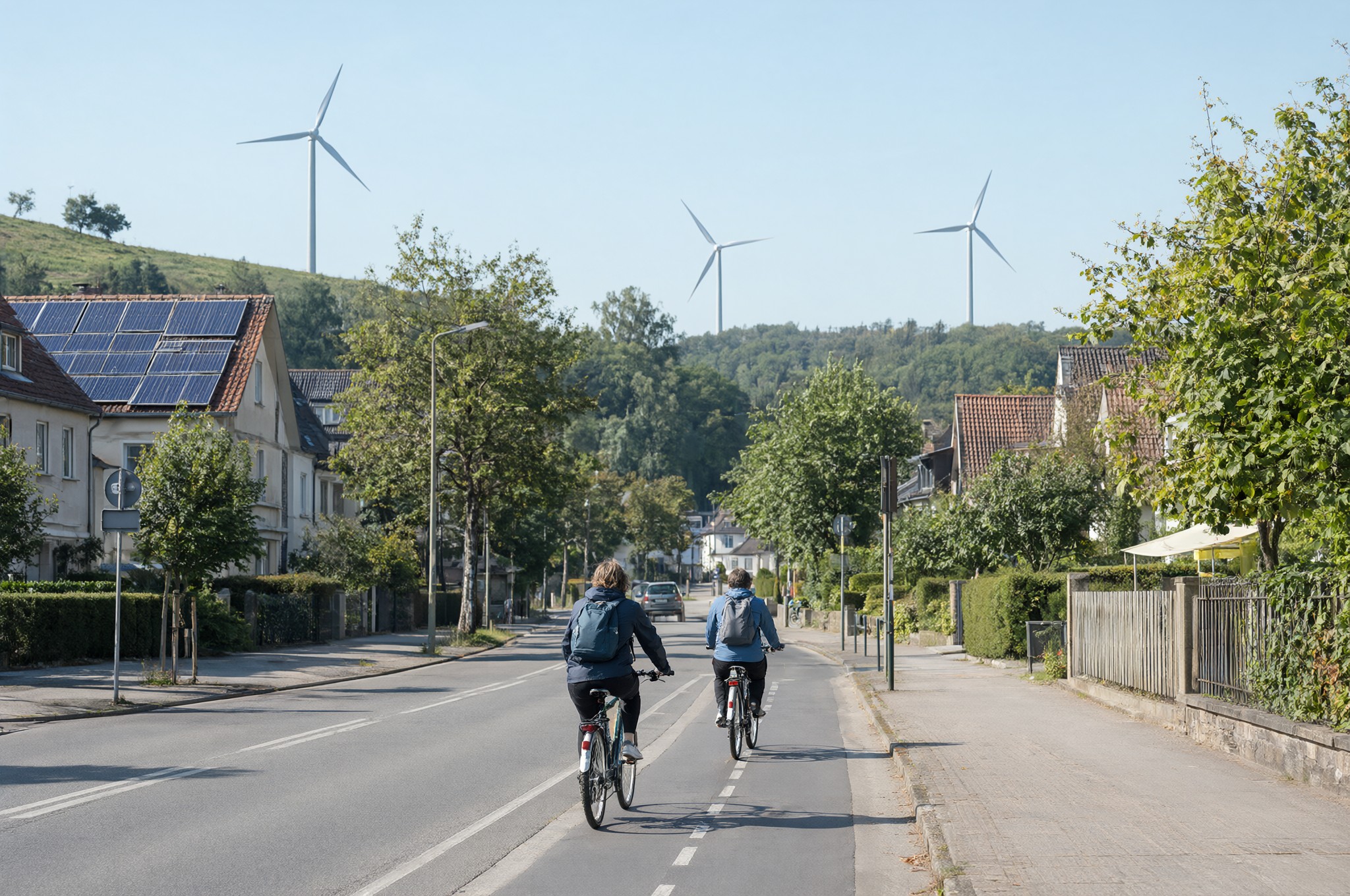
Image by Qwen-Image 2.1
‘Sustainable’ is one of the most used words of our time: on product labels, in company reports, in political speeches. The more often a word is used, the more blurred it becomes – and science needs clear terms. A definition that is still quoted today comes from the World Commission on Environment and Development (WCED), which was chaired by Gro Harlem Brundtland from Norway (WCED 1987, p. 4). In its report ‘Our Common Future’ of 1987, the commission defined sustainable development (German: nachhaltige Entwicklung):
World Commission on Environment and Development, 1987
‘Sustainable development is development that meets the needs of the present without compromising the ability of future generations to meet their own needs.’ (ibid., p. 54)
The commission names two key concepts in this definition: the needs of people, above all the essential needs of the world’s poor, which have priority, and the limits that technology and social organization impose on the ability of the environment to meet present and future needs (ibid., p. 54).
Almost thirty years later, the member states of the United Nations (UN) turned this idea into a common plan. On 25 September 2015, the General Assembly adopted the 2030 Agenda for Sustainable Development (United Nations 2015, p. 1). Its first sentence reads: ‘This Agenda is a plan of action for people, planet and prosperity.’ (ibid., p. 1) At its core are the 17 Sustainable Development Goals (SDGs) with their 169 targets (ibid., p. 1). They came into effect on 1 January 2016 and are to guide decisions over the following 15 years (ibid., p. 6).
Three features distinguish the agenda:
- It is universal. The agenda is accepted by all countries and applies to all of them, to developed and developing countries alike (ibid., p. 3). The goals concern Germany as much as any other country.
- It is integrated. The goals belong together and cannot be pursued in isolation; they balance the economic, the social and the environmental dimension of sustainable development (ibid., p. 1).
- It leaves no one behind. The states promise to leave no one behind (ibid., p. 1).
Its preamble names five areas that are crucial for humankind and the planet: people, planet, prosperity, peace and partnership (ibid., pp. 1–2). The picture above shows what this can look like in everyday life: renewable energy on a roof and on the hills, clean transport, a town that works for the people who live in it.
1.2 Goals, targets and indicators
The 17 goals are deliberately broad. To make them workable, the agenda breaks each goal down into targets (German: Unterziele), 169 in total (ibid., p. 1). Each target, in turn, is measured with one or more indicators (German: Indikatoren), which the global indicator framework lists (United Nations 2026). It contains 234 different indicators; because some of them belong to two or three targets, the list has 251 entries in total (UN Statistics Division 2026).
An example shows how the three levels fit together. Our example question from FTS-01, 3.3, ‘Does hydrogen make steel production climate-neutral?’, belongs to SDG 9, which deals with industry. Its target 9.4 asks for industries to be retrofitted with clean technologies, and indicator 9.4.1 measures the emissions of carbon dioxide (CO₂) per unit of value added (United Nations 2026, p. 10):
| Level | Example from SDG 9 |
|---|---|
| Goal | SDG 9: Build resilient infrastructure, promote inclusive and sustainable industrialization and foster innovation |
| Target | 9.4: By 2030, upgrade infrastructure and retrofit industries to make them sustainable, with increased resource-use efficiency and greater adoption of clean and environmentally sound technologies and industrial processes, with all countries taking action in accordance with their respective capabilities |
| Indicator | 9.4.1: CO₂ emission per unit of value added |
If steelworks in a country replace coal with hydrogen and the hydrogen is produced with electricity from renewable sources, the value of this indicator should fall for that country. However, the indicator does not tell you whether hydrogen makes steel production climate-neutral. It measures, but it does not answer your question. That is exactly the difference between an indicator and a scientific question – and the reason why you will need sources.
1.3 The 17 goals at a glance
The 17 icons of the UN show the goals at a glance. Each of them has a short name, a number and a colour (United Nations 2023, p. 40):
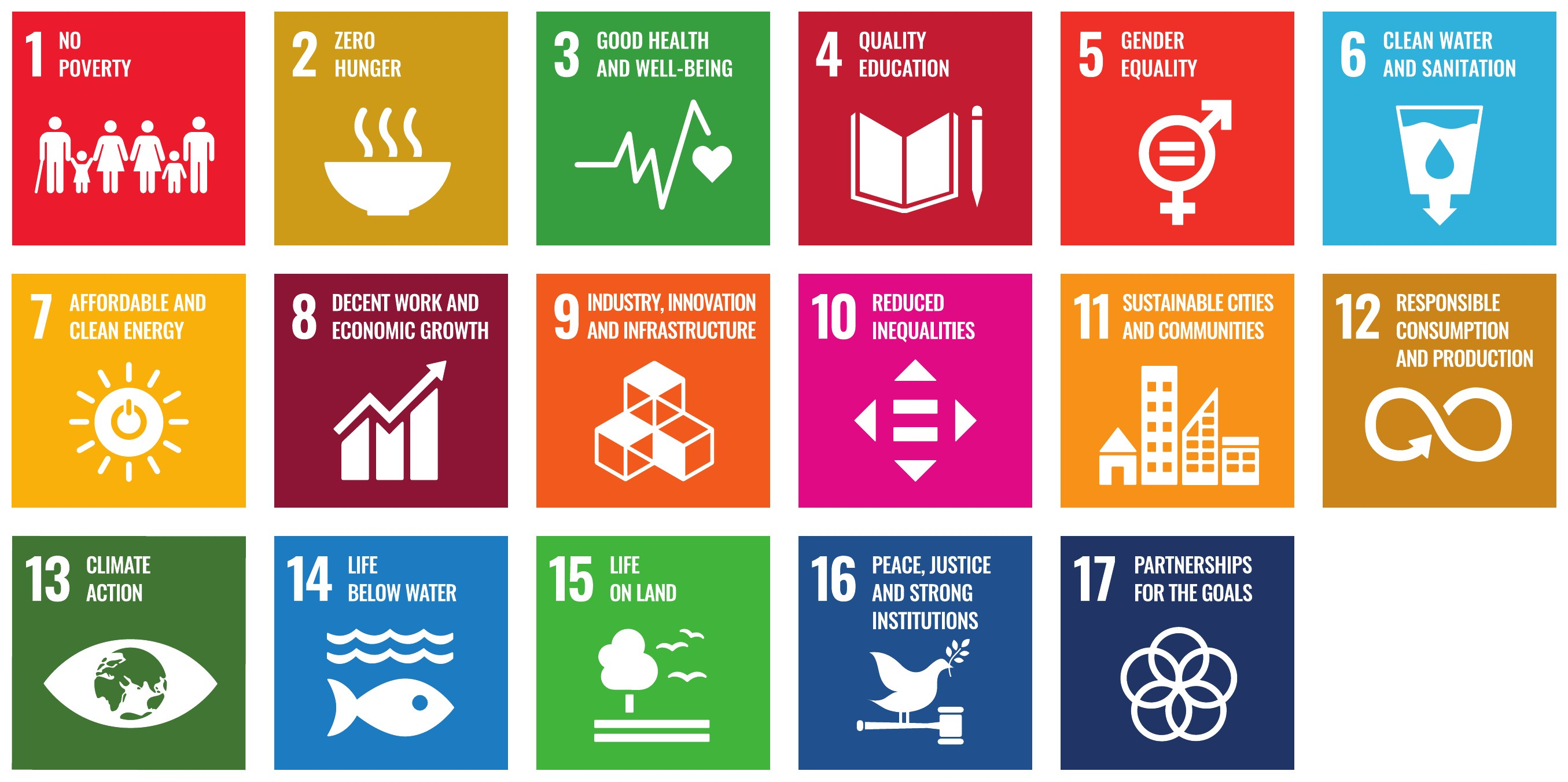
Icons: United Nations (United Nations 2023, p. 40)
The short names are easy to remember; what each goal aims at in full is stated in its official title in the agenda (United Nations 2015, p. 14):
| No. | Short name | Official title of the goal |
|---|---|---|
| 1 | No poverty | End poverty in all its forms everywhere |
| 2 | Zero hunger | End hunger, achieve food security and improved nutrition and promote sustainable agriculture |
| 3 | Good health and well-being | Ensure healthy lives and promote well-being for all at all ages |
| 4 | Quality education | Ensure inclusive and equitable quality education and promote lifelong learning opportunities for all |
| 5 | Gender equality | Achieve gender equality and empower all women and girls |
| 6 | Clean water and sanitation | Ensure availability and sustainable management of water and sanitation for all |
| 7 | Affordable and clean energy | Ensure access to affordable, reliable, sustainable and modern energy for all |
| 8 | Decent work and economic growth | Promote sustained, inclusive and sustainable economic growth, full and productive employment and decent work for all |
| 9 | Industry, innovation and infrastructure | Build resilient infrastructure, promote inclusive and sustainable industrialization and foster innovation |
| 10 | Reduced inequalities | Reduce inequality within and among countries |
| 11 | Sustainable cities and communities | Make cities and human settlements inclusive, safe, resilient and sustainable |
| 12 | Responsible consumption and production | Ensure sustainable consumption and production patterns |
| 13 | Climate action | Take urgent action to combat climate change and its impacts |
| 14 | Life below water | Conserve and sustainably use the oceans, seas and marine resources for sustainable development |
| 15 | Life on land | Protect, restore and promote sustainable use of terrestrial ecosystems, sustainably manage forests, combat desertification, and halt and reverse land degradation and halt biodiversity loss |
| 16 | Peace, justice and strong institutions | Promote peaceful and inclusive societies for sustainable development, provide access to justice for all and build effective, accountable and inclusive institutions at all levels |
| 17 | Partnerships for the goals | Strengthen the means of implementation and revitalize the Global Partnership for Sustainable Development |
Read the official title of your own goal carefully before you choose your question: it says more about the goal than the short name on the icon.
1.4 Where does the world stand in 2026?
Every year, the UN publish a report on the progress towards the goals. The Sustainable Development Goals Report 2026 assesses 139 targets for which there are enough data to calculate trends (UN DESA 2026, p. 4):
| Assessment of the targets | Share |
|---|---|
| On track or target met | 15 % |
| Moderate progress | 21 % |
| Marginal progress | 32 % |
| Stagnation | 17 % |
| Regression below the level of 2015 | 15 % |
In short: just over a third of the assessable targets, 36 %, are on track or progressing at least moderately, while 15 % have fallen back (ibid., p. 2). One person in ten still lives in extreme poverty (ibid., p. 3), 2.1 billion people faced moderate or severe food insecurity in 2025 (ibid., p. 10), and about 2.1 billion people have no safely managed drinking water (ibid., p. 3).
There is progress, too. Electricity now reaches 92 % of the world’s population, and a third of it is generated from renewable sources (ibid., p. 3). Progress is possible – but four years before the target date, it is too slow and too uneven (ibid., pp. 2–3).
The report also mentions a development that will accompany you in this module: artificial intelligence (AI) is quickly changing how information is produced and used. It can support official statistics, but it can also produce biased or inaccurate information (ibid., p. 4). Keep this in mind for step 3 of the didactic concept in chapter 5.
1.5 Synergies and trade-offs
The agenda calls its goals ‘integrated and indivisible’ (United Nations 2015, p. 1). In practice, this means two things. Progress on one goal can support progress on another: a synergy (German: Synergie). But it can also get in its way: a trade-off (German: Zielkonflikt). Måns Nilsson and his colleagues rate such interactions between two targets on a scale with seven types (Nilsson et al. 2018, pp. 1491–1492):
| Score | Type | Meaning |
|---|---|---|
| +3 | Indivisible | Progress on one target automatically brings progress on the other. |
| +2 | Reinforcing | Progress on one target makes progress on the other easier. |
| +1 | Enabling | Progress on one target creates the conditions for progress on the other. |
| ±0 | Consistent | There is no significant link between the two targets. |
| −1 | Constraining | Progress on one target limits the options for achieving the other. |
| −2 | Counteracting | Progress on one target makes progress on the other more difficult. |
| −3 | Cancelling | Progress on one target automatically harms the other. |
A synergy from the same study: progress on clean energy (SDG 7) improves people’s respiratory health (ibid., p. 1492) – and with it good health and well-being (SDG 3).
Our example question shows such a trade-off. In the project Hydrogen Breakthrough Ironmaking Technology (HYBRIT), a Swedish steel company, a mining company and an energy company are working together on steel production without fossil fuels, from the mining of the iron ore to the final steel (Nikoleris 2019, p. 1). For the hydrogen, however, a lot of additional electricity is needed. The case study names possible conflicts over access to land and the disturbance of wildlife habitats caused by the extra power generation (ibid., p. 2). A gain for climate action (SDG 13) can therefore cost something on land (SDG 15).
Many of the questions that you will choose from today are about such trade-offs: offshore wind farms and marine life, wind turbines and birds, lithium mining for batteries and ecosystems. That is why they cannot be answered with a simple yes or no. In step 5, you will weigh up both sides.
2 What can companies do? – The role of companies and employees
2.1 Why the goals matter for companies
The Sustainable Development Goals (SDGs) were adopted by governments, but governments cannot achieve them on their own. The agenda itself counts private business activity, investment and innovation among the main engines of productivity, of growth that includes everybody and of new jobs. And it calls on all businesses to use their creativity and their power of innovation to solve the challenges of sustainable development (United Nations 2015, p. 29).
Why should a company respond to this call? The SDG Compass, a guide for companies by the Global Reporting Initiative (GRI), the United Nations (UN) Global Compact and the World Business Council for Sustainable Development (WBCSD), names five benefits (GRI et al. 2015, p. 4):
- identifying future business opportunities, because the goals aim to steer public and private investment towards the challenges they represent,
- enhancing the value of corporate sustainability, for example through a more efficient use of resources,
- strengthening relations with customers, employees and other stakeholders, and keeping pace with policy developments,
- stabilizing societies and markets, because companies cannot prosper in failing societies,
- using a common language to communicate with stakeholders.
Before any contribution comes a baseline. Every company, whatever its size, sector or location, has to obey the laws that apply to it, meet internationally recognized minimum standards and respect universal rights. A company cannot offset harm to human rights with its efforts for sustainable development (ibid., p. 10).
2.2 The SDG Compass – five steps for companies
The SDG Compass guides companies in five steps towards aligning their strategies with the Sustainable Development Goals (SDGs) and measuring and managing their contribution (ibid., p. 5):
| Step | What the company does |
|---|---|
| 1 Understanding the SDGs | It familiarizes itself with the goals. |
| 2 Defining priorities | It assesses where along its value chain it affects the goals – positively or negatively, today or in future – and defines its priorities. |
| 3 Setting goals | It sets its own goals and aligns them with the SDGs. |
| 4 Integrating | It integrates sustainability into its core business and governance, embeds the targets across all functions and engages in partnerships. |
| 5 Reporting and communicating | It reports on its performance with common indicators and communicates with its stakeholders. |
The key to step 2 is the value chain (German: Wertschöpfungskette): from raw materials and suppliers via the company’s own operations to distribution, the use of the products and their end of life. The greatest impact of a company may lie outside the sites it owns, for example at its suppliers or with its customers (ibid., p. 12).
Look at the project Hydrogen Breakthrough Ironmaking Technology (HYBRIT) with these steps in mind. Its aim covers the entire value chain of steel, from the mining and pelletizing of the iron ore via the reduction to the steelmaking in electric arc furnaces, and three companies of different sectors share the work in a joint venture (Nikoleris 2019, p. 1) – an example of the partnerships of step 4. The guide has a limit, too: it was written mainly for large multinational enterprises; smaller companies are encouraged to adapt it as necessary (GRI et al. 2015, p. 5).
2.3 From the company goal to the engineer’s desk
How does a goal set by the board reach the individual employee? The SDG Compass gives an example (ibid., p. 23):
| Level | Goal or task |
|---|---|
| Company | Contribute to SDG 12 by phasing out all harmful chemicals in the products |
| Research and development | Identify alternative materials for all harmful chemicals identified in the products |
| Supply chain management | Identify and phase out harmful chemicals in purchased products and components |
| Engineer in research and development | Identify alternative materials for the harmful chemicals in the products and components under their responsibility |
| Component purchaser | Ensure that all suppliers comply with the purchasing policy on harmful chemicals |
The guide stresses that dedicated sustainability teams are not enough: the key is the support and ownership of the functions, such as research and development (R&D), business development, supply management, operations and human resources (ibid., p. 23). Employees contribute to the goals through the decisions of their daily work – which material, which supplier, which process. As an engineer, you will make such decisions.

Image by Qwen-Image 2.1
The commitment of a company to the goals has its limits, too. A study of the sustainability reports of 1 370 organizations from 97 countries found that the vast majority engage with the goals only superficially (Heras-Saizarbitoria et al. 2022, p. 316). In over 80 % of the reports, the choice of the goals that the organization gives priority to was not explained (ibid., p. 325). In the best cases, the organizations picked a set of goals and linked them to activities that had often existed for years; in most cases, the goals merely added colourful icons to the reports (ibid., p. 325). Heras-Saizarbitoria et al. (2022, pp. 316, 325) see this as a sign of SDG-washing (German: SDG-Washing). So when you read a company report, look for specific goals, targets and indicators – not for icons.
3 Which goal will be yours? – The 17 goals one by one
In chapter 1, you saw the 17 Sustainable Development Goals (SDGs) at a glance, and chapter 2 showed how companies and their employees contribute to them. Now we look at the goals one by one. Each section names what the targets of a goal aim at, where the world stands according to the Sustainable Development Goals Report 2026 and what you can contribute as a mechatronics engineer or as an industrial engineer. The report rates every target for which there are enough data (UN DESA 2026, pp. 44–45), on the scale that you know from section 1.4. With one exception in section 3.9, the examples of what engineers can contribute come from the SDG Industry Matrix, in which the United Nations (UN) Global Compact and KPMG compiled opportunities for industrial manufacturers under each of the 17 goals, together with examples that companies submitted themselves (UN Global Compact and KPMG 2016, pp. 5, 12). The matrix does not distinguish between degree programmes; I have assigned each opportunity to the programme that is closest to it. Where none of the opportunities for a goal fitted a programme, I have taken one of the examples instead. Read the section on your own goal before you choose your question.
3.1 SDG 1: No poverty
The first goal addresses the poorest people in the world. Its seven targets call for eradicating extreme poverty by 2030 and for at least halving the share of people who are poor by the definition of their own country. Social protection systems are to cover everybody, and the poor are to get the same rights to economic resources as everybody else and access to basic services, land, appropriate new technology and financial services. They are also to become more resilient to extreme weather and other disasters (United Nations 2015, p. 15).
Extreme poverty (German: extreme Armut) still affects an estimated 826 million people in 2026 – 10 % of the world’s population: they live on less than 3.00 dollars a day at the purchasing power of 2021 (UN DESA 2026, p. 8). Compared with 2015, the share is only three percentage points lower, and about 9 % are expected for 2030 (ibid., p. 8). One milestone has been reached: more than half of the world’s population, 52.4 %, was covered by at least one benefit of social protection in 2023 (ibid., p. 9). Of the seven targets, the report rates six: two show moderate progress, three marginal progress, and one has regressed (ibid., p. 44).
As a mechatronics engineer, you can design industrial products for emerging economies that take their market opportunities, resources and budgets into account (UN Global Compact and KPMG 2016, p. 13). As an industrial engineer, you can help suppliers and retailers in emerging economies to become more resilient to extreme weather and other economic, social and environmental shocks (ibid., p. 13).
3.2 SDG 2: Zero hunger
The second goal aims at food security for all. By 2030, nobody is to go hungry, everybody is to have enough safe and nutritious food throughout the year, and all forms of malnutrition are to end. Small-scale food producers are to double their agricultural productivity and their incomes, and food production is to become sustainable and resilient to climate change, drought and floods. Investment in rural infrastructure, agricultural research and technology is to support this (United Nations 2015, pp. 15–16).
In 2025, an estimated 645 million people were chronically undernourished; at 7.8 % of the world’s population, their share was only slightly below the 8.0 % of 2015 (UN DESA 2026, p. 10). Among children under five, the share with stunted growth fell from 26.4 % in 2012 to 23.2 % in 2024 (ibid., p. 10). The crisis in the Middle East endangers this progress: it has disrupted the transport of fertilizers, natural gas and fuels and driven up the costs of producing and transporting food (ibid., p. 11). Of the eight targets, the report rates seven: one is on track, one shows moderate progress, two marginal progress, one stagnates, and two have regressed, among them target 2.1 on hunger and food security (ibid., p. 44).
As a mechatronics engineer, you can develop machines, tools and processes with which farms and food processors work more efficiently and sustainably, for example with less energy (UN Global Compact and KPMG 2016, p. 14); ThyssenKrupp Industries India, for instance, developed a mill for sugar production with lower frictional losses that saves power (ibid., p. 15). As an industrial engineer, you can buy crop residues from farmers as fuel for production, so that they are no longer burnt: Ambuja Cements helped farmers in India to set up an organization that sold such biomass to the company, which gave the farmers a new source of income (ibid., p. 14).
3.3 SDG 3: Good health and well-being
The third goal is about a healthy life at all ages. By 2030, maternal mortality is to fall below 70 deaths per 100 000 live births, preventable deaths of newborns and young children are to end, and so are epidemics such as tuberculosis and malaria. Premature deaths from non-communicable diseases are to fall by a third, and the number of deaths and injuries in road traffic was to be halved by 2020. Everybody is to have health coverage, with affordable essential medicines and vaccines, and substantially fewer people are to fall ill or die from hazardous chemicals and polluted air, water and soil (United Nations 2015, pp. 16–17).
The global maternal mortality ratio fell from 228 deaths per 100 000 live births in 2015 to 197 in 2023 – still more than two and a half times the target (UN DESA 2026, p. 12). Some 4.9 million children died before their fifth birthday in 2024 (ibid., p. 13), and 4.6 billion people lacked access to essential health services in 2023 (ibid., p. 15). The report rates all 13 targets: one is on track, the target on deaths and illnesses from pollution, two show moderate progress and ten marginal progress (ibid., p. 44).
As a mechatronics engineer, you can develop low-cost medical devices for middle- and low-income countries (UN Global Compact and KPMG 2016, p. 16), such as the ultrasound machines and the equipment for the care of mothers and infants that General Electric began to manufacture in India for emerging markets (ibid., p. 17). As an industrial engineer, you can set up distribution networks for such devices and the local capacity to service and maintain them (ibid., p. 16).
3.4 SDG 4: Quality education
The fourth goal aims at good education for everybody, throughout life. By 2030, all girls and boys are to complete free primary and secondary schooling of good quality, and all women and men are to have equal access to affordable technical, vocational and tertiary education, including university. Many more young people and adults are to acquire relevant skills for employment, including technical and vocational skills, and all learners are to acquire the knowledge and skills needed for sustainable development (United Nations 2015, p. 17).
Between 2015 and 2024, the completion rate rose from 85 % to 88 % in primary school, from 75 % to 78 % in lower secondary and from 53 % to 61 % in upper secondary education; yet 273 million children and young people have no access to education (UN DESA 2026, p. 16). More than a fifth of all primary schools lack electricity, safe drinking water or basic sanitation (ibid., p. 17). Of the ten targets, the report rates eight: two show moderate progress, one marginal progress, and five stagnate, among them learning outcomes and qualified teachers; for skills for employment, there are not enough data (ibid., p. 44).
As a mechatronics engineer, you can promote education in science, technology, engineering and mathematics (STEM) (UN Global Compact and KPMG 2016, p. 18), for example by visiting schools and working with teachers, as Siemens encourages its employees to do in order to counter the shortage of skilled workers in engineering (ibid., p. 19). As an industrial engineer, you can organize training for the suppliers of components and raw materials that makes their operations more productive and sustainable (ibid., p. 18).
3.5 SDG 5: Gender equality
The fifth goal aims at equal rights and opportunities for women and girls. All forms of discrimination and violence against them are to end, as are harmful practices such as child marriage. Unpaid care and domestic work is to be recognized, and women are to have full and equal opportunities for leadership in political, economic and public life. They are to get equal rights to economic resources, and technology, in particular information and communications technology, is to strengthen their position (United Nations 2015, p. 18).
Women held 27.4 % of the seats in national parliaments on 1 January 2026 and 30.5 % of managerial positions in 2025; if progress continues at this speed, equal representation of women and men in management is more than 50 years away (UN DESA 2026, p. 18). Nearly one woman in three – 840 million women – has experienced physical or sexual violence by a partner or sexual violence by another person at least once in her life (ibid., p. 19). Only five of the nine targets can be rated, and all five show marginal progress (ibid., p. 44).
As a mechatronics engineer, you can help adapt the facilities and processes of a plant for women employees (UN Global Compact and KPMG 2016, p. 20). As an industrial engineer, you can include more businesses owned by women in the supply chain and help them develop their capacity (ibid., p. 20).
3.6 SDG 6: Clean water and sanitation
The sixth goal aims at water and sanitation for everybody. By 2030, everybody is to have access to safe and affordable drinking water and to adequate sanitation and hygiene. Water quality is to improve: the share of untreated wastewater is to be halved, and recycling and safe reuse are to increase substantially. All sectors are to use water much more efficiently, so that fewer people suffer from water scarcity. Water resources are to be managed in an integrated way, including across borders, and water-related ecosystems such as wetlands, rivers and lakes are to be protected (United Nations 2015, pp. 18–19).
In 2024, safely managed drinking water reached 74 % of the world’s population, up from 68 % in 2015; safely managed sanitation reached 58 %, up from 48 %, and basic hygiene services 80 %, up from 66 % (UN DESA 2026, p. 20). Between 2015 and 2023, water-use efficiency rose by 24 %, from 17.4 to 21.5 dollars of economic output per cubic metre of water (ibid., p. 20). Yet one person in ten lives in a country where water stress (German: Wasserstress) is high or critical; it measures how much freshwater is withdrawn relative to the available supply (ibid., p. 20). Of the eight targets, the report rates six: one shows moderate progress, two marginal progress, and three stagnate, among them water quality (ibid., p. 44).
As a mechatronics engineer, you can replace wet machining with dry machining, which uses less water (UN Global Compact and KPMG 2016, p. 22); Ford, for example, uses only a little oil to lubricate its cutting tools, instead of the large quantities of fluids and water needed in conventional wet machining (ibid., pp. 23–24). As an industrial engineer, you can plan a production site so that neighbouring communities with limited access to water also get access to it (ibid., p. 22).
3.7 SDG 7: Affordable and clean energy
The seventh goal aims at energy that everybody can afford and that is clean. By 2030, everybody is to have access to modern energy services that are affordable and reliable, renewable energy is to make up a substantially larger share of the energy mix of the world, and the rate at which energy efficiency improves worldwide is to double. International cooperation is to give access to research and technology for clean energy, and developing countries are to get the infrastructure for modern and sustainable energy services (United Nations 2015, p. 19).
Electricity reached 92 % of the world’s population in 2024, up from 87 % in 2015; 655 million people still live without it, 86 % of them in sub-Saharan Africa (UN DESA 2026, p. 22). Renewable sources supplied 18.0 % of the final energy consumption in 2023, up from 15.6 % in 2015, and over 30 % of the electricity (ibid., p. 23). The energy intensity (German: Energieintensität), the ratio of the total energy supply to the gross domestic product, improved by 1.5 % in 2023; between 2010 and 2023, no region reached the improvement of 2.6 % a year that the target sets (ibid., p. 23). All five targets are rated: two are on track and three show moderate progress (ibid., p. 44).
As a mechatronics engineer, you can develop more efficient microgrids that integrate renewable sources and supply rural and marginalized communities with affordable energy (UN Global Compact and KPMG 2016, p. 25). As an industrial engineer, you can increase the share of energy from renewable sources in your company’s own operations and encourage your suppliers to do the same (ibid., p. 25).
3.8 SDG 8: Decent work and economic growth
The eighth goal links economic growth with good work. Economic growth per person is to be sustained, and the economies of the least developed countries are to grow by at least 7 % a year (United Nations 2015, p. 19); productivity is to rise through diversification, technological upgrading and innovation. Growth is to be decoupled from environmental degradation. By 2030, all women and men are to have productive employment and decent work, with equal pay for work of equal value; forced labour is to end, and child labour was to end by 2025. Labour rights and safe working environments are to be protected for all workers (ibid., pp. 19–20).
Global unemployment stood at 4.9 % in 2025 (UN DESA 2026, p. 24), but low unemployment does not mean decent work: informal employment (German: informelle Beschäftigung), work without contracts, protection or reliable income, made up 57.9 % of all employment in 2025, a share that has hardly changed since 2015 (ibid., p. 25). Some 138 million children are still in child labour, 54 million of them in hazardous work (ibid., p. 25). Of the twelve targets, the report rates eleven: one shows moderate progress, six marginal progress, one stagnates, and three have regressed, among them labour rights and safe working environments (ibid., p. 44).
As a mechatronics engineer, you can support small suppliers of components with technical know-how, so that they become more efficient and competitive (UN Global Compact and KPMG 2016, pp. 28–29); Hyundai, for example, gives technical guidance to its smaller suppliers, mostly through retired employees who work on site with a supplier for three to twelve months (ibid., p. 29). As an industrial engineer, you can set standards for your suppliers on labour rights and safe working conditions, help them meet these standards through training and checks, and give priority to eradicating modern slavery and child labour (ibid., p. 28).
3.9 SDG 9: Industry, innovation and infrastructure
The ninth goal is close to your future work in industry. Infrastructure is to become reliable, sustainable and resilient, industrialization inclusive and sustainable, and small industrial enterprises are to get access to credit and to value chains. You know target 9.4 from section 1.2: by 2030, infrastructure is to be upgraded and industries retrofitted, so that they use resources more efficiently and adopt clean technologies and processes. Research is to be strengthened, with more researchers and more spending on research and development (United Nations 2015, pp. 20–21).
Global manufacturing grew by 2.7 % in 2025, and its value added per person rose by 18.1 % between 2015 and 2025; yet its share of global employment fell from 14.3 % to 13.7 % (UN DESA 2026, p. 26). Carbon dioxide (CO₂) emitted by burning fuels and by industrial processes hit a record of 38.1 billion tonnes in 2025, and spending on research and development rose from 1.71 % to 1.92 % of the global gross domestic product between 2015 and 2023 (ibid., p. 27). Of the eight targets, the report rates seven: one is on track, four show moderate progress, among them target 9.4, one marginal progress, and one has regressed, namely sustainable and inclusive industrialization (ibid., p. 44).
As a mechatronics engineer, you can develop machines for industry that need less energy; in 2013, for example, Atlas Copco introduced a compressor that uses only half the energy of traditional compressors (UN Global Compact and KPMG 2016, p. 31). As an industrial engineer, you can plan the conversion of production to clean processes, as the Swedish steel company, mining company and energy company from our example question are doing together in a joint venture for steel production with hydrogen (Nikoleris 2019, p. 1).
3.10 SDG 10: Reduced inequalities
The tenth goal aims at less inequality within and among countries. By 2030, the incomes of the poorest 40 % of the population are to grow faster than the national average (United Nations 2015, p. 21). Everybody is to be included socially, economically and politically, irrespective of, for example, their origin, ethnicity, race, religion, sex, age, disability or economic status, and discriminatory laws, policies and practices are to be eliminated. Fiscal, wage and social protection policies are to create more equality, migration is to be orderly and safe, and the costs of sending money home are to fall below 3 % (ibid., p. 21).
In nearly 60 % of 112 countries with comparable surveys, the income or consumption of the poorest 40 % grew faster than the national average (UN DESA 2026, p. 28). At the same time, the share of economic output that goes to labour fell from 53.0 % in 2015 to 52.6 % in 2025, and nearly one person in five reports having experienced discrimination in the past twelve months (ibid., p. 29). All ten targets are rated: one is on track, two show moderate progress, two marginal progress, two stagnate, and three have regressed, among them the elimination of discrimination (ibid., p. 44).
As a mechatronics engineer, you can help your company support employees with impairments or disabilities in production; at Volkswagen, around 55 % of the employees with disabilities worked in production (UN Global Compact and KPMG 2016, p. 35). As an industrial engineer, you can work towards your company paying its staff a living wage and adopting equal opportunity policies that rule out any form of discrimination, and you can ask the companies in your value chain to follow suit (ibid., p. 34).
3.11 SDG 11: Sustainable cities and communities
The eleventh goal concerns cities and human settlements. By 2030, everybody is to have adequate, safe and affordable housing, and slums are to be upgraded. Transport systems are to be safe, affordable, accessible and sustainable, notably through more public transport. Cities are to reduce their environmental impact per person, with special attention to air quality and waste management, and to offer green and public spaces for all; fewer people are to die or suffer losses in disasters (United Nations 2015, pp. 21–22).
In 2024, nearly a quarter of all people in cities, about 1.16 billion, had their homes in slums or informal settlements (UN DESA 2026, p. 30). Between 2020 and 2025, the share of city dwellers who can reach public transport conveniently grew from 53.2 % to 61.5 %, but buses make up 78 % of the options, rail and metro only 22 % (ibid., p. 31). After a decade of improvement, the concentration of fine particulate matter in the air stalled at 26.1 micrograms per cubic metre in 2023 (ibid., p. 31). Only five of the ten targets can be rated: three are on track, one shows marginal progress, and the target on housing stagnates (ibid., p. 45).
As a mechatronics engineer, you can develop sustainable transport solutions, particularly for public buses and trains, for example an automated fast-charging system for electric buses that charges a bus in four to six minutes and can be integrated into existing bus lines (UN Global Compact and KPMG 2016, p. 36). As an industrial engineer, you can develop business models that give low-income families access to affordable housing, as the cement producer Cemex does in its programme Patrimonio Hoy by combining loans, building materials, technical advice and logistics (ibid., p. 37).
3.12 SDG 12: Responsible consumption and production
The twelfth goal concerns how we produce and consume. By 2030, natural resources are to be managed sustainably and used efficiently, food waste per person in retail and households is to be halved and food losses reduced. Chemicals and wastes are to be managed in an environmentally sound way throughout their life cycle, and waste generation is to fall substantially through prevention, reduction, recycling and reuse. Companies, especially large ones, are to adopt sustainable practices and include sustainability information in their reports, and inefficient subsidies for fossil fuels are to be rationalized, including by phasing out harmful ones (United Nations 2015, pp. 22–23). You know this goal from the example in section 2.3, in which a company phases out harmful chemicals.
Between 2015 and 2022, global material consumption rose by 25 %, from 92.1 to 115.1 billion tonnes, or 14.4 tonnes per person (UN DESA 2026, p. 32). The world produced 65 million tonnes of electronic waste (German: Elektroschrott) in 2023, but only 15.5 million tonnes were formally recycled, and subsidies for fossil fuels still amounted to more than 921 billion dollars in 2024 (ibid., p. 33). Of the eleven targets, the report rates ten: four are on track, among them the sustainable practices of companies, one shows marginal progress, one stagnates, and four have regressed, among them food waste and losses and the reduction of waste (ibid., p. 45).
As a mechatronics engineer, you can design machinery and vehicles that consume less energy and water when in use and produce less waste and pollution (UN Global Compact and KPMG 2016, p. 38); Gestamp, for example, makes steel parts for car bodies lighter with a patented hot stamping process – by 20 % compared with traditional methods – which reduces fuel consumption (ibid., p. 39). As an industrial engineer, you can turn the by-products and waste of production into raw materials, as Tata Steel does with slag and other by-products of steelmaking (ibid., p. 40).
3.13 SDG 13: Climate action
The thirteenth goal calls for urgent action against climate change and its impacts. All countries are to strengthen their resilience and their capacity to adapt to climate-related hazards and natural disasters, to integrate climate measures into their policies, strategies and planning and to improve education and awareness. The developed countries are to fulfil their commitment to mobilize 100 billion dollars a year for developing countries by 2020 (United Nations 2015, p. 23). The agenda acknowledges the United Nations Framework Convention on Climate Change as the primary forum in which the states negotiate how the world responds to climate change (ibid., p. 23).
The eleven years from 2015 to 2025 were the hottest on record, and in 2024 the global temperature reached 1.55 °C above the pre-industrial level (UN DESA 2026, p. 34). Emissions of greenhouse gases (German: Treibhausgase) reached a record of 57.7 billion tonnes of CO₂ equivalent in 2024, an increase of 2.3 % on 2023; even if all countries keep their current pledges, the world is heading for a warming of 2.3 to 2.5 °C in this century (ibid., p. 34). Over the past decade, disaster-related mortality fell by nearly 65 % compared with the decade before (ibid., p. 35). Only three of the five targets can be rated: two are on track, among them resilience, and one shows marginal progress, namely the integration of climate measures into national policies (ibid., p. 45).
As a mechatronics engineer, you can develop machines that need less fuel; Caterpillar, for example, improved the transmission systems of its medium wheel loaders, which results in large fuel savings and fewer greenhouse gas emissions on the job site (UN Global Compact and KPMG 2016, p. 41). As an industrial engineer, you can assess the climate risks to your company’s plants and plan for sites at high risk how the risk of natural disasters is reduced and how the site recovers after one (ibid., p. 41).
3.14 SDG 14: Life below water
The fourteenth goal protects the oceans, seas and marine resources. By 2025, all kinds of pollution of the seas, above all from activities on land, were to be prevented and significantly reduced, including marine debris and nutrient pollution. Marine and coastal ecosystems are to be protected, the impacts of ocean acidification (German: Versauerung der Ozeane) minimized, and overfishing and illegal fishing ended; at least 10 % of coastal and marine areas were to be conserved by 2020 (United Nations 2015, pp. 23–24). Scientific knowledge and research capacity are to grow, and marine technology is to be transferred (ibid., p. 24).
By April 2026, the share of the ocean that is protected or conserved had reached 10.01 % – six years after the deadline of 2020 (UN DESA 2026, p. 36). The latest global assessment, from 2021, found 35.5 % of the assessed fish stocks overfished (ibid., p. 37). The ocean absorbs about 29 % of the carbon dioxide emitted by humans, and in the past 40 years, the average pH value at its surface has fallen from 8.11 to 8.04 (ibid., p. 37). Of the ten targets, the report rates nine: three show moderate progress, three marginal progress, among them marine pollution, and three have regressed, namely ocean acidification, sustainable fishing and marine research (ibid., p. 45).
As a mechatronics engineer, you can design components for ships that minimize the risk of marine pollution (UN Global Compact and KPMG 2016, p. 42). As an industrial engineer, you can introduce improved waste treatment systems so that no pollutants are released that could find their way back into the oceans and seas (ibid., p. 42).
3.15 SDG 15: Life on land
The fifteenth goal protects life on land. Terrestrial and freshwater ecosystems are to be conserved and restored, all types of forests managed sustainably and deforestation (German: Entwaldung) halted – for all three, the agenda set 2020 as the deadline. Desertification is to be combated and degraded land restored, the loss of biodiversity halted and the extinction of threatened species prevented. Poaching and the trafficking of protected species are to end (United Nations 2015, pp. 24–25).
More than 48 600 species are threatened with extinction (UN DESA 2026, p. 38). Since 2015, the world has lost 41 million hectares of forest (ibid., p. 38), although deforestation has slowed, from an average of 17.6 million hectares a year between 1990 and 2000 to 10.9 million hectares a year between 2015 and 2025; forests now cover 31.8 % of the land, compared with 33.3 % in 1990 (ibid., p. 39). Of the twelve targets, the report rates ten: three are on track, one shows moderate progress, namely sustainable forest management, two show marginal progress, two stagnate, and two have regressed, among them the loss of biodiversity (ibid., p. 45).
As a mechatronics engineer, you can develop heavy agricultural machinery that treats the soil gently, for example with low-pressure tyres that stop the soil from becoming more and more compacted (UN Global Compact and KPMG 2016, p. 43). As an industrial engineer, you can make sure that your company uses only wood from certified sustainable sources (ibid., p. 43).
3.16 SDG 16: Peace, justice and strong institutions
The sixteenth goal aims at peaceful and inclusive societies with justice for all. All forms of violence and the related death rates are to fall significantly, and the abuse, exploitation and trafficking of children are to end. The rule of law and equal access to justice are to be promoted, illicit financial and arms flows reduced and organized crime combated. Corruption and bribery (German: Bestechung) are to be substantially reduced in all their forms, and institutions are to be effective, accountable and transparent (United Nations 2015, pp. 25–26).
Between 2015 and 2024, the global homicide rate fell by 14 %, from 5.9 to 5.1 victims per 100 000 people (UN DESA 2026, p. 40). In 139 countries with recent data, roughly 17 % of people reported that they had paid a bribe to a public official in the past year or had been asked for one – 27 % in low-income countries, compared with 9 % in high-income countries (ibid., p. 41). Of the twelve targets, the report rates nine: three show moderate progress, among them corruption and bribery, one marginal progress, four stagnate, among them access to justice, and one has regressed (ibid., p. 45).
As a mechatronics engineer, you can integrate security and privacy into products from the start, as Intel does with its processes for privacy by design (UN Global Compact and KPMG 2016, p. 46). As an industrial engineer, you can design and implement a robust compliance programme against bribery and corruption (ibid., p. 45), for example in purchasing, where Sandvik introduced group-wide policies to prevent bribery and corruption (ibid., p. 46).
3.17 SDG 17: Partnerships for the goals
The last goal concerns the means to reach all the others. Its 19 targets fall into five areas: finance, technology, capacity-building, trade and systemic issues. The developed countries are to fulfil their commitments to official development assistance (German: öffentliche Entwicklungsleistungen), many of them the target of 0.7 % of their gross national income; environmentally sound technologies are to be transferred to developing countries on favourable terms, and the share of the least developed countries in global exports was to double by 2020 (United Nations 2015, pp. 26–27). Partnerships of governments, businesses and civil society are to mobilize and share knowledge, technology and money (ibid., p. 27).
Official development assistance fell by a record 23.1 % in 2025, to 174.3 billion dollars – just 0.26 % of the gross national income of the donor countries and back at the level of 2015 (UN DESA 2026, p. 42). The least developed countries accounted for only 1.13 % of global merchandise exports in 2024, compared with 0.91 % in 2015, so the target of doubling their share by 2020 has been missed (ibid., p. 42). Nearly three quarters of the world’s population were online in 2025, but only 34 % in the least developed countries (ibid., p. 43). Of the 19 targets, the report rates 15: three are on track, among them access to technology, four show moderate progress, three marginal progress, four stagnate, among them the commitment to development assistance, and one has regressed (ibid., p. 45).
As a mechatronics engineer, you can contribute your technical expertise when industrial manufacturers and other stakeholders develop good practice initiatives together or advise governments and regulators on the impact of laws and regulations on sustainable development (UN Global Compact and KPMG 2016, p. 47). As an industrial engineer, you can measure your company’s contribution to sustainable development regularly and report it transparently (ibid., p. 47).
4 What makes work scientific? – The 13 criteria
4.1 Opinion, journalism or science?
In step 2, you write down your own answer; in step 3, an artificial intelligence (AI) service answers; in step 4, scientific sources answer. All three answers can sound convincing. So what distinguishes a scientific answer from the other two? In my book on final theses, I describe 13 general criteria of scientific work (German: allgemeine Kriterien wissenschaftlichen Arbeitens) that answer this question (Jungmann 2025, p. 11). In this chapter, you get to know all of them, in my own words from the book, translated into English. The book is written in German; you can borrow it from the university library.
What makes work scientific? Essentially, there are 13 characteristics that show what distinguishes good research practice and how scientific texts differ from everyday opinions or journalistic texts (ibid., p. 11):
- Relevance
- Originality
- Objectivity
- Honesty
- Traceability
- Logical argumentation
- Validity
- Reliability
- Verifiability
- Reflexivity
- Comprehensibility
- Responsibility
- Fairness
The list begins with fundamental motivations (why research is done), moves on to methodological principles (how research is done) and communicative aspects (how research is communicated), and ends with overarching ethical dimensions (what responsibility researchers bear). These characteristics do not rule out other forms of work – but they set the standard for what is expected in a scientific context (ibid., p. 11).
In the book, I explain what lies behind each of the general criteria with a view to a bachelor’s thesis, a master’s thesis or a doctoral thesis. The same criteria apply to your posters and to your term paper. After each criterion, you find an example from this module of where you meet it – one example among many, because every criterion applies to every piece of scientific work.
4.2 Relevance
Relevance (German: Relevanz) means that your scientific work makes a genuine contribution to its field. This is the case if the topic or the question is of importance in the field concerned. Scientific works do not take up arbitrary topics but deal with subjects that are of theoretical, empirical or practical interest (ibid., p. 12).
Relevance can take various forms: it can relate to a current development in society, address an existing research gap (German: Forschungslücke) or contribute to the further development of theoretical concepts. New methodological approaches to established topics can be relevant, too. Relevance does not arise from the topic alone, but from the contribution to knowledge that a scientific work makes to a discipline, a field of discussion or a practical field of application (ibid., p. 12).
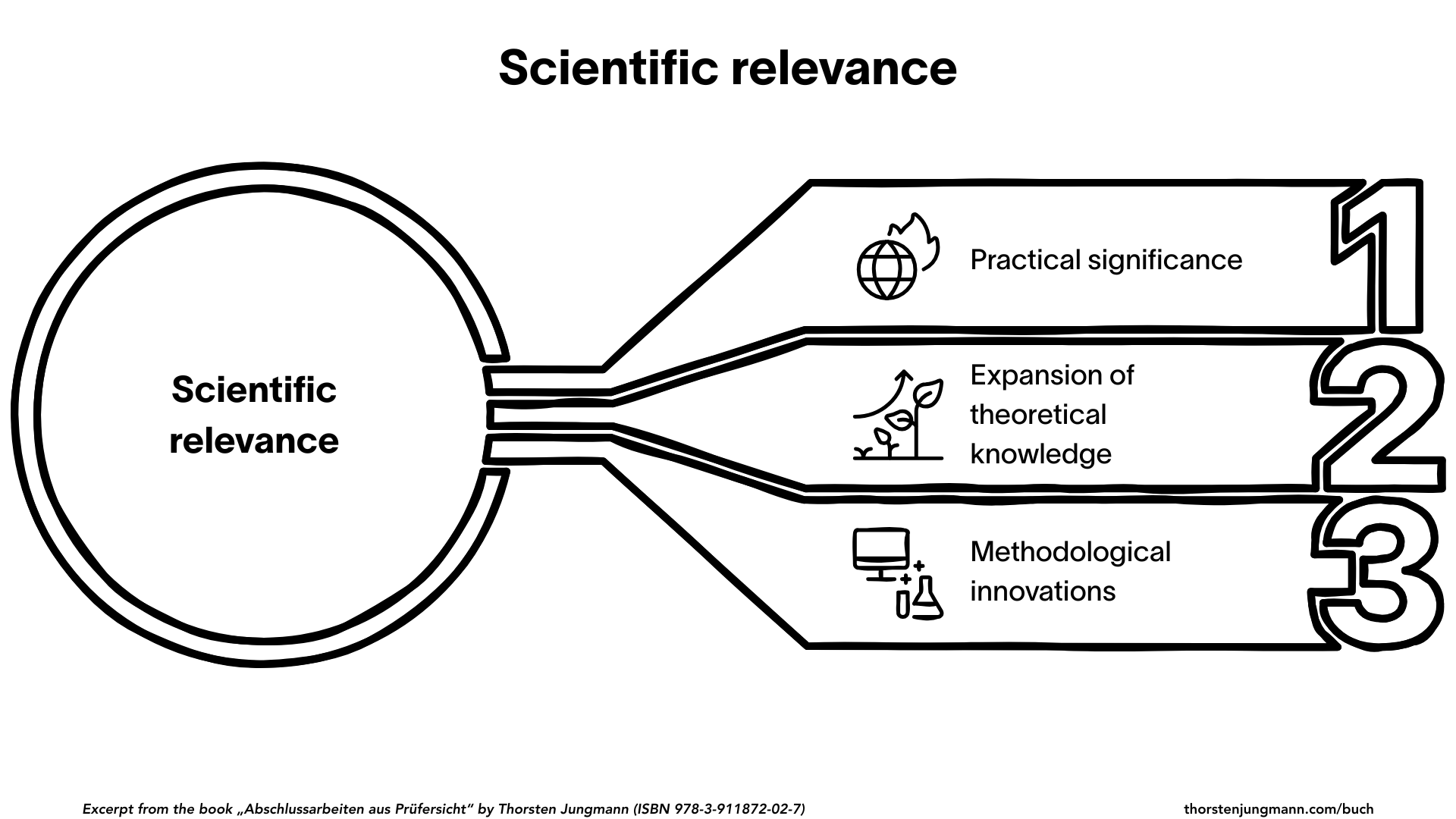
Figure: English version of the figure in Jungmann (2025, p. 12)
Example
Instead of a paper on ‘The history of football’, a relevant topic for a paper in sports management would be ‘The impact of the coronavirus pandemic on the financing of amateur football clubs in Germany’ (ibid., p. 12).
In this module, for example, relevance is the first feature of a good question, the starting point of the didactic concept in five steps.
4.3 Originality
Originality (German: Originalität) requires that your scientific work makes an independent contribution to the current state of knowledge – for example through new data, innovative methods or creative links between existing theories (ibid., p. 13).
While a bachelor’s thesis usually makes lower demands on originality, master’s theses, and doctoral theses in particular, should show clearly recognizable features that distinguish them from other works (ibid., p. 13).
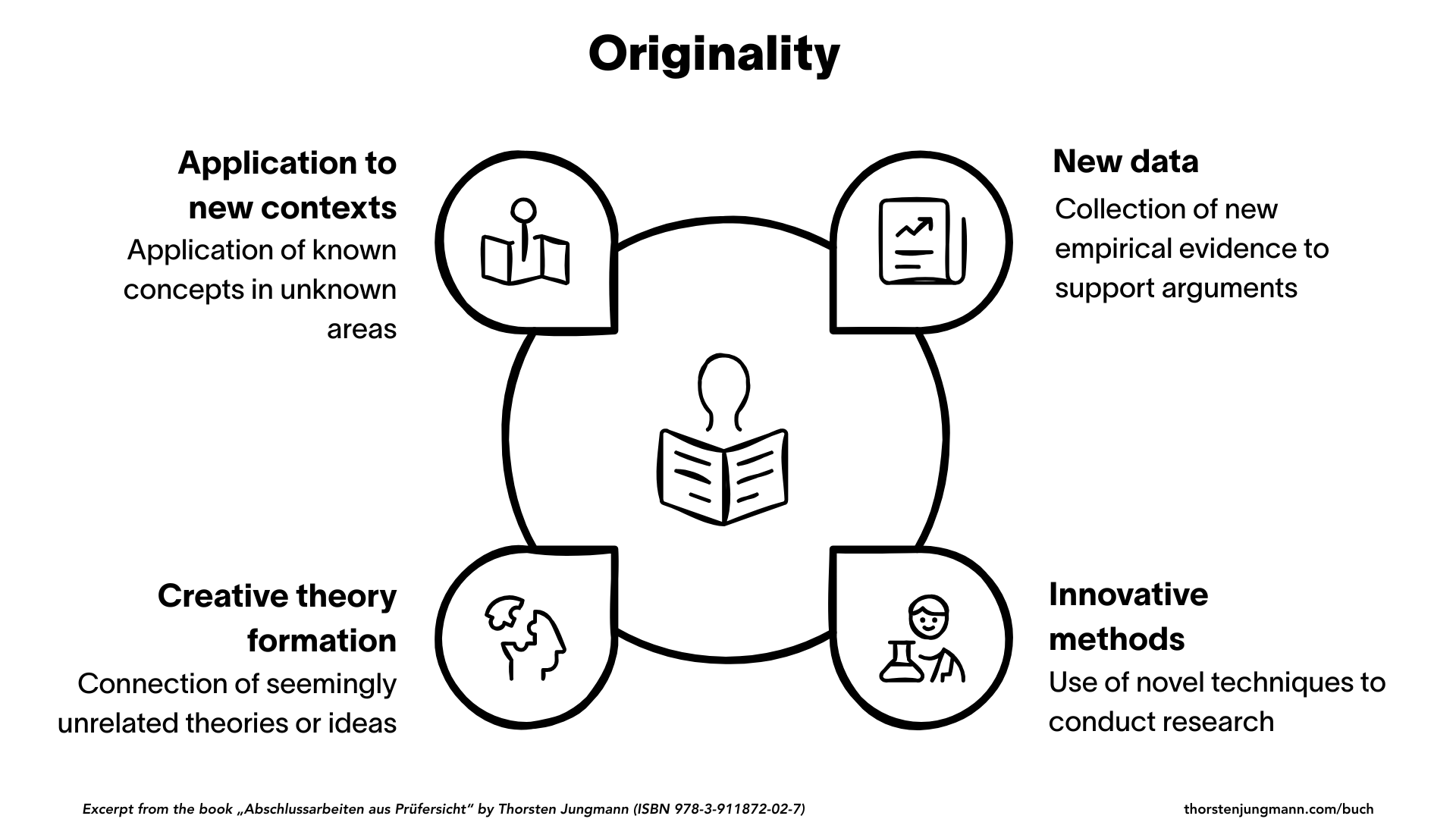
Figure: English version of the figure in Jungmann (2025, p. 13)
Example
A master’s thesis could not only summarize the existing literature on ‘sustainability in the fashion industry’, but also carry out its own case study of a local fashion label and analyse and document its specific challenges and approaches to solutions (ibid., p. 13).
In your term paper, for example, originality can lie in applying a known model – VUCA (volatility, uncertainty, complexity, ambiguity) or BANI (brittle, anxious, nonlinear, incomprehensible) – to the case of a company.
4.4 Objectivity
Objectivity (German: Objektivität) calls for a neutral, unbiased approach to the subject of your research (ibid., p. 14).
To work scientifically, you have to set your personal convictions aside and present different perspectives fairly. Especially with controversial topics, it is important to take all relevant points of view into account and not to cite selectively only those sources that support your own position (ibid., p. 14).
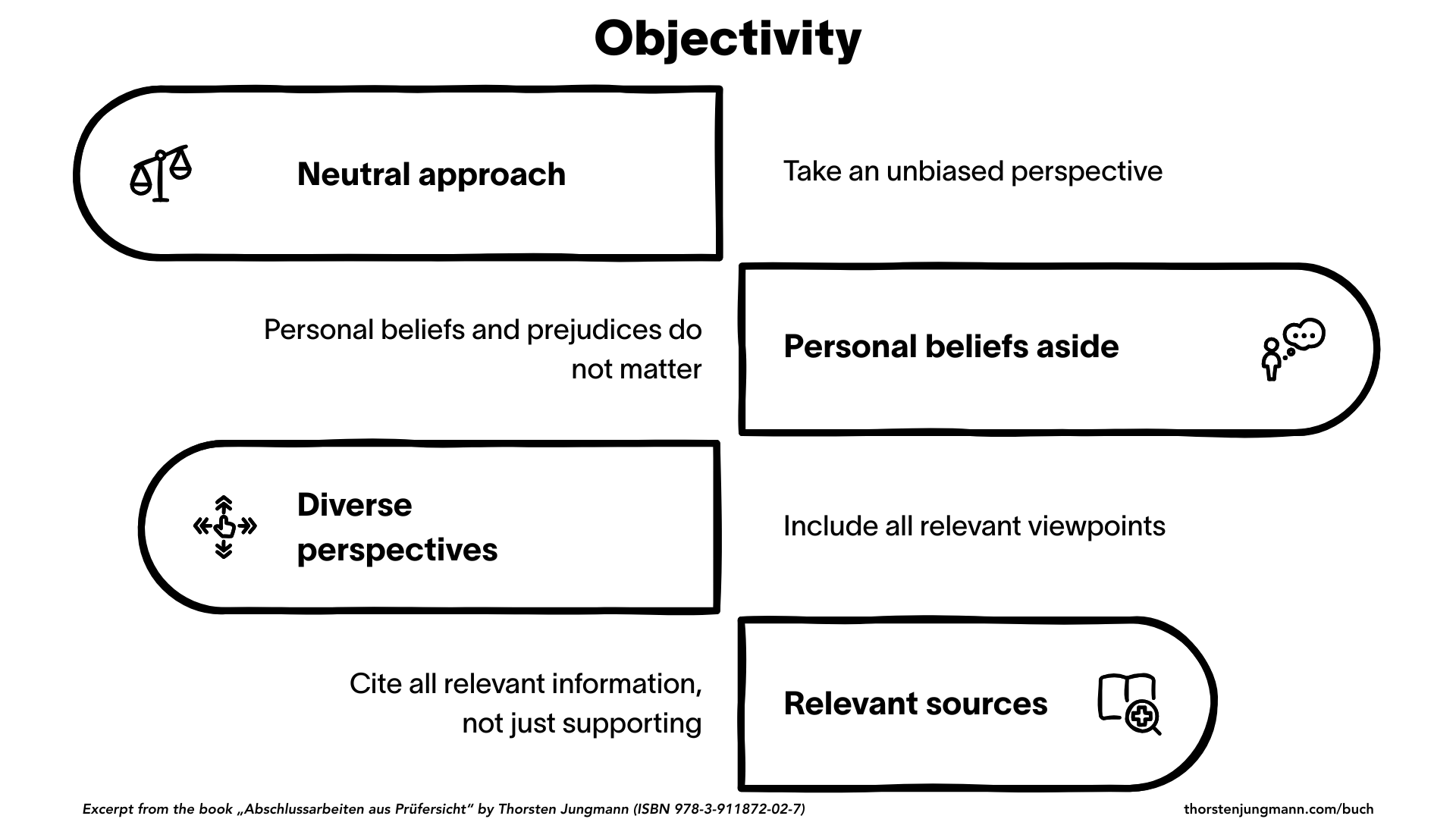
Figure: English version of the figure in Jungmann (2025, p. 14)
Example
In a study on ‘the advantages and disadvantages of nuclear energy’, both supporters and critics should have their say, and their arguments should be presented fairly and in a balanced way (ibid., p. 14).
In this module, for example, objectivity matters when you weigh up the three answers in step 5 and take seriously the answer that contradicts your own.
4.5 Honesty
Honesty (German: Ehrlichkeit) means presenting data, methods and results truthfully – without manipulation or falsification. This includes reporting contradictory or negative results in full instead of concealing them (ibid., p. 15).
Honesty also means distinguishing clearly between your own ideas and the thoughts of others and acknowledging the intellectual property (German: geistiges Eigentum) of others by citing correctly (ibid., p. 15).
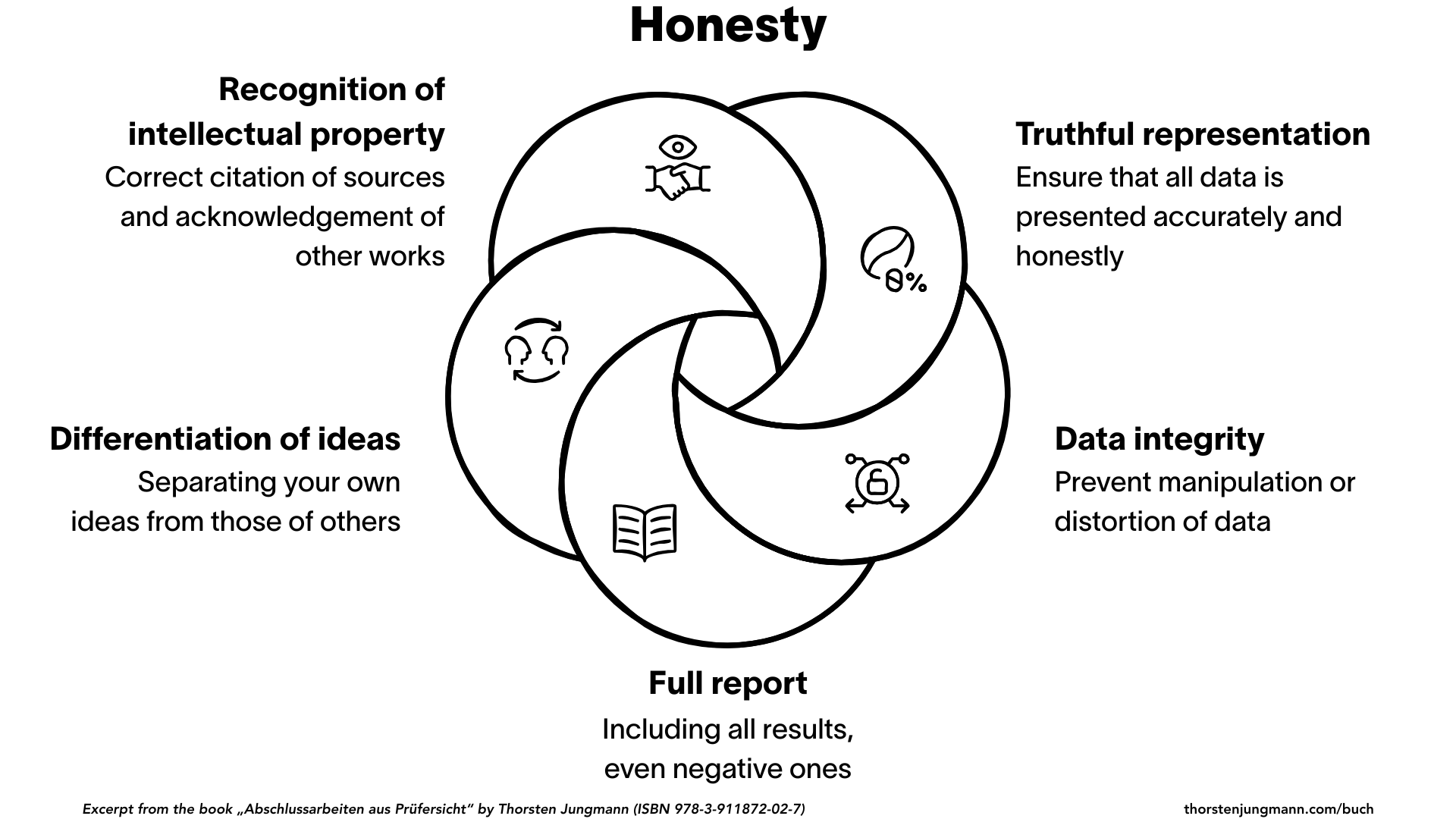
Figure: English version of the figure in Jungmann (2025, p. 15)
Example
If a survey shows that a hypothesis is not confirmed, this must be reported honestly instead of manipulating the results so that they fit the hypothesis (ibid., p. 15).
In this module, for example, honesty begins with your own answer in step 2, which stays as you wrote it, and it continues with every sentence of an AI service that you mark as a quotation. Honesty also applies to pictures: every picture on your poster that you have not created yourself carries its source.
4.6 Traceability
Traceability (German: Nachvollziehbarkeit) requires that other researchers can understand your entire work process and could repeat it (ibid., p. 16).
Therefore, document in detail your selection of literature, your methodological decisions, your data collection and your analysis strategies. A traceable work discloses how you arrived at your results and conclusions without omitting important intermediate steps (ibid., p. 16).
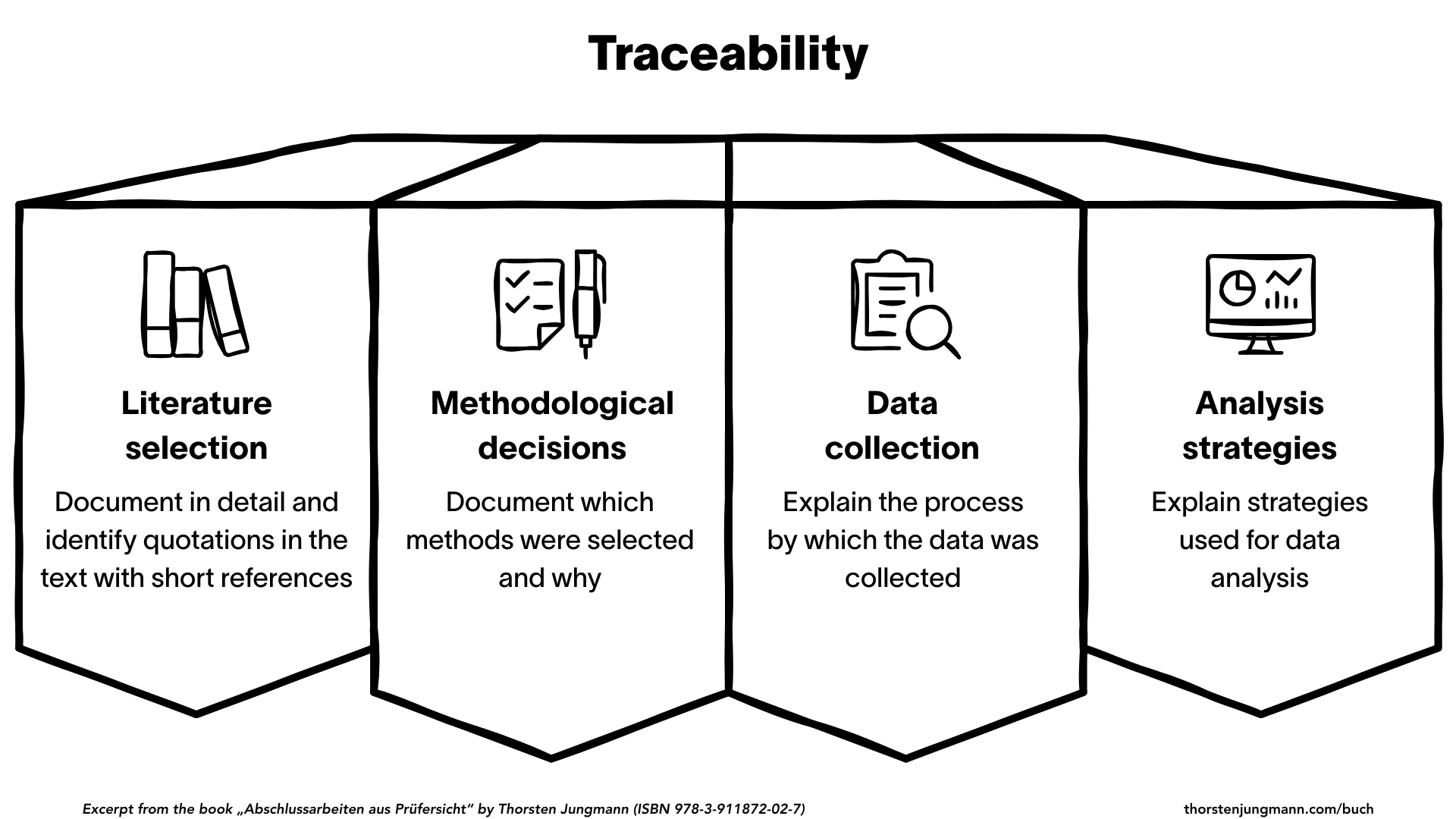
Figure: English version of the figure in Jungmann (2025, p. 16)
Example
In a paper about an experiment, you should describe in detail how the experiment was carried out – for example, with exact details of the materials, the participants, the steps of the procedure and the ambient conditions – so that other researchers can replicate the experiment (ibid., p. 16).
On your poster, for example, traceability means that a reader can see which AI service you asked, when and with which question.
4.7 Logical argumentation
Logical argumentation (German: logische Argumentation) means that your trains of thought follow a clear structure free of contradictions (ibid., p. 17).
Make sure that there are coherent transitions between the sections and a recognizable connection between the research question (German: Forschungsfrage), the theoretical framework, the methodology and the interpretation of the results. Claims must be supported by evidence, and conclusions should follow compellingly from the data presented (ibid., p. 17).
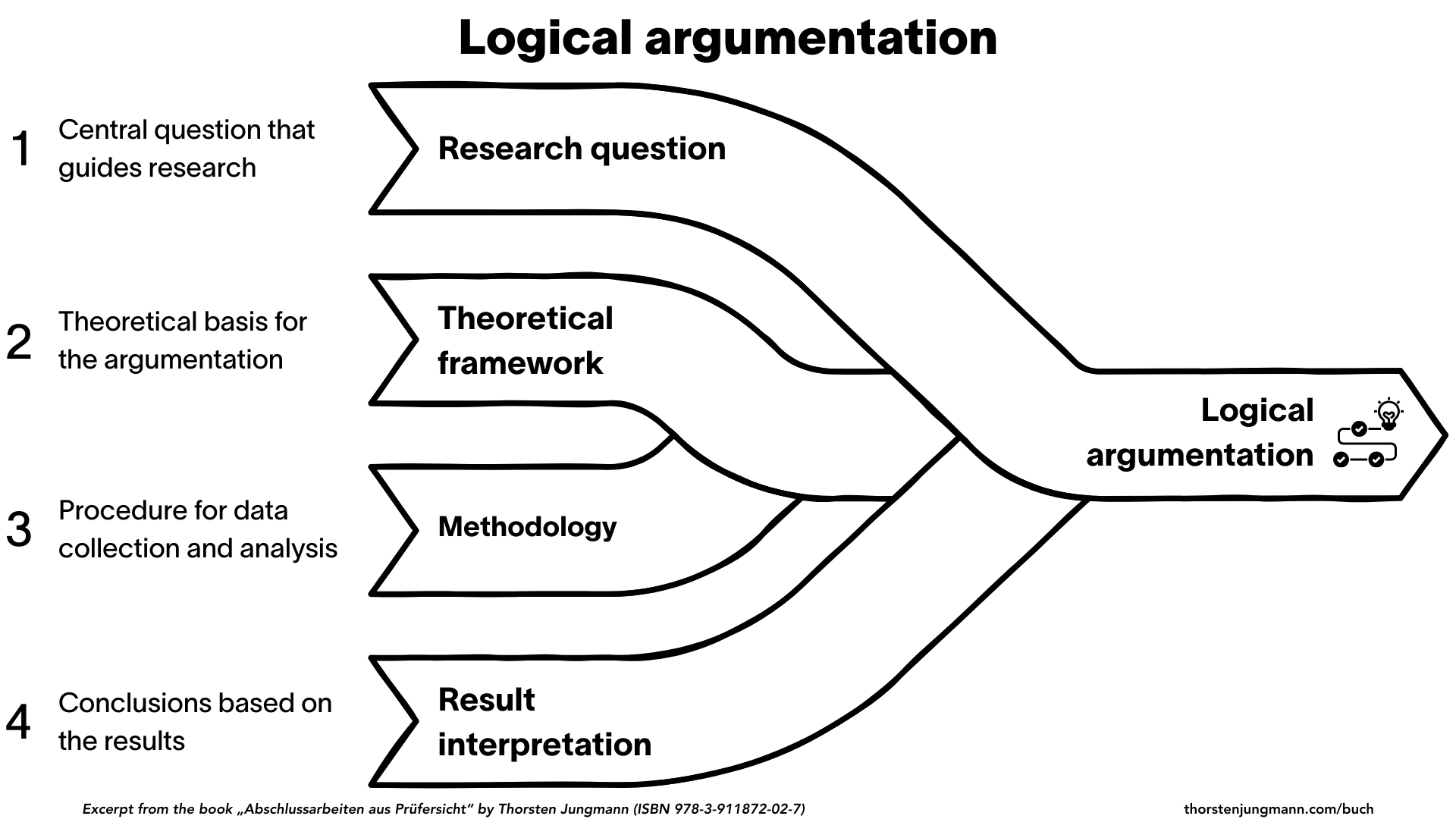
Figure: English version of the figure in Jungmann (2025, p. 17)
Example
Instead of writing ‘Product X is good because it has many functions’, you should argue: ‘Product X is well suited for the given field of application because it has functions A, B and C. Function A solves problem Y, function B improves process Z and function C enables new applications. The comparison with the functional expectations named in the requirements specification (cf. <source>) supports this conclusion.’ (ibid., p. 17)
In FTS-03, for example, you weigh up your three answers with claim, evidence and conclusion.
4.8 Validity
Validity (German: Validität) describes the extent to which a method actually captures what it claims to capture. If you use quantitative methods, suitable statistical procedures and validated instruments are required in order to work validly (ibid., p. 18).
In qualitative studies, the interpretations must be derived systematically from the data collected and must not go beyond what these data can show. You ensure this, for example, by using standardized and validated instruments (ibid., p. 18).
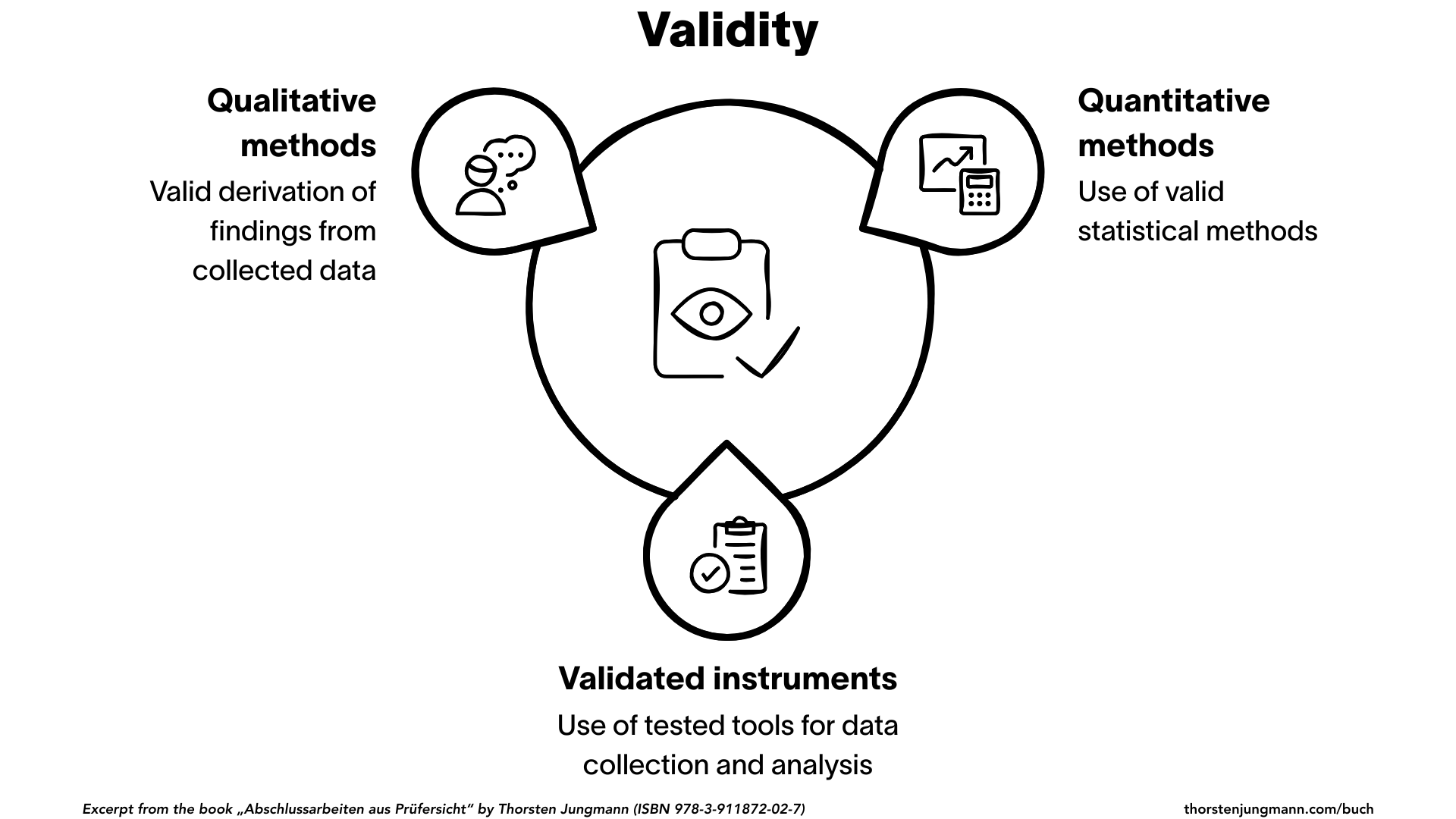
Figure: English version of the figure in Jungmann (2025, p. 18)
Example
If you want to measure customer satisfaction, it is not enough to count only the number of complaints – even if this is a possible indicator of dissatisfaction. A valid survey also requires asking the customers directly, for example with a standardized satisfaction scheme (ibid., p. 18).
In FTS-05, for example, you ask what a study has examined and how – a question of validity.
4.9 Reliability
Reliability (German: Reliabilität) describes the dependability and consistency of your research methods and results. A reliable study leads to comparable results when it is repeated under the same conditions (ibid., p. 19).
In your thesis, you should identify potential sources of error and explain which measures you have taken to ensure that your data and analyses are reliable (ibid., p. 19).
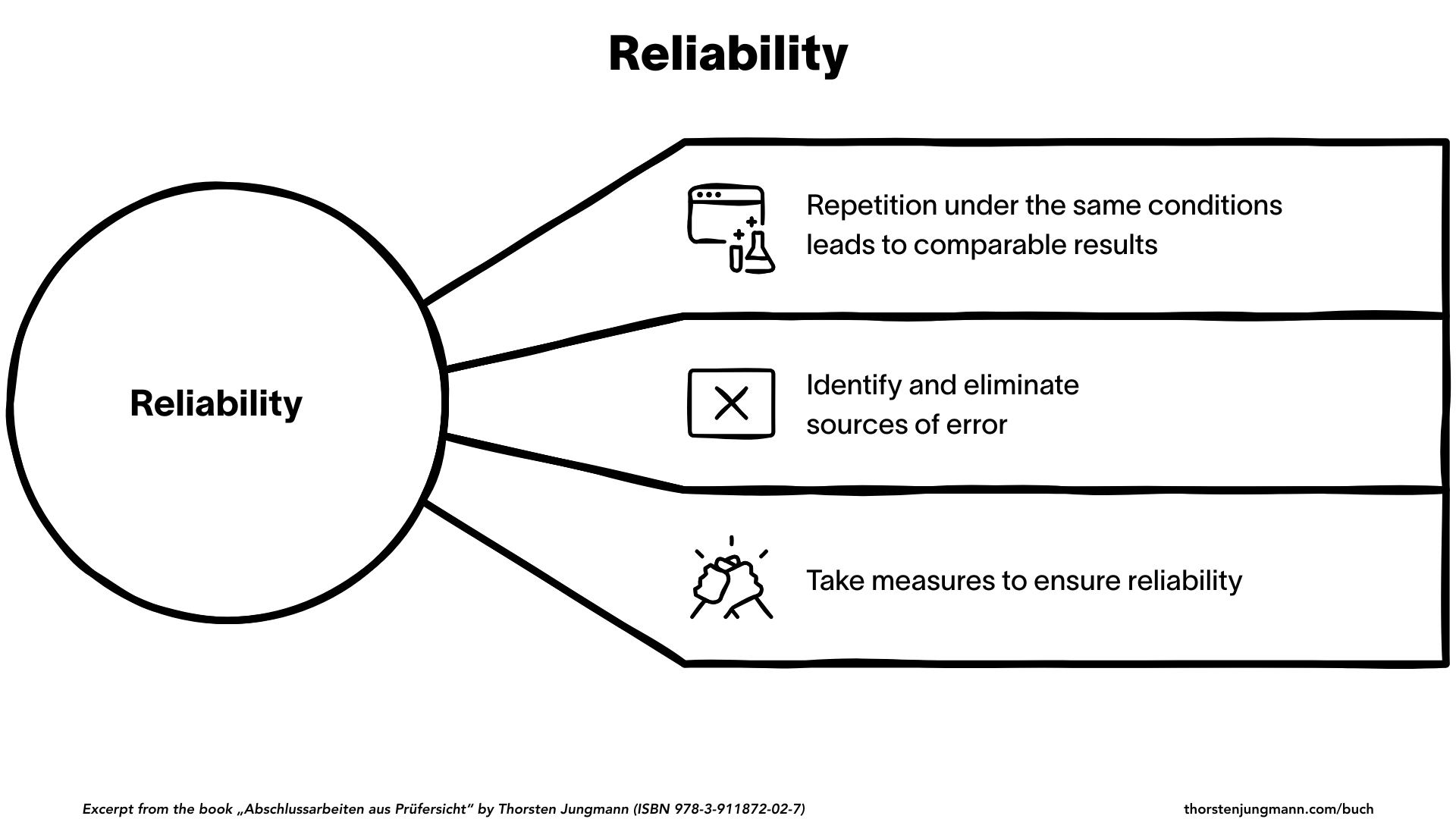
Figure: English version of the figure in Jungmann (2025, p. 19)
Example
If you carry out an experiment in the natural sciences, you should make sure that the results are not influenced by random factors. You can achieve this, for example, by repeating the experiment several times and/or by using a large sample (ibid., p. 19).
In phase 2, for example, you put the same question to an AI service twice and compare the two answers.
4.10 Verifiability
Verifiability (German: Überprüfbarkeit) enables other researchers to verify or refute your results. This criterion is closely linked with traceability (ibid., p. 20).
To ensure that your scientific work can be verified, you have to document your data, analysis steps and research materials sufficiently and, where appropriate, make them accessible. Especially with innovative methods, it is important to provide details so that others can understand and question your procedure (ibid., p. 20).
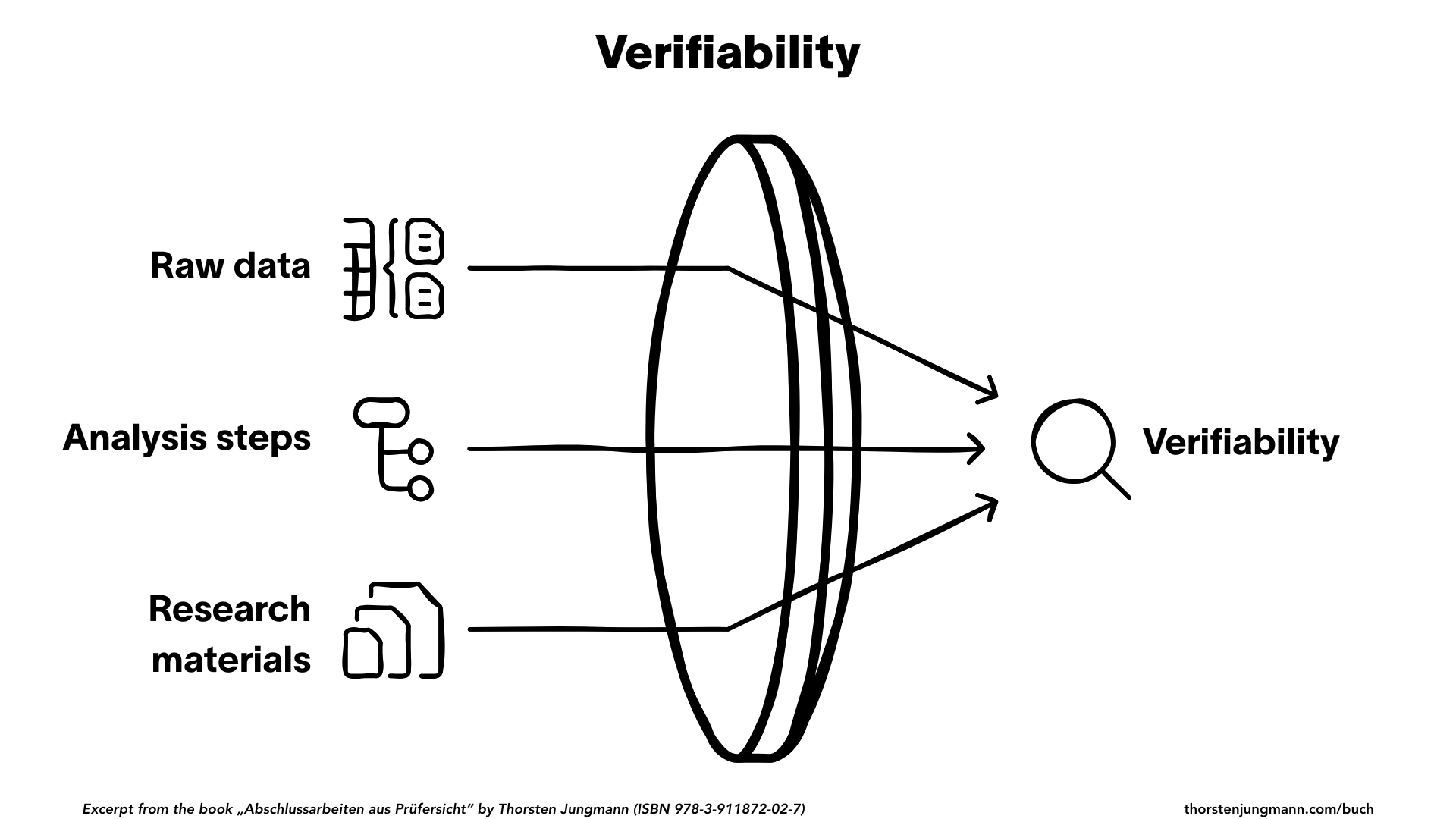
Figure: English version of the figure in Jungmann (2025, p. 20)
Example
In quantitative research, you should make available the raw data and the code you used, for example in R or Python. With validated questionnaires, this also includes the complete questionnaire, the scaling and the calculation of the parameters, for example the mean value, the standard deviation and Cronbach’s alpha. With qualitative research methods, you should present your methodological procedure transparently, for example by disclosing the topic guide of your interviews, documenting how you carried out the content analysis and providing your category system or coding frame (ibid., p. 20).
In this module, for example, every statement from a scientific source on your poster carries a short reference with the page, so that every reader can look it up in the source.
4.11 Reflexivity
Reflexivity (German: Reflexivität) means critical self-reflection on your own position in the research process. The ability to question your own work critically is a central element of scientific maturity (ibid., p. 21).
Actively question your assumptions, your personal convictions and possible biases. Especially in papers in the social sciences and humanities, you should address your own role as a researcher and reflect on how your background and your perspective could influence your research (ibid., p. 21).
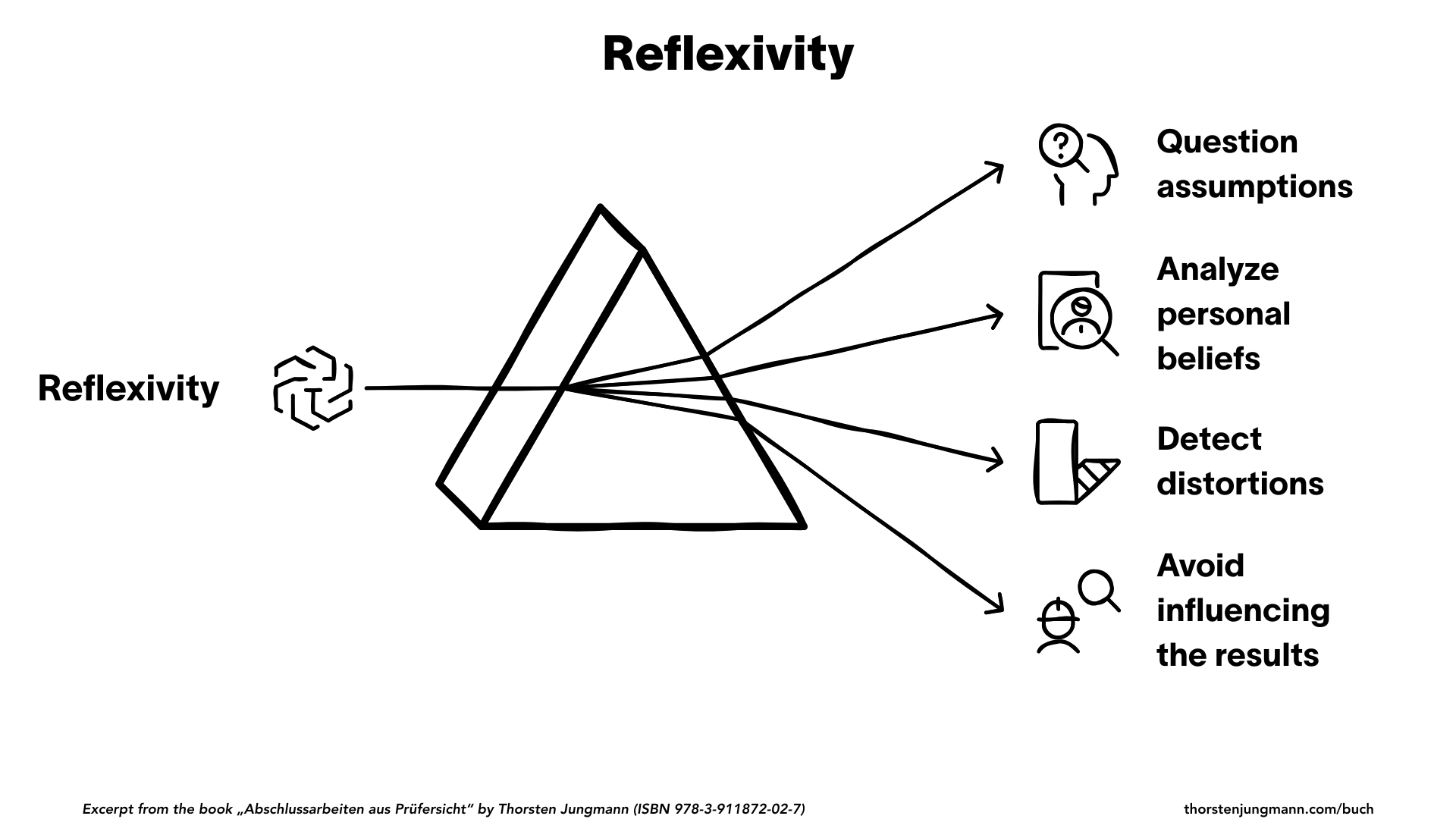
Figure: English version of the figure in Jungmann (2025, p. 21)
Example
In a qualitative study on a sensitive topic, such as homelessness, you should reflect on how your own social position and your assumptions could influence the collection and the interpretation of the data (ibid., p. 21).
In this module, for example, your own answer from step 2 shows you in step 5 where you started from – and what you have learnt since.
4.12 Comprehensibility
Comprehensibility (German: Verständlichkeit) requires clear, precise language and an accessible presentation of your research. Complex matters should be explained in such a way that colleagues in your field can follow them, without sacrificing depth (ibid., p. 22).
Pay attention to a logical structure and unambiguous definitions of terms, and avoid unnecessarily complicated wording or technical terms that do not contribute to new insights (ibid., p. 22).
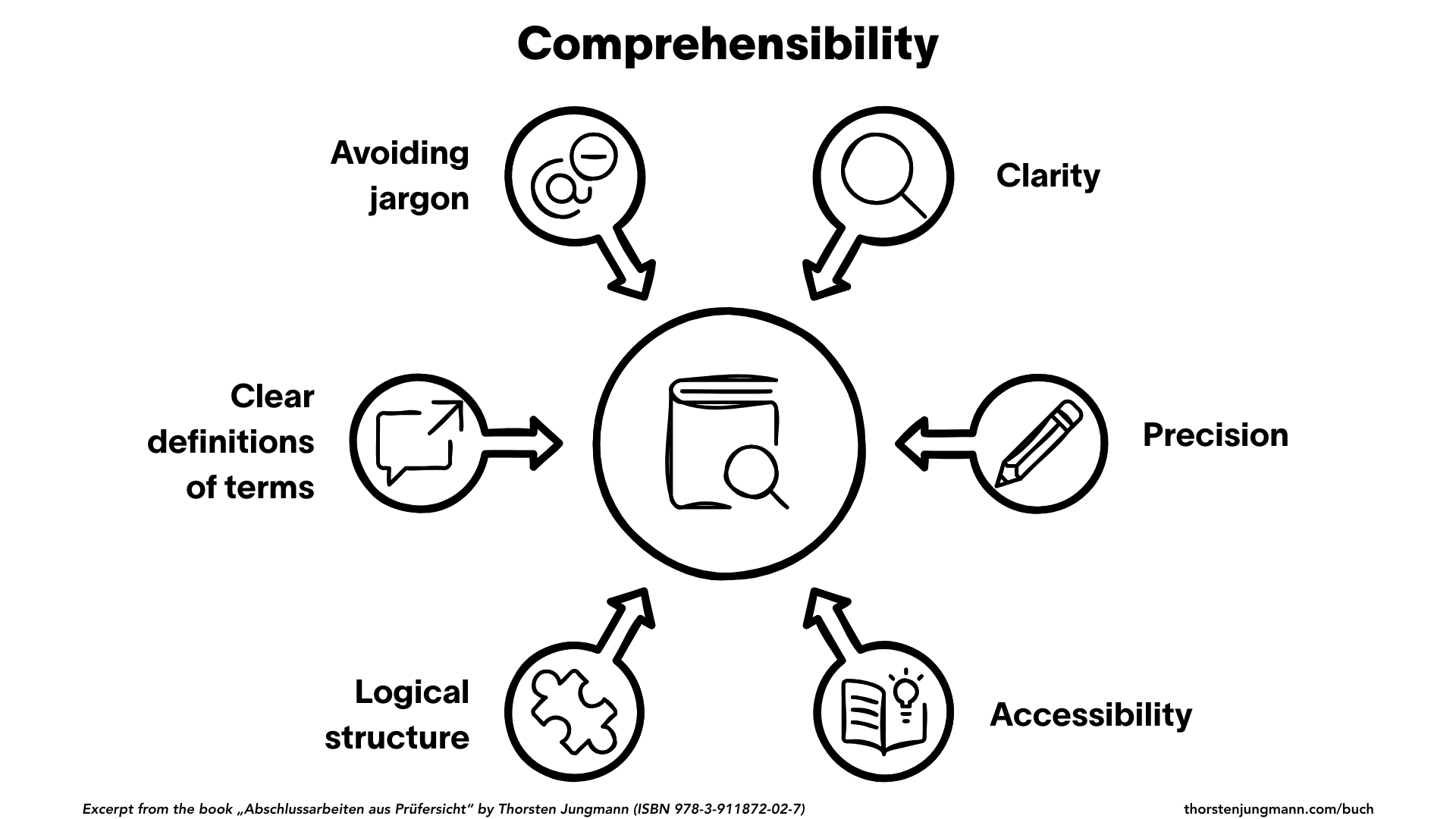
Figure: English version of the figure in Jungmann (2025, p. 22)
Example
Complicated technical terms or jargon specific to an institute are often difficult for outsiders to understand. Therefore, try to present matters as clearly and simply as possible. Technical terms should be defined – unless they are established and generally known in the discipline concerned, such as Latin terms in medicine and law (in vitro, culpa in contrahendo) or basic technical terms such as the voltage divider in electrical engineering (ibid., p. 22).
In your elevator talk in FTS-04, for example, everybody in the room should understand your question and your balanced, reflective answer.
4.13 Responsibility
Responsibility (German: Verantwortung) covers the ethically appropriate handling of research participants, of the data collected and of the possible effects of your work (ibid., p. 23).
Consider potential risks for those involved, and make sure that they are informed before the start and consent voluntarily to take part in the research. Responsible research also means reflecting on the implications of your results for society and considering how they could be misused (ibid., p. 23).
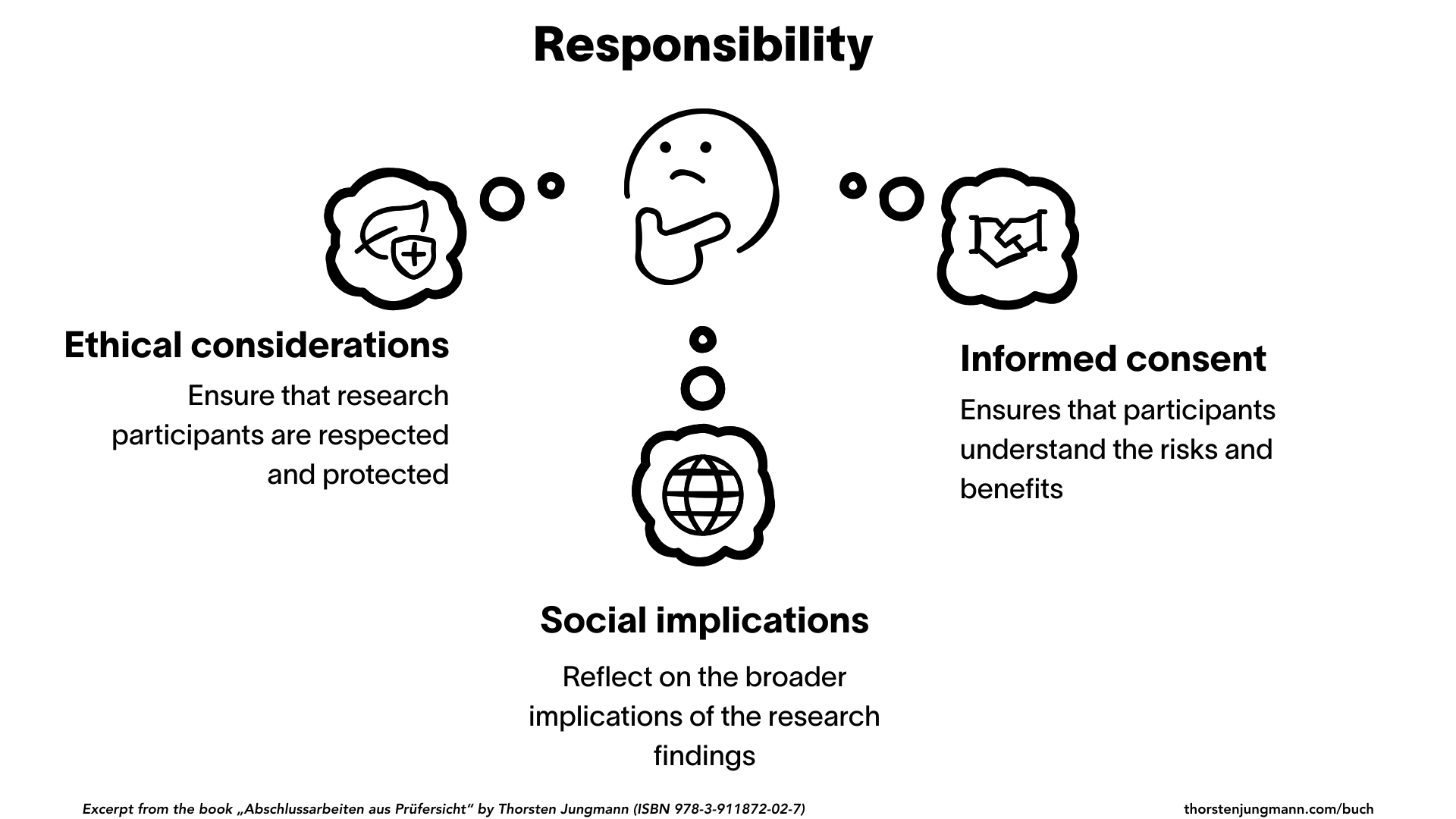
Figure: English version of the figure in Jungmann (2025, p. 23)
Example
If you plan an experiment with learners on the effectiveness of different learning methods, you must inform the participants in advance about the aim, the procedure, possible burdens, such as stress caused by test situations, and their rights, such as voluntary participation, anonymity and the use of the data. In many cases, an application to a research ethics committee is required as well (ibid., p. 23).
In your term paper, for example, you make a recommendation as an engineer – and responsibility means asking whom it affects.
4.14 Fairness
Fairness (German: Fairness) means appreciating competing theories, points of view and methods appropriately and not presenting them in a distorted way (ibid., p. 24).
Treat the work of other researchers with respect, even if you criticize it. In multidisciplinary work, it is important to acknowledge the contributions of different disciplines and to find a balanced way of dealing with all points of view (ibid., p. 24).
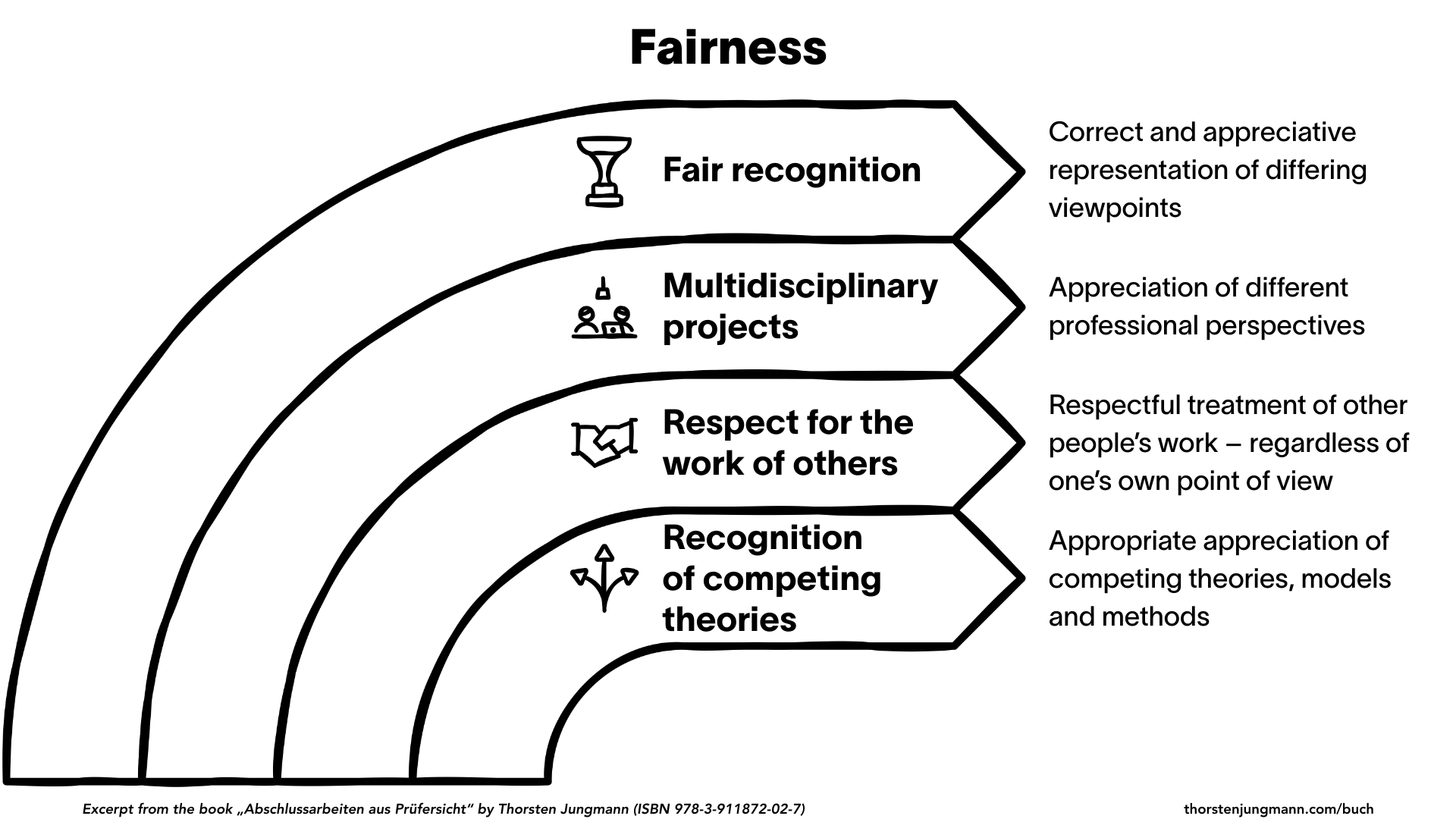
Figure: English version of the figure in Jungmann (2025, p. 24)
Example
If you write a literature review on a particular topic, you should present the various studies and theories without favouring a particular point of view or methodology. This ensures a fair representation of the existing research and promotes a balanced discussion (ibid., p. 24).
In FTS-06, for example, you present the position of the other pair in your trend group in your own words, until they agree that you have presented it correctly.
5 From your question to the sources – Steps 1 to 4 of the didactic concept
5.1 Step 1: A good question
Every piece of scientific work starts with a question. The question decides what you look for – and therefore what you find. Four features help you recognize a good question:
- It is relevant: its answer contributes to knowledge, as the first criterion in chapter 4 requires.
- It is open: even if it is phrased as a yes-or-no question, the honest answer is ‘it depends’, and the interesting part is on what.
- It can be answered with sources: others have already examined it scientifically, so that there is evidence to find.
- Its terms are precise: you know exactly what you are asking about.
Take our example question, ‘Does hydrogen make steel production climate-neutral?’ It is relevant because it concerns the change of an entire industry. It is open, because the answer depends, among other things, on how the electricity for the hydrogen is produced (Nikoleris 2019, p. 2). It can be answered with sources: researchers have examined it, for example Vogl et al. (2018), whose article you will meet again in step 4. And it forces you to be precise: does ‘climate-neutral’ mean no emissions at all, or no emissions from fossil fuels? The companies in the project Hydrogen Breakthrough Ironmaking Technology (HYBRIT) deliberately speak of ‘fossil free’ rather than zero emissions (Nikoleris 2019, p. 2) – a small difference in wording with a big difference in meaning.
In phase 1, you do not have to invent your question. For each Sustainable Development Goal (SDG), I have prepared three questions, and the source package of the SDG is tailored to them. For SDG 9, for example, the three questions read:
- ‘Does Industry 4.0 make factories more sustainable?’
- ‘Does bringing production back to Europe make industry more resilient?’
- ‘Is rail freight more sustainable than road freight in practice?’
Today, you choose one of the three questions for your SDG. In phase 3, you will tailor a question for your term paper yourself, in FTS-08.
5.2 Step 2: Your own answer – before any source
Before you ask anybody or anything, you answer the question yourself. What do you think – and why? Everything you already know counts, including what you have heard in this session; ‘before any source’ means before you consult the artificial intelligence (AI) service or your source package. Write your answer down in a few sentences, together with the reasons that lead you to it. Distinguish what you know from what you assume: ‘I know that …’, ‘I assume that …’, ‘I am not sure whether …’.
Your own answer – an example
‘I think so, because when hydrogen reacts, only water is produced. I know that steelworks today use a lot of coal and emit a lot of carbon dioxide. I assume that hydrogen could replace the coal and so remove most of these emissions. But I do not know where the hydrogen comes from and how much energy its production needs. I am also not sure whether a steelworks needs other materials that cause emissions.’
This is a good example of your own answer: it takes a position, gives a reason and says openly what it does not know. Steps 3 and 4 will show whether the reason holds for a steelworks.

Image by Qwen-Image 2.1
Why first? Your own answer is your starting point. In step 5, you compare it with the two other answers – the one of the AI service and the scientific one – and see what you have learnt – reflexivity in practice (4.11). And it keeps your own thoughts apart from those of others – honesty in practice (4.5).
In phase 1, you write down your own answer in the session today, before you consult the AI service or your source package. It stays as you wrote it: on your poster, it shows where you started from.
5.3 Step 3: Questioning the AI and checking its sources
Now you put the same question, word for word, to the AI service that is specified for your SDG (6.2). Save the complete answer as text, together with the date, the name of the service and, where it is shown, the model and the mode.
Then you check the answer like a reviewer:
- Which sources does the AI name? List all of them.
- Do these sources exist? Look up each one, for example in the library catalogue, in Google Scholar or on the website of the journal.
- Do the sources say what the AI claims? Open each source and look for the passage.
Why this effort? Language models generate plausible text – and plausible is not the same as true. In a study, ChatGPT wrote 84 short literature reviews on 42 topics with 636 references in total: 55 % of the references by ChatGPT-3.5 were fabricated, and still 18 % of those by the newer ChatGPT-4 (Walters and Wilder 2023, p. 1). Many of the real references contained substantive errors as well, such as wrong authors, titles or page numbers (ibid., p. 1). The second example question from FTS-01, ‘Does AI consume more energy than its use saves?’, adds a twist: here, the AI answers a question about itself.
An AI answer is never a citable source and never evidence for a statement. On your poster, you quote it only because you examine it: verbatim in quotation marks or paraphrased, and always with the long reference directly at the quotation – the product, the access source, the model and the mode and the date of your query – and with the note that the quotation is not evidence. An AI answer never gets a short reference, and its long reference stands nowhere else.
The guide to Scientific Work does not permit quoting the output of AI tools in a paper as a rule – with one exception: the scientific examination of such output in the context of your work (section 2.10). That is exactly what you do in step 3. Data and facts never come from the AI: either they come from a valid source, which you research and cite, or they are invented, and then you do not use them.
5.4 Step 4: Reading a scientific text and noting where a statement comes from
For step 4 in phase 1, you do not search the internet. The source package for your SDG in the Zotero group FTS-resources-1 contains the scientific texts you need (6.2). Many scientific texts are articles that independent experts of the same field assessed before publication: they are peer-reviewed (German: begutachtet). This procedure, called peer review (German: Peer-Review), checks the scientific quality, traceability and relevance of a work before it is published (Jungmann 2025, p. 141).
Most research articles follow a similar structure. Take the article by Vogl et al. (2018, pp. 736–745) on steel production with hydrogen: after the abstract come the sections ‘Introduction’, ‘Method’, ‘Results and discussion’ and ‘Conclusion and outlook’, followed by the references. The abstract (German: Abstract) summarizes the whole article in a few sentences. The introduction explains the question and what is already known; the method section describes what the authors examined and how; the results section presents and discusses the findings; the conclusion answers the question and looks ahead.
Do not read such an article from the first to the last word. Keshav (2007, p. 83) recommends reading it in up to three passes, each with its own goal:
- First pass: Read the title, the abstract and the introduction carefully, then only the headings, then the conclusions, and glance over the references. Afterwards, you know what kind of article it is and whether it is worth reading further (ibid., p. 83).
- Second pass: Read the article with greater care, but skip details such as proofs. Look carefully at the figures and diagrams, and note the key points. Afterwards, you can summarize the main thrust of the article, with its evidence, for someone else (ibid., pp. 83–84).
- Third pass: If you need to understand the article in depth, reconstruct the work in your mind and question every assumption; this shows you its strengths and its weaknesses (ibid., p. 84).
While you read, note every statement that you want to use – in your own words, with the short reference and the page. For example:
A note from step 4 – an example
According to Vogl et al. (2018, p. 736), producing one tonne of liquid steel by hydrogen direct reduction takes 3.48 MWh of electricity, most of it for making the hydrogen by electrolysis.
Distinguish what the authors have found from what they assume or recommend. Zotero keeps the text, your notes and the bibliographic data together in one place.
6 Your goal, your question – Phase 1 step by step
6.1 Your goal and your question
Your work in phase 1 starts in the exercise time today. First, you sign up for one Sustainable Development Goal (SDG) in ILIAS. Each SDG has five places, set up as groups in ILIAS. Choose your SDG by interest: you will work with it until the elevator talk, and in phase 3, you can link your term paper to it.
Then you choose one of the three questions for your SDG; the exercise of this phase lists the questions for all 17 SDGs. Finally, you write down your own answer – before you consult any source.
6.2 Your AI service and your source package
For step 3, an artificial intelligence (AI) service is specified for each SDG, so that different services are used in the module:
| SDG | AI service | Access |
|---|---|---|
| 1, 7, 13 | ChatGPT | https://chatgpt.com |
| 2, 8, 14 | Perplexity | https://www.perplexity.ai |
| 3, 9, 15 | Claude | https://claude.ai |
| 4, 10, 16 | Gemini | https://gemini.google.com |
| 5, 11, 17 | Vibe by Mistral AI | https://chat.mistral.ai |
| 6, 12 | Grok | https://grok.com |
If registering with the specified service is an obstacle for you – some services ask for a mobile phone number, for example – use the chat service with artificial intelligence of HSBI (HSBIKI) instead (FTS-01, 2.1).
For step 4, you use the source package of your SDG in the Zotero group FTS-resources-1, which you asked to join in exercise FTS-01.01. You take the scientific sources for your poster from this package.
6.3 From today to your elevator talk
Phase 1 at a glance:
- Today, in FTS-02: sign up for your SDG, choose your question and write down your own answer.
- Until FTS-03 on 23 October: steps 3 and 4 on your own, with your AI service and your source package:
- Step 3: Questioning the AI and checking its sources
- Step 4: Reading a scientific text and noting where a statement comes from
- In FTS-03: weighing up (step 5), citing on the poster and designing your poster.
- By Wednesday 28 October 2026 at 23:55: upload your poster in ILIAS.
- In FTS-04 on 30 October: elevator talks, grouped by SDG; the posters are displayed alongside, and everybody can view them in ILIAS.
- In your elevator talk, you present briefly and concisely, in 60 to 90 seconds, your question, your own answer, what the scientific sources say, how the AI answer fits in, and the insight you take away from the exercise.
Take steps 3 and 4 before FTS-03: in FTS-03, you need all three answers to weigh them up against each other.
7 What have you learnt today? – Summary and answers to the guiding questions
7.1 The building blocks of knowledge
- Sustainable development and the 2030 Agenda: Development is sustainable if it meets the needs of today without endangering the chances of future generations to meet their own (WCED 1987, p. 54). The 2030 Agenda of 2015 sets 17 Sustainable Development Goals (SDGs) with 169 targets; it is universal, integrated and pledges to leave no one behind.
- Goals, targets and indicators: Each goal is broken down into targets, and each target is measured with indicators, for example SDG 9, target 9.4 and indicator 9.4.1.
- The 17 goals and where the world stands: from no poverty to partnerships for the goals, each with its targets, its status in 2026 and examples of what mechatronics engineers and industrial engineers can contribute; the world is far behind in reaching most of the targets.
- Synergies and trade-offs between the goals: Progress on one goal can support or hinder progress on another, as with hydrogen for steel and the land needed for additional power generation.
- How companies and their employees contribute: The SDG Compass guides companies in five steps; a company goal is broken down to the targets of functions and individual employees, such as an engineer or a purchaser.
- The 13 criteria of scientific work: relevance, originality, objectivity, honesty, traceability, logical argumentation, validity, reliability, verifiability, reflexivity, comprehensibility, responsibility and fairness.
- Steps 1 to 4 of the didactic concept: a relevant, open question; your own answer before any source; the answer of an artificial intelligence (AI) service, checked and quoted only to examine it, never as a source or evidence; the scientific answer from the source package, with every statement noted with its short reference and page.
- Phase 1 step by step: your SDG group, your question and your own answer today; AI service and source package until FTS-03; poster upload by Wednesday 28 October 2026 at 23:55; elevator talk in FTS-04.
7.2 Answers to the guiding questions
What are the Sustainable Development Goals, and how can companies and their employees contribute to achieving them?
The 17 Sustainable Development Goals (SDGs) are the core of the 2030 Agenda, which all member states of the United Nations adopted in 2015. They are broken down into 169 targets, which are measured with indicators. Companies contribute through their core business along the whole value chain; the SDG Compass guides them in five steps from understanding the goals to reporting. Employees contribute through the decisions of their daily work, such as the choice of a material or a supplier. As a mechatronics engineer or an industrial engineer, you can contribute to every one of the 17 goals, from low-cost medical devices to standards against child labour at suppliers.
What makes work scientific?
Thirteen general criteria, from relevance and originality via objectivity, honesty, traceability, logical argumentation, validity, reliability, verifiability, reflexivity and comprehensibility to responsibility and fairness. They show what distinguishes good research practice, and they set scientific texts apart from everyday opinions and journalistic texts.
How do you take the first four steps for a question such as ‘Does hydrogen make steel production climate-neutral?’
You check that the question is relevant, open, answerable with sources and precise in its terms. You write down your own answer with your reasons, before you consult any source. You put the question to the artificial intelligence (AI) service of your SDG, save its answer and check whether the sources it names exist and say what it claims; on your poster, you quote its answer only to examine it, never as a source or evidence. Finally, you read the texts of your source package and note every statement in your own words with its short reference and page.
Bibliography
- GRI, UN GLOBAL COMPACT and WBCSD, 2015. SDG Compass: the guide for business action on the SDGs [online]. Global Reporting Initiative, United Nations Global Compact and World Business Council for Sustainable Development. Available from: https://www.unglobalcompact.org/docs/issues_doc/development/SDGCompass.pdf [viewed 2026-10-12].
- HERAS-SAIZARBITORIA, Iñaki, URBIETA, Laida and BOIRAL, Olivier, 2022. Organizations’ engagement with sustainable development goals: from cherry-picking to SDG-washing? Corporate Social Responsibility and Environmental Management [online]. 29(2), 316–328. Available from: https://doi.org/10.1002/csr.2202 [viewed 2026-10-13].
- JUNGMANN, Thorsten, 2025. Abschlussarbeiten aus Prüfersicht: Bachelor-, Master- oder Doktorarbeit schreiben und selbst bewerten – Leitfaden zur Bestnote [Final theses from an examiner’s perspective]. Herne: Prof. Dr. Thorsten Jungmann. ISBN 978-3-911872-02-7.
- KESHAV, S., 2007. How to read a paper. ACM SIGCOMM Computer Communication Review [online]. 37(3), 83–84. Available from: https://doi.org/10.1145/1273445.1273458 [viewed 2026-10-13].
- NIKOLERIS, Alexandra, 2019. HYBRIT: a case study [online]. REINVENT project no. 730053. 31 May 2019. Available from: https://www.reinvent-project.eu/s/HYBRIT.pdf [viewed 2026-10-12].
- NILSSON, Måns, CHISHOLM, Elinor, GRIGGS, David, HOWDEN-CHAPMAN, Philippa, McCOLLUM, David, MESSERLI, Peter, NEUMANN, Barbara, STEVANCE, Anne-Sophie, VISBECK, Martin and STAFFORD-SMITH, Mark, 2018. Mapping interactions between the sustainable development goals: lessons learned and ways forward. Sustainability Science [online]. 13(6), 1489–1503. Available from: https://doi.org/10.1007/s11625-018-0604-z [viewed 2026-10-13].
- UN DESA, 2026. The Sustainable Development Goals Report 2026 [online]. New York: United Nations Department of Economic and Social Affairs. Available from: https://unstats.un.org/sdgs/report/2026/The-Sustainable-Development-Goals-Report-2026.pdf [viewed 2026-10-12].
- UN GLOBAL COMPACT and KPMG, 2016. SDG Industry Matrix: industrial manufacturing [online]. United Nations Global Compact and KPMG International. Available from: https://assets.kpmg.com/content/dam/kpmg/xx/pdf/2017/05/sdg-industrial-manufacturing.pdf [viewed 2026-10-14].
- UN STATISTICS DIVISION, 2026. SDG indicators: global indicator framework for the Sustainable Development Goals and targets of the 2030 Agenda for Sustainable Development [online]. New York: United Nations. Available from: https://unstats.un.org/sdgs/indicators/indicators-list/ [viewed 2026-10-13].
- UNITED NATIONS, 2015. Transforming our world: the 2030 Agenda for Sustainable Development [online]. Resolution A/RES/70/1, adopted by the General Assembly on 25 September 2015. New York: United Nations. Available from: https://documents.un.org/doc/undoc/gen/n15/291/89/pdf/n1529189.pdf [viewed 2026-10-08].
- UNITED NATIONS, 2023. Sustainable Development Goals: guidelines for the use of the SDG logo, including the colour wheel, and 17 icons [online]. New York: United Nations Department of Global Communications. Available from: https://www.un.org/sustainabledevelopment/wp-content/uploads/2023/09/E_SDG_Guidelines_Sep20238.pdf [viewed 2026-10-08].
- UNITED NATIONS, 2026. Global indicator framework for the Sustainable Development Goals and targets of the 2030 Agenda for Sustainable Development [online]. Resolution A/RES/71/313 with the refinements up to E/CN.3/2026/12. New York: United Nations. Available from: https://unstats.un.org/sdgs/indicators/Global-Indicator-Framework-after-2026-refinement_Eng.pdf [viewed 2026-10-12].
- VOGL, Valentin, ÅHMAN, Max and NILSSON, Lars J., 2018. Assessment of hydrogen direct reduction for fossil-free steelmaking. Journal of Cleaner Production [online]. 203, 736–745. Available from: https://doi.org/10.1016/j.jclepro.2018.08.279 [viewed 2026-10-13].
- WALTERS, William H. and WILDER, Esther Isabelle, 2023. Fabrication and errors in the bibliographic citations generated by ChatGPT. Scientific Reports [online]. 13, 14045. Available from: https://doi.org/10.1038/s41598-023-41032-5 [viewed 2026-10-13].
- WCED, 1987. Report of the World Commission on Environment and Development: our common future [online]. UN document A/42/427, annex. New York: United Nations. Available from: https://documents.un.org/doc/undoc/gen/n87/184/67/pdf/n8718467.pdf [viewed 2026-10-13].
Overview of tools used
In creating this script, AI-supported software tools were used to generate and revise text and images according to my specifications:
| Product name | Access source | Software functions used | Scope of use |
|---|---|---|---|
| Perplexity | https://www.perplexity.ai | Search | Research |
| Gemini | https://gemini.google.com | Search | Research |
| Connected Papers | https://www.connectedpapers.com | Graphs of related papers | Research |
| Claude | https://claude.ai | Claude Opus and Claude Fable | Consistency checking, corrections, text revision and translation |
| Qwen-Image 2.1 | Installation on a server of the author | Text-to-image generation | Photorealistic images of everyday scenes |
Exercises for this lesson
In the exercise time of this session, you sign up for your Sustainable Development Goal (SDG) in ILIAS, choose one of the three questions and write down your own answer. Until FTS-03, you continue with steps 3 and 4 on your own. The exercise of phase 1 describes what you do in phase 1; the second exercise shows you, step by step, how to do it in ILIAS, with your AI service and in Zotero. In the third, you recognize the 13 criteria of scientific work in eight cases.
Exercise FTS-02.01 – Poster on your Sustainable Development Goal
Exercise FTS-02.02 – Using ILIAS, your AI service and Zotero in phase 1
Exercise FTS-02.03 – The 13 criteria at work
Slides for this lesson
The slides of this lesson as PDF: Slides FTS-02
⏭️ Continue with: FTS-03 Weighing up and posters 🔗